Field Notes
Tenlea Turner
1. Notes from the interns on the important work they are doing at the Refuge.
2. Explanations of the work of the interns and why it is vital to the sustainability of the Refuge.
Hunter Willman
Biological Science Technician
Mac Payne
9/18/2026
By Tenlea Turner
2026 Summer Intern
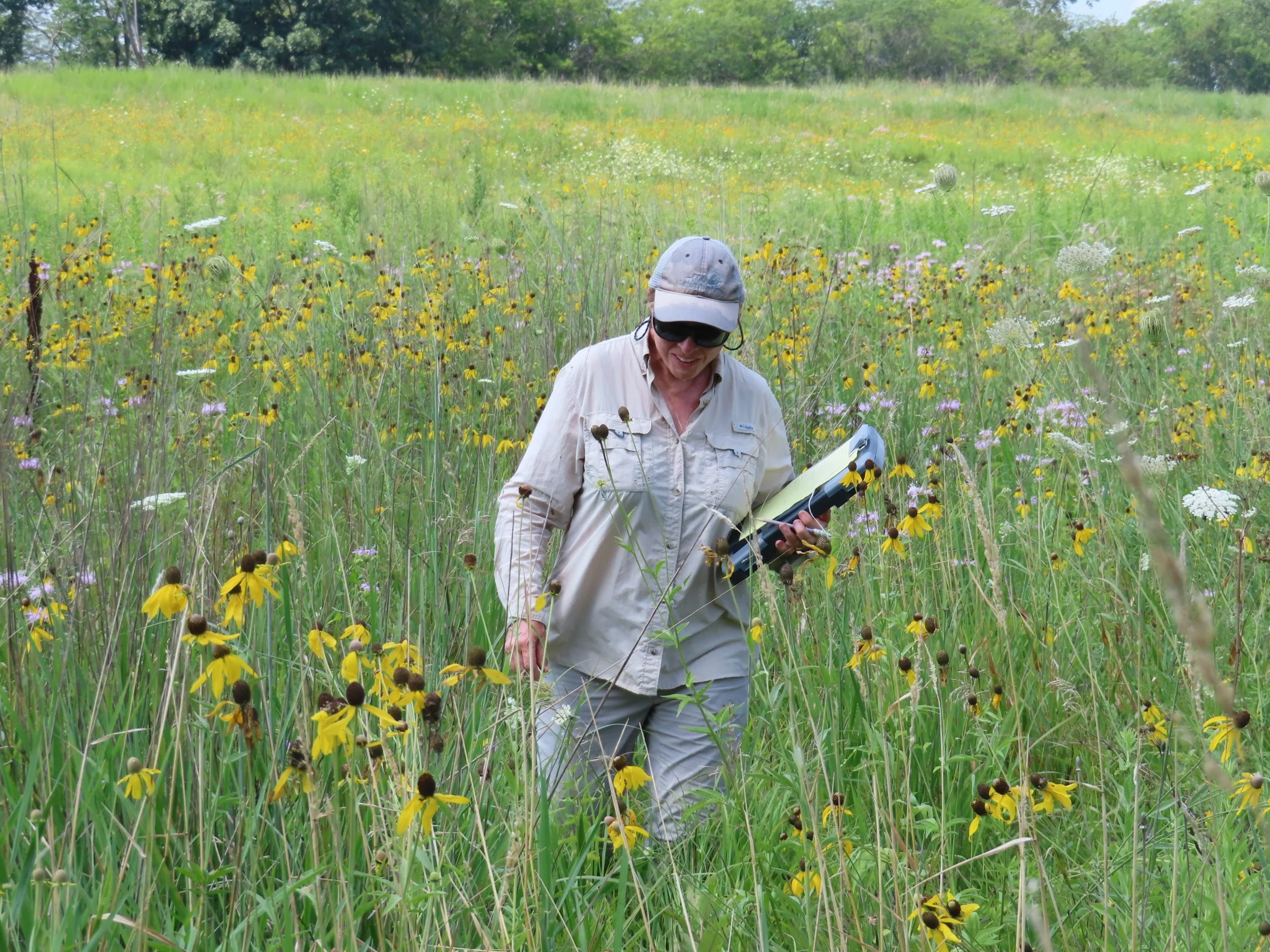
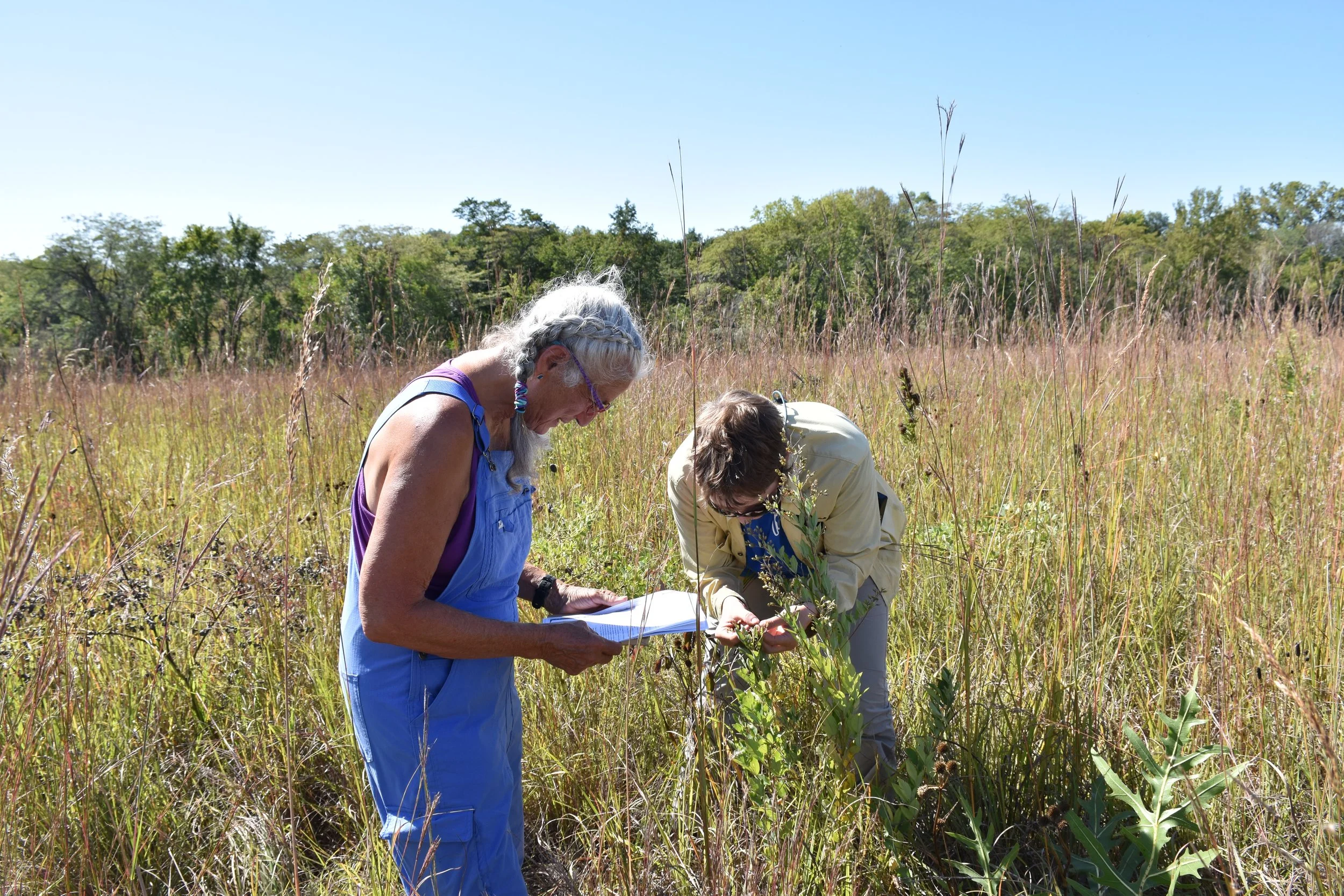
Karen makes an assessment of plants at the site
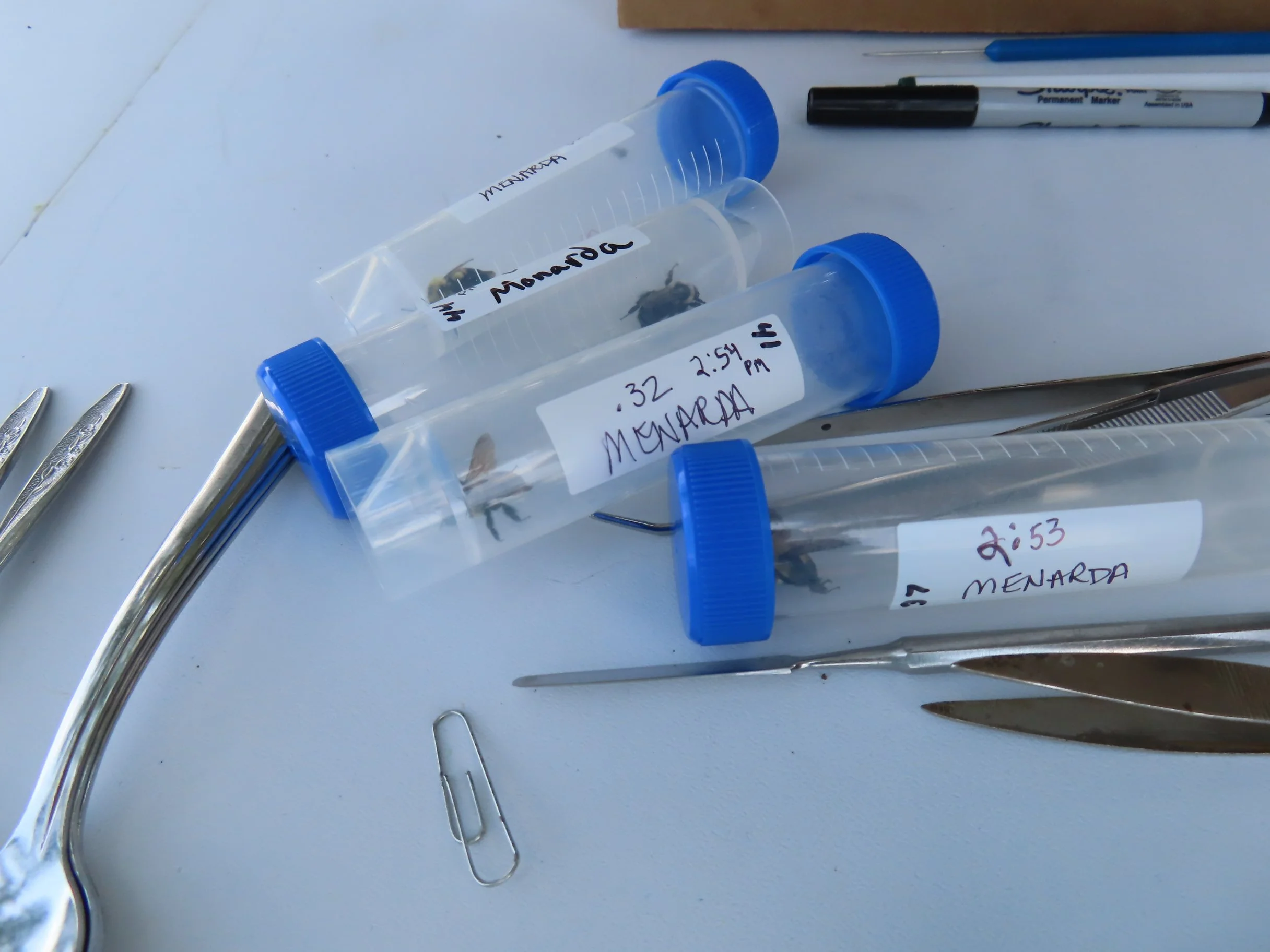
Specimen vials marked with unique identification number, collection time used, and plant species at collection point
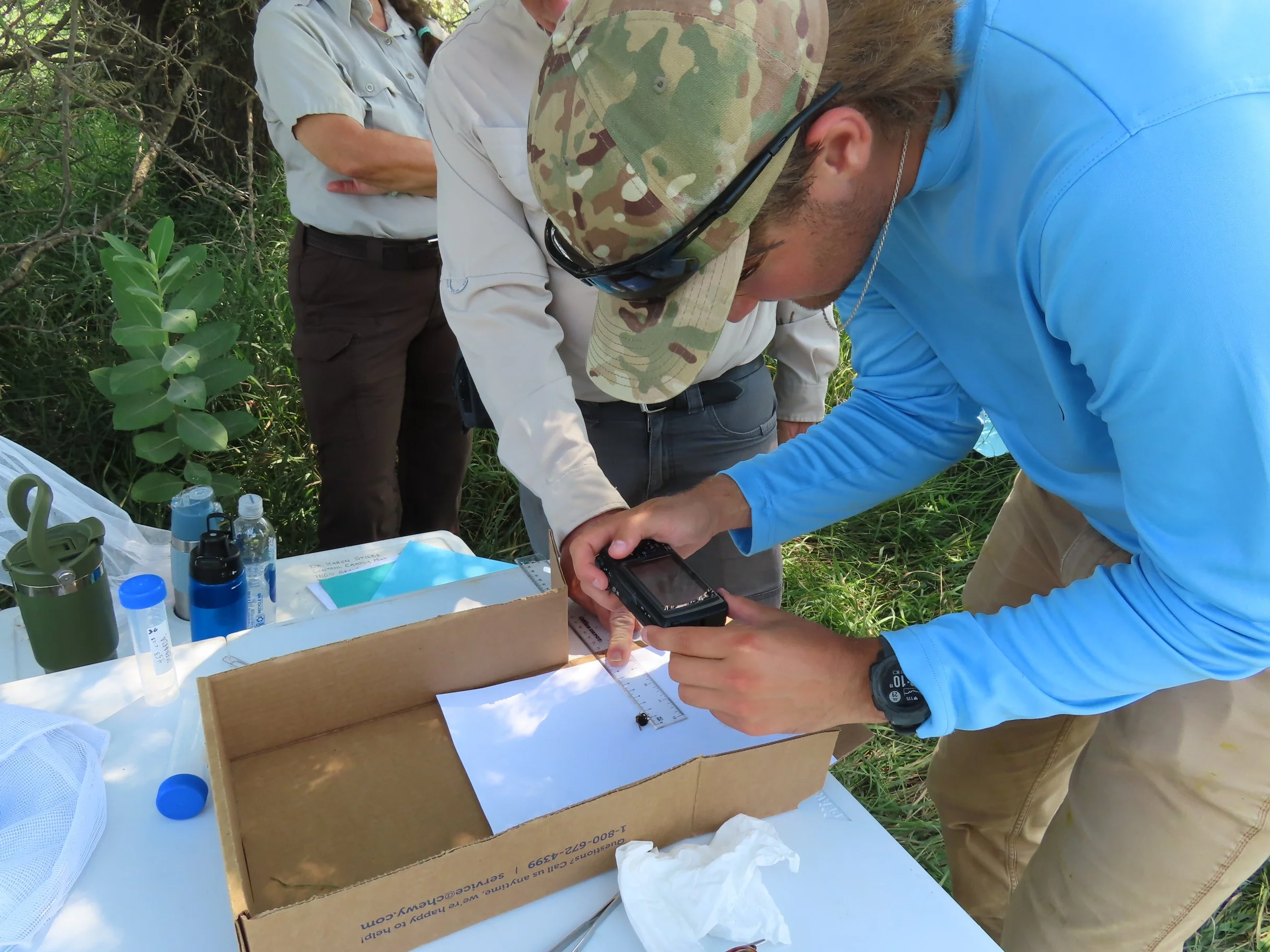
We each had multiple opportunities to practice our positioning and photographing skills
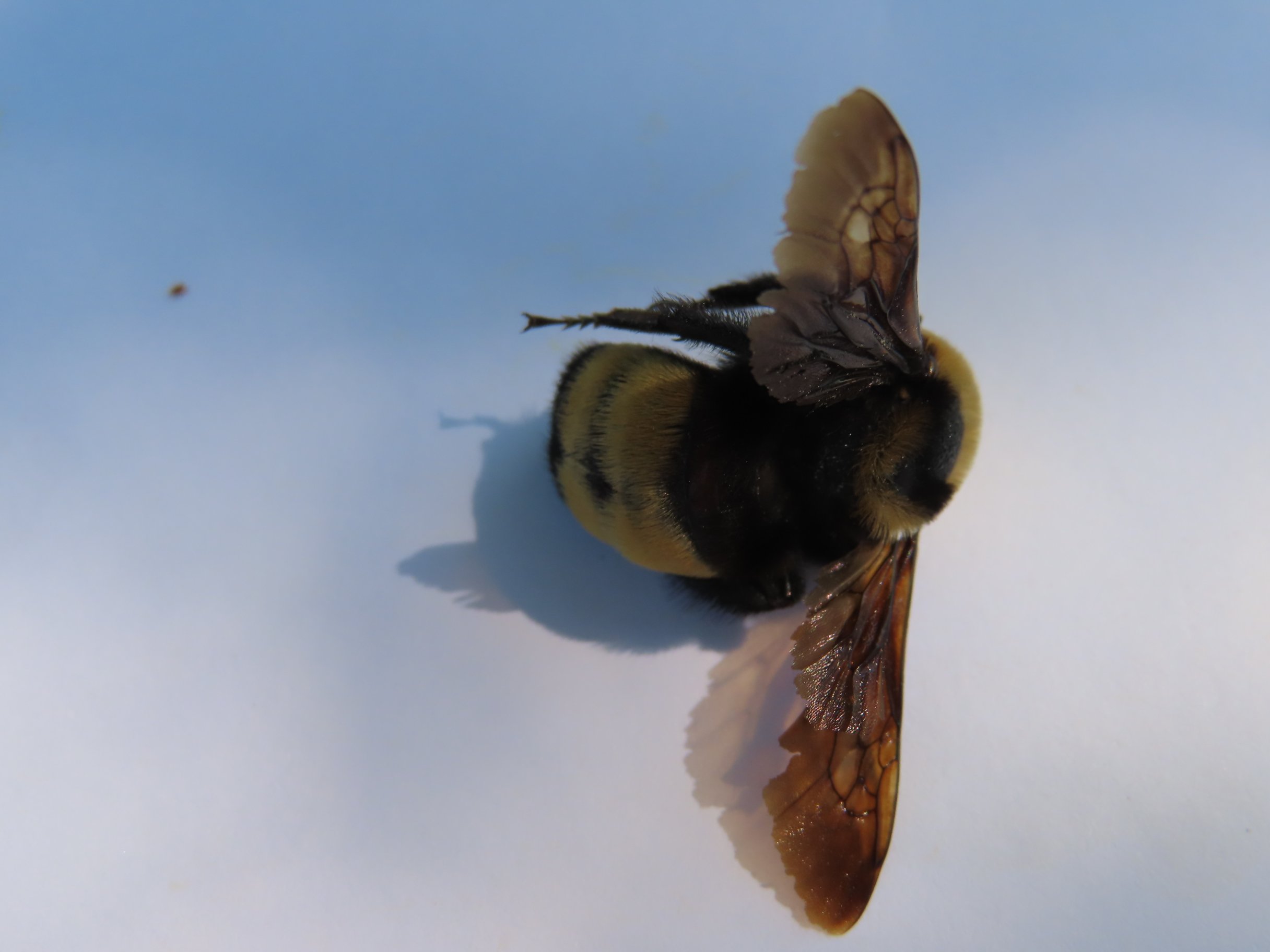
The black line between the wings is an identifying characteristic of the Black and Gold bumble bee
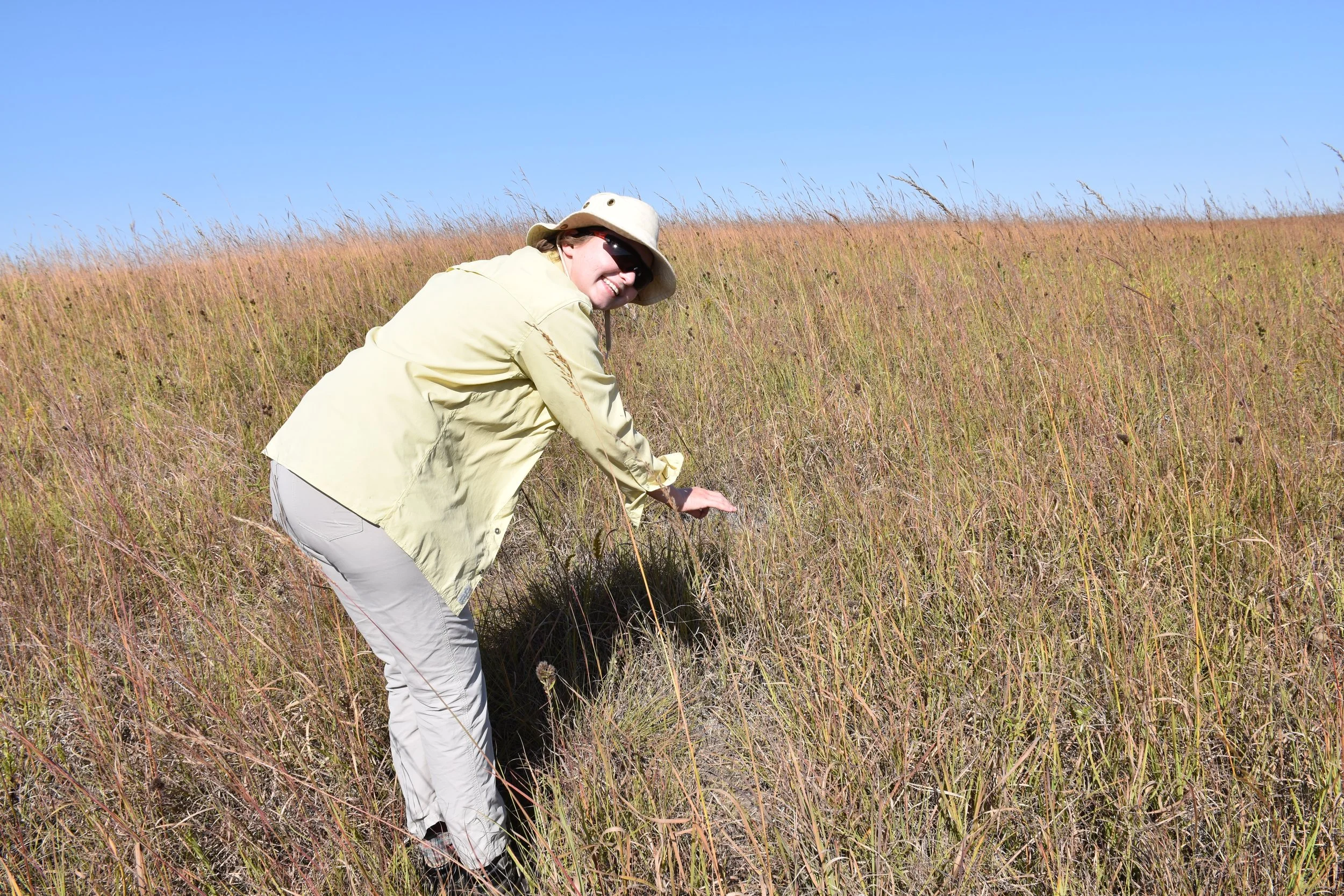
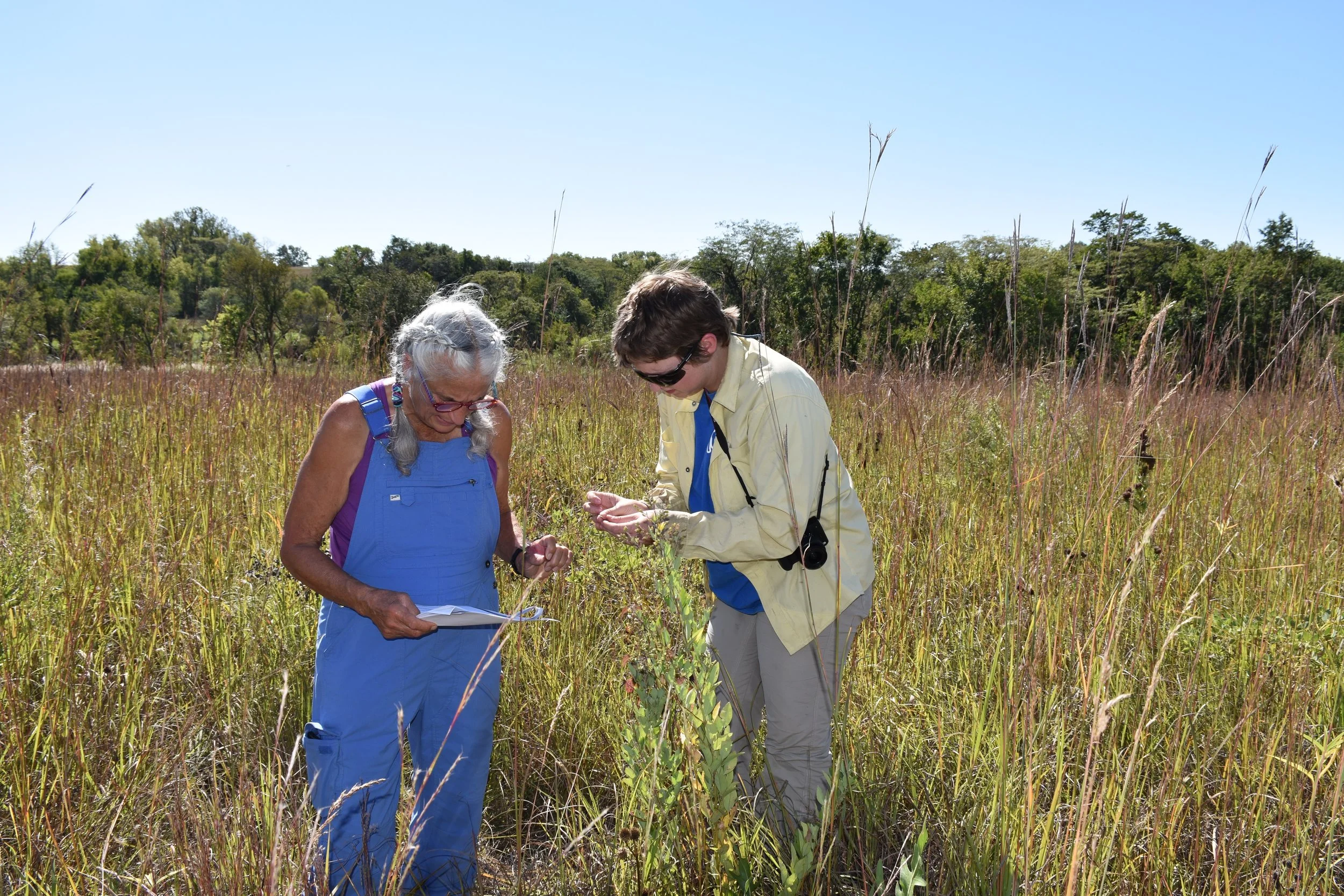
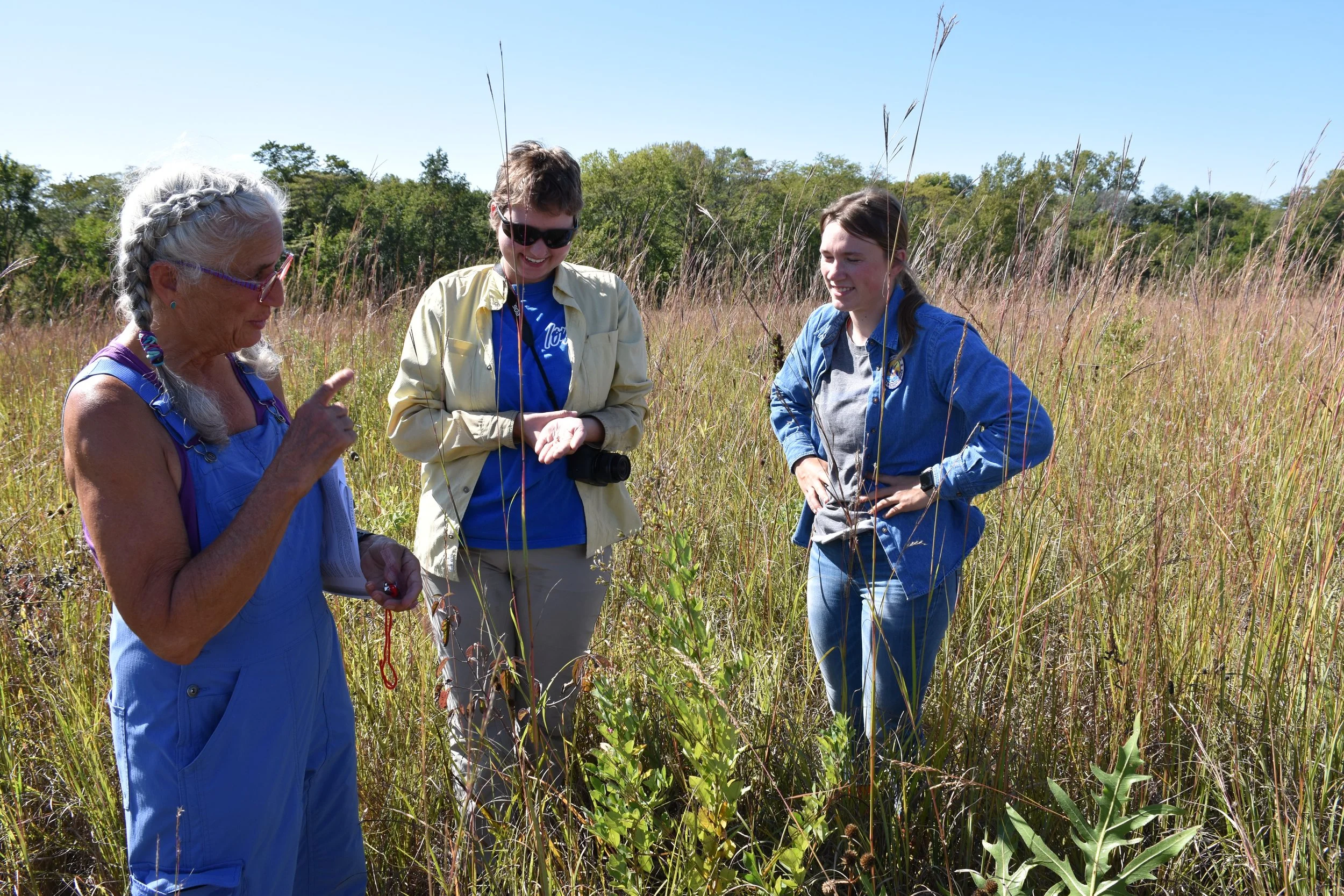
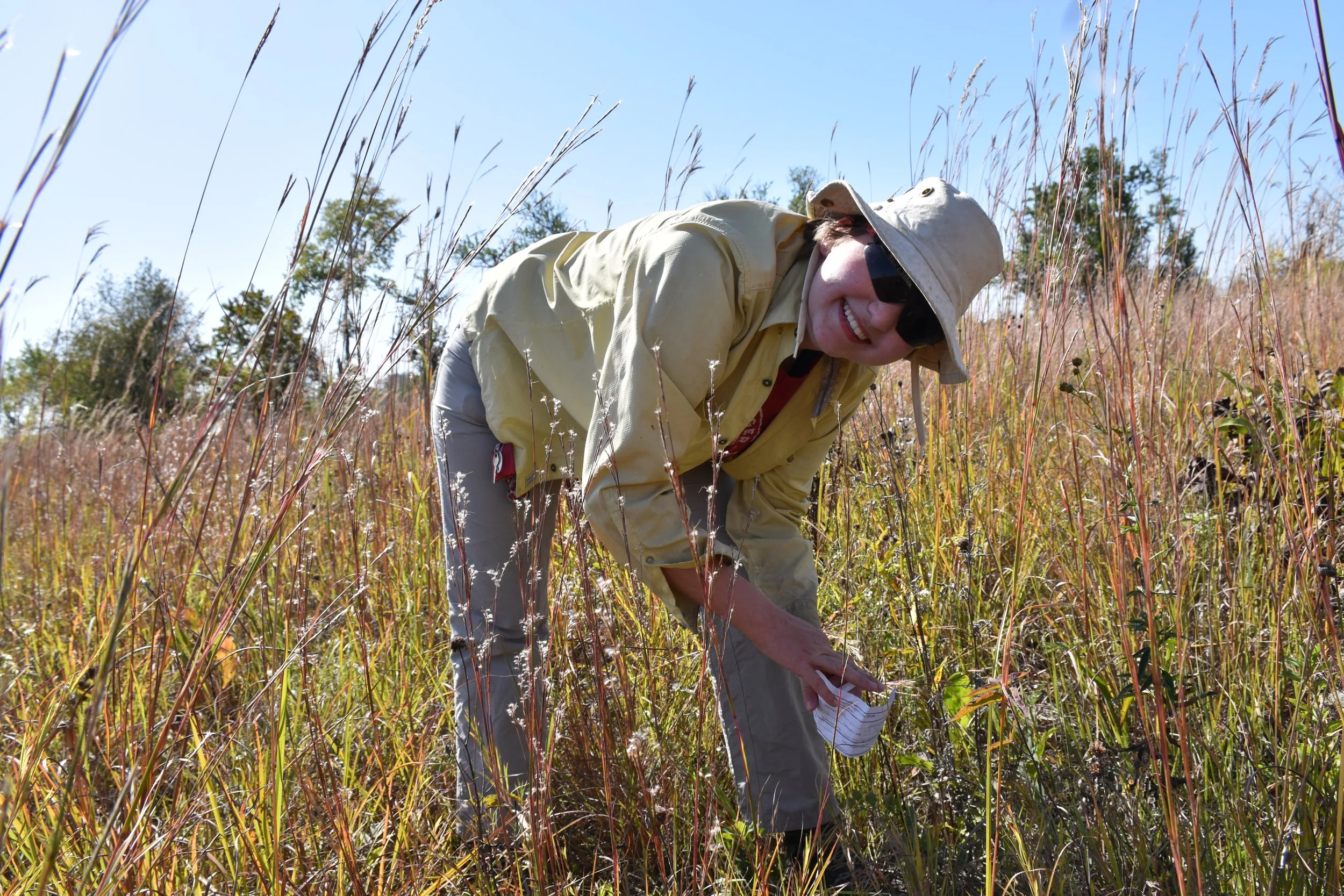
On July 29, 2026 we (Hunter, Mac, Nancy, and I) had the pleasure of participating in the Xerces Society's Bumble Bee Atlas data collection project. Our guides, Karen and Mike Stiles are seasoned experts in the project - and eager to conduct surveys at the Refuge and share their knowledge (and findings) with us.
The Bumble Bee Atlas is "A Conservation Initiative by the Xerces Society and Partners to Track and Conserve Bumble Bees" (bumblebeeatlas.org). It is a community science project open to individuals, groups, and organizations who wish to contribute to the conservation of bumble bee populations - starting with identifying what's out there right now.
We selected areas in our Savanna Reconstruction and Heritage West units to conduct the surveys. Collection time (locating and netting the bees) is limited to 45 minutes and divided between the number of participants. Once captured, the bees are removed from the net, contained in specimen vials, and chilled in a cooler with ice for a short period to temporarily immobilized them. When they are sufficiently immobile, they are positioned for photographs at different angles so they can be accurately identified by experts. Photos are taken of the face, top of head, top of thorax, side of thorax, and all abdominal segments - all before the bee becomes active again. Finally, the bee is measured and released.
In our surveys we collected 26 bumble bees, identified 3 species (Brown-belted, Common Eastern, and Black and Gold). We collected 5 bees at Savanna Reconstruction, and 21 at Heritage West. They were collected from 5 different plant species. Monarda fistulosa was their favorite, and why not - it's commonly known as bee balm. It was an interesting and exciting experience. We were all very grateful to have the opportunity to participate, learn from Karen and Mike, and embrace their enthusiasm for such a significant effort.
Surveying for the Bumble Bee Atlas
9/3/2026
By Tenlea Turner
2026 Summer Intern
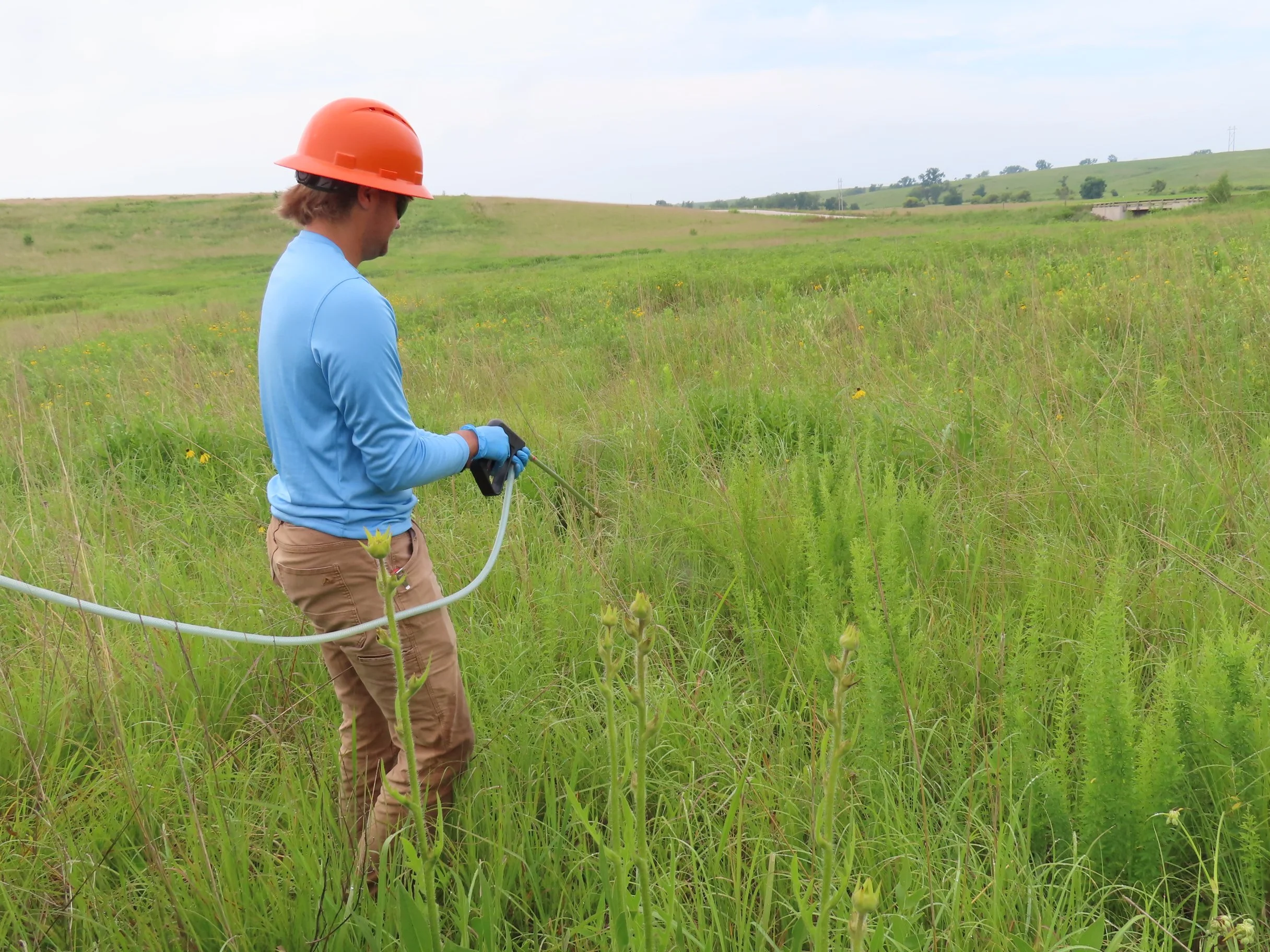
Mac spraying a patch of L. cuneata with foliar herbicide
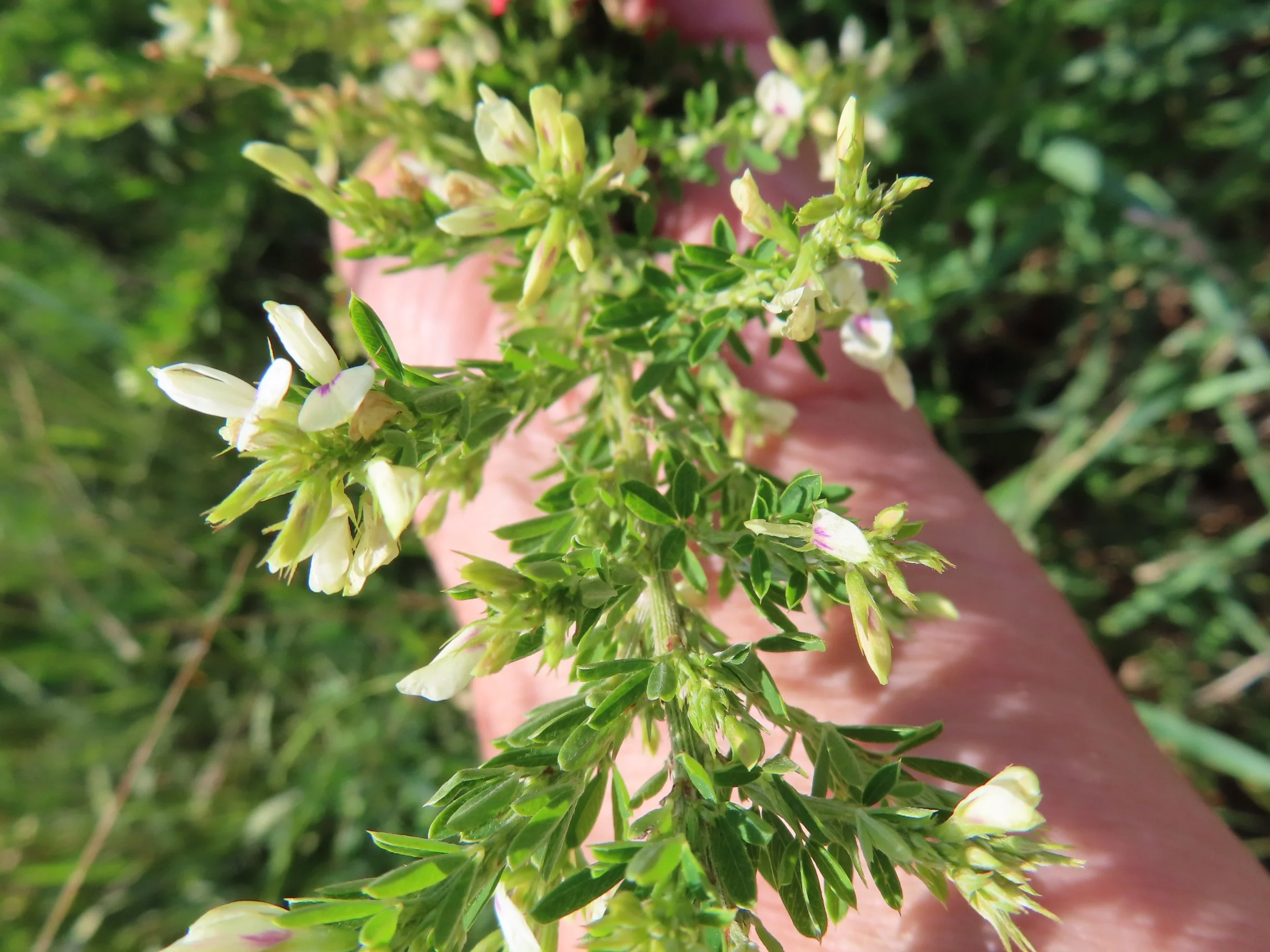
L. cuneata flower head
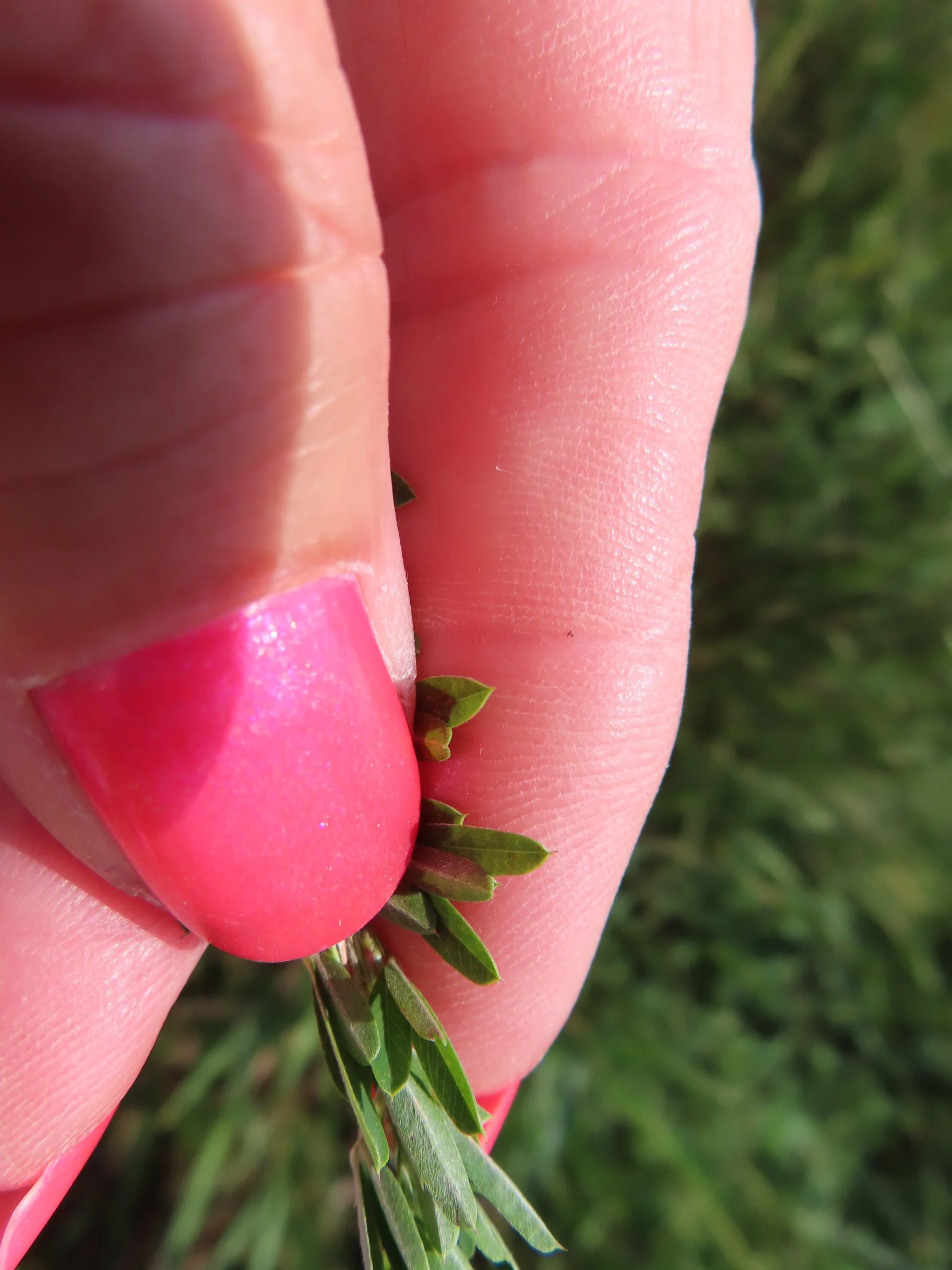
The pointed tip of the leaf is a distinguishing characteristic of L. cuneata
Controlling invasive plant species is an ongoing and unceasing undertaking at the Refuge. The seasonal staff spends a significant portion of their time in efforts to control or manage certain plant species.
Plants of consideration are referenced by different terms and levels of priority.
Introduced/non-native: these are plants that are not native to our ecosystem that came here intentionally or not, from another ecosystem, and are sometimes invasive;
Noxious: is a legal or regulatory label for plants deemed toxic or harmful to humans, animals, agriculture, wildlife, etc.;
Invasive (which can also be introduced and/or noxious): non-native plants that spread aggressively, out compete native plants, and cause harm to the environment, economy, or human health.
Invasive plants are top priority and Sericea lespedeza aka Chinese bushclover (Lespedeza cuneata) is our primary focus right now. It was first planted in the U.S. in the 1896 at North Carolina Agricultural Experiment Station. It has been used for erosion control, mine reclamation projects (KY, and VA); as a forage crop for livestock; and in Conservation Reserve Program (CRP) plantings - along with native grass seed mixes. It is still in use in some regions of the country - and deemed invasive in others (including Iowa).
Controlling sericea lespedeza can be challenging, especially in a prairie ecosystem. It loves full sun; is tolerant to adverse growing conditions; produces an abundance of seeds which can spread by wind, water, and animal activity; and produces an in-soil seed bank that is viable for up to 20 years. The plant is fire resistant, but grazing and fire can actually stimulate seed germination. Over time it can form large patches that out-compete native plant species. The most effective management approach is a combination of fire, herbicide, and mowing over a period of years. That requires consistent resources of labor, equipment, and funding - not always easily attainable. Another challenge is herbicide application which has weather related limitations like wind, rain, and heat which impedes spraying opportunities. Throughout the summer we spray as much as we can (with as little damage to native plants as possible) to reduce the potential of seed production. We are doing the best we can, with what we have to work with and hoping we can contain it until more resources come available.
One last note: there are native Lespedeza species that are not invasive and do not require any control measures. The most common at the Refuge is Round-headed bush clover (Lespedeza captitata).
Controlling Invasive Plant Species
8/14/2026
By Tenlea Turner
2026 Summer Intern
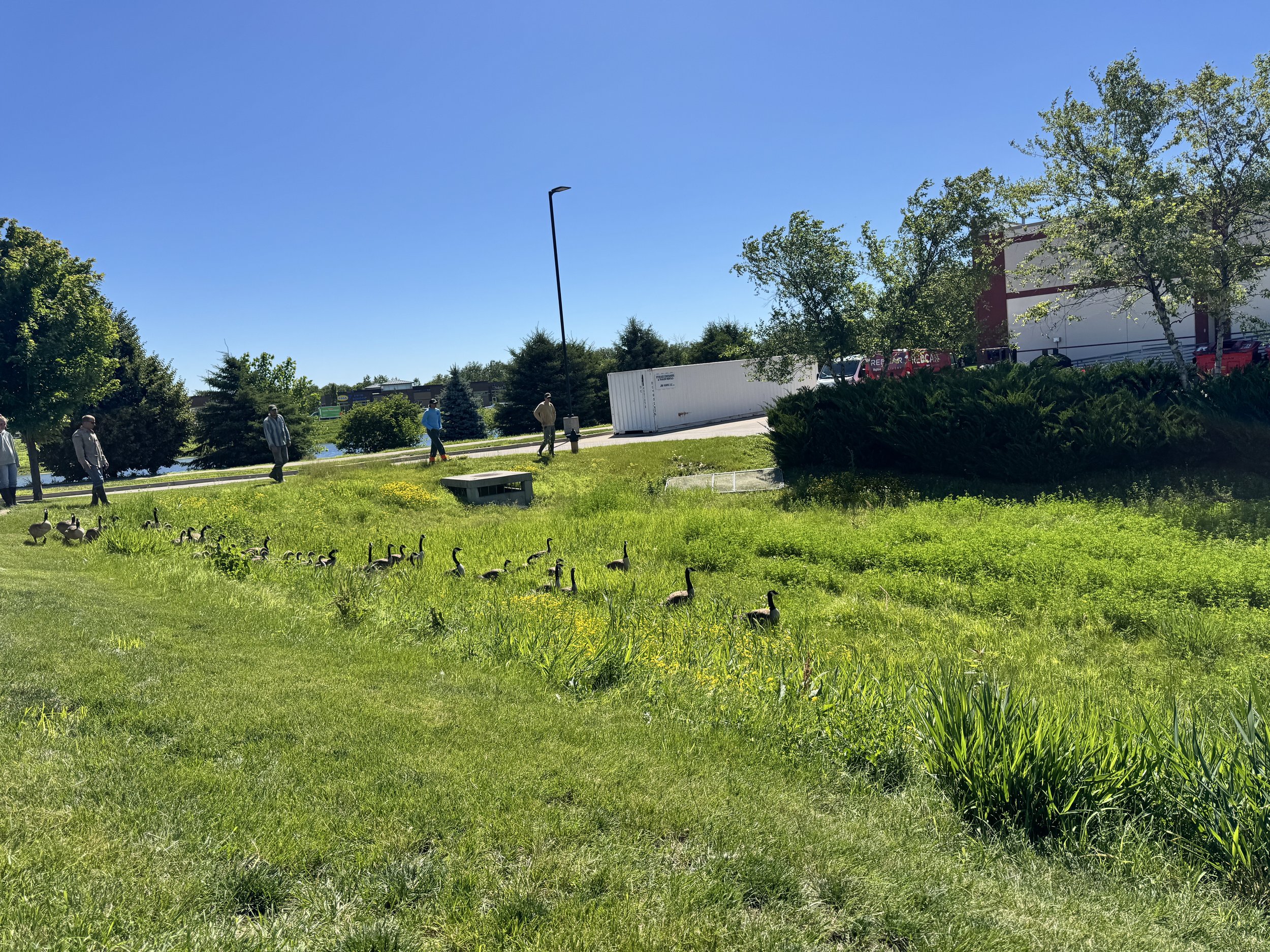
a parade of geese headed to the capture site
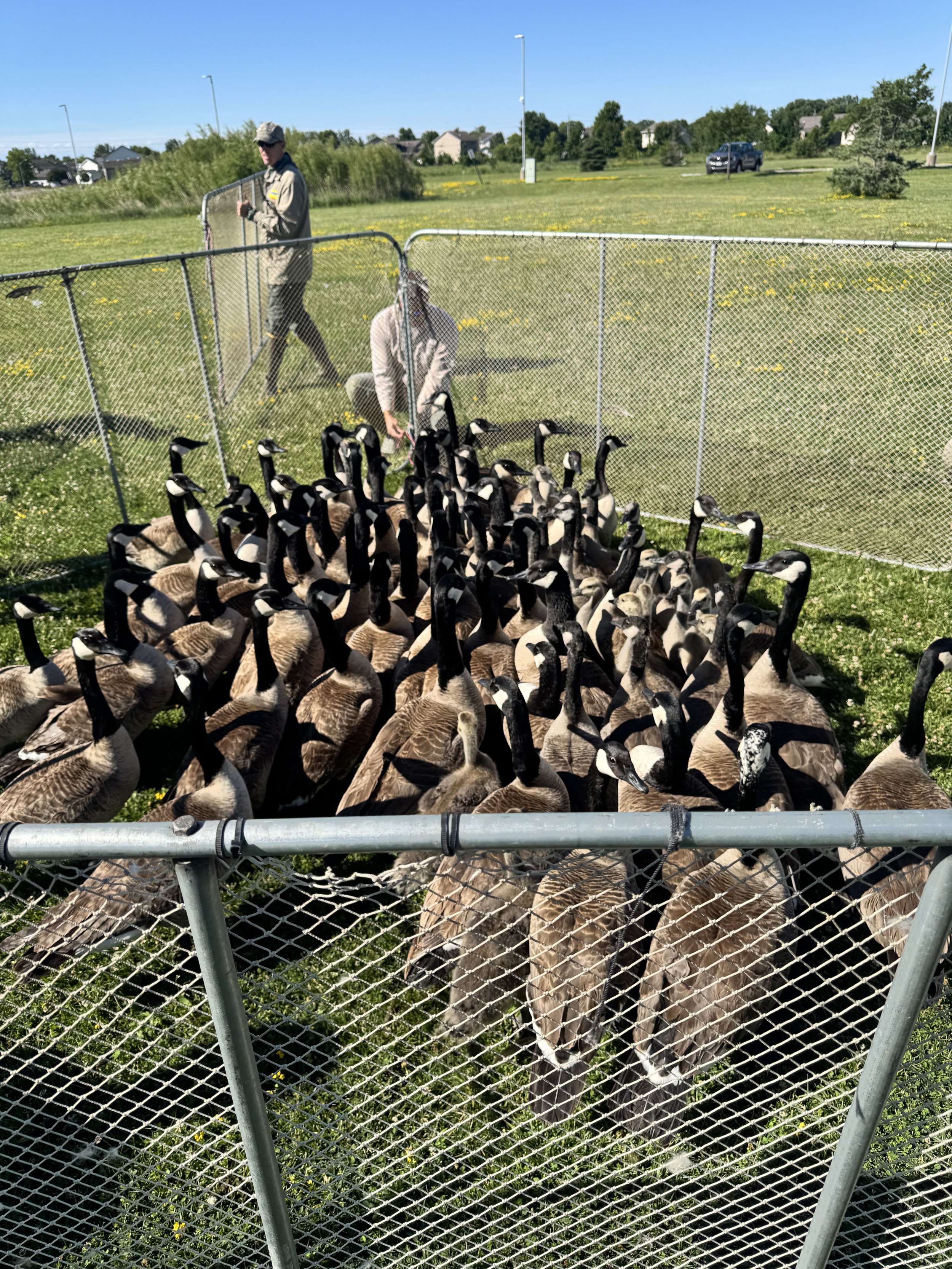
Temporary holding pen
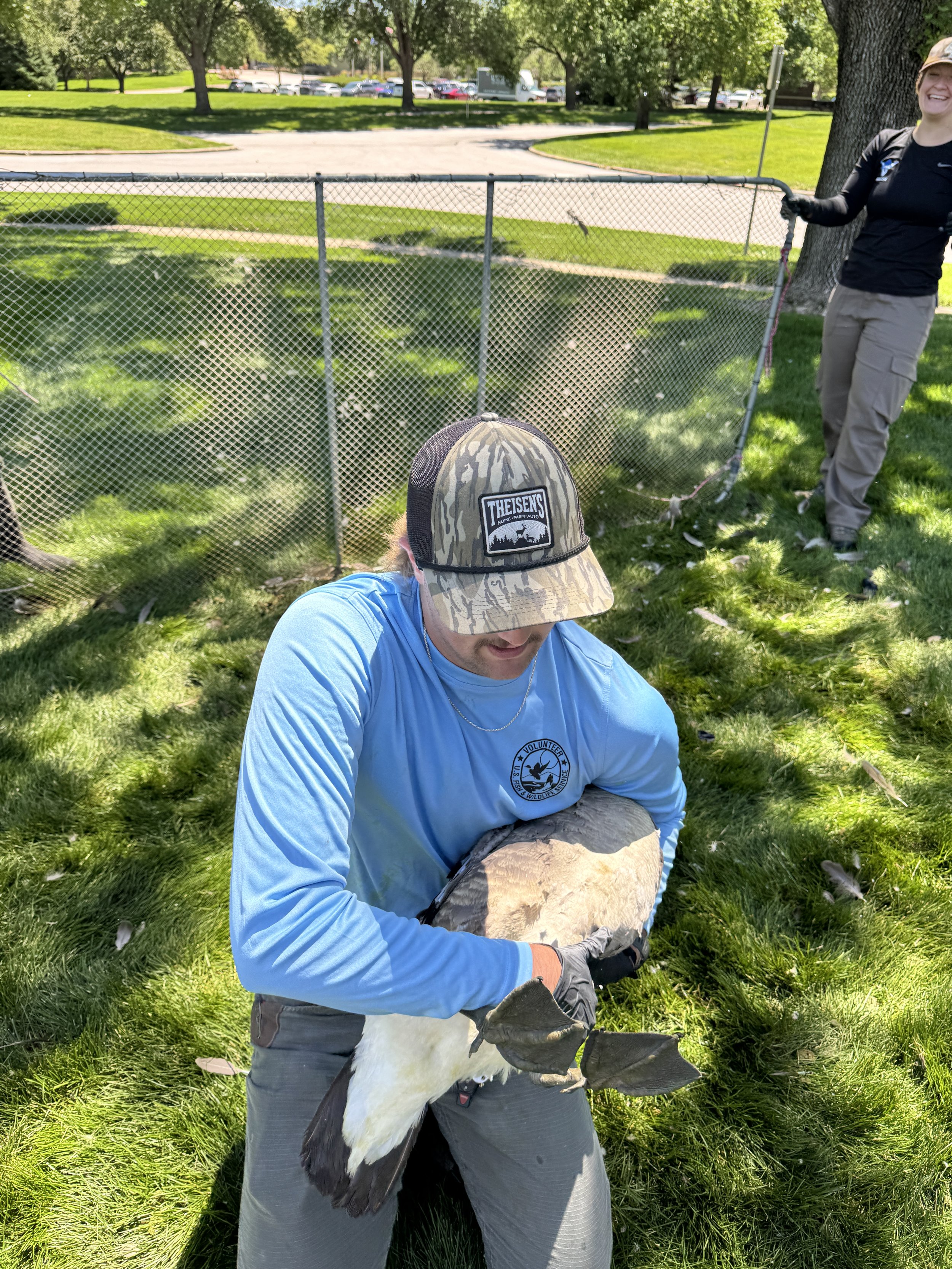
Mac holding a goose for data collection
Goose Banding
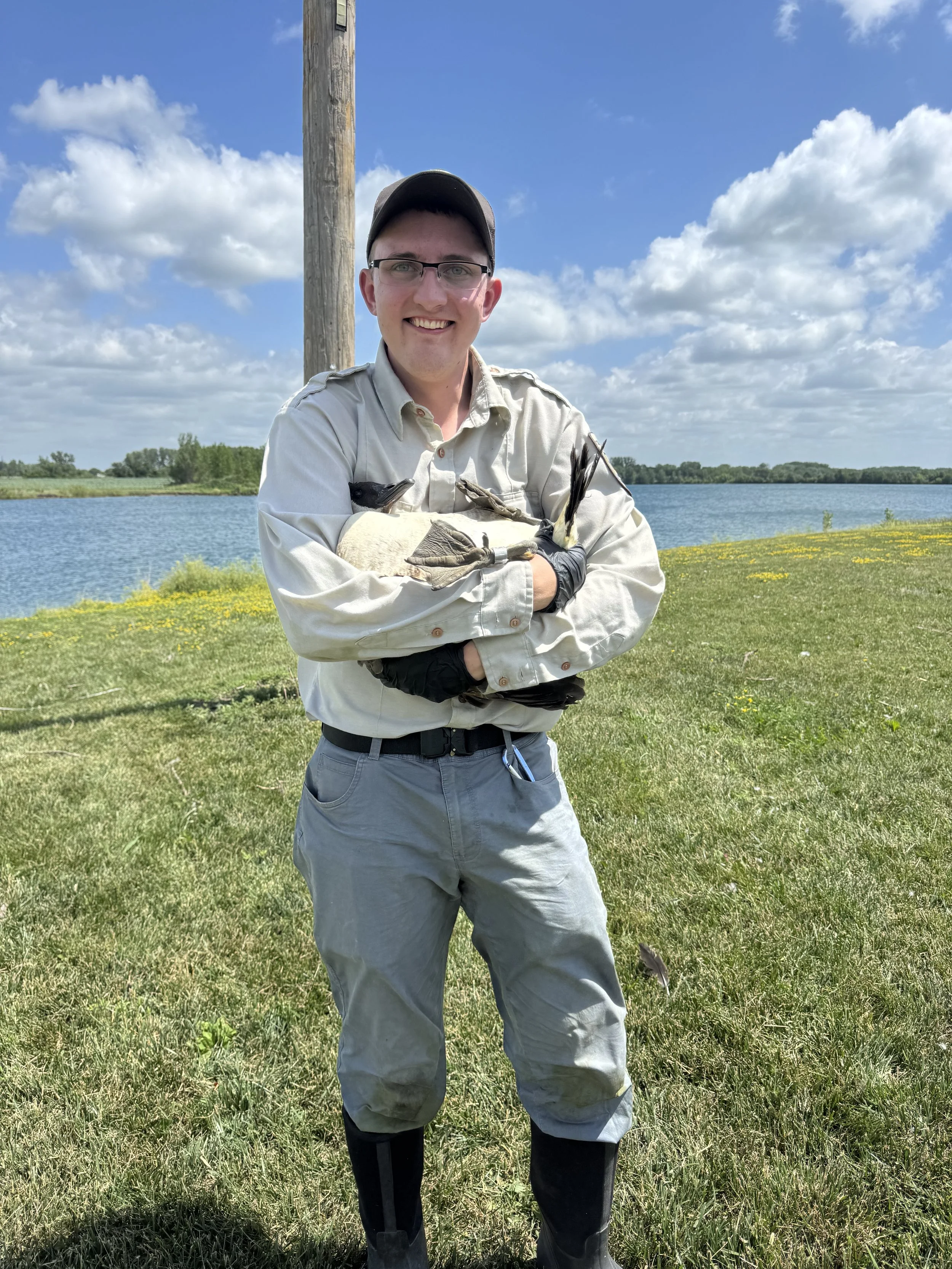
Since the late 1970s the Iowa Department of Natural Resources (DNR) has banded geese annually in late June/early July to monitor survival and recovery rates, reproductive success, and migration patterns of Canada geese. The data collected is used for population management. Our interns and seasonal staff are offered the opportunity to participate in the project to add this experience to their resumes. The banding occurs across the state with 3 different locations in the Des Moines area. The banding done during the birds' flightless period - after birds have nested and raised young. The timing makes them much easier to manage. Small groups of geese are rounded up and surrounded by gates that make a temporary containment. Once contained, DNR staff and volunteers collect demographic data from each bird (age, sex, nesting status, and general health), then place a metal band on their leg and release them. On the day Mac and Hunter were helping, it took about 15 participants approximately 6 hours to process about 300 birds. They reported that it was messy, but fun and interesting.
7/17/2026
By Tenlea Turner
2026 Summer Intern
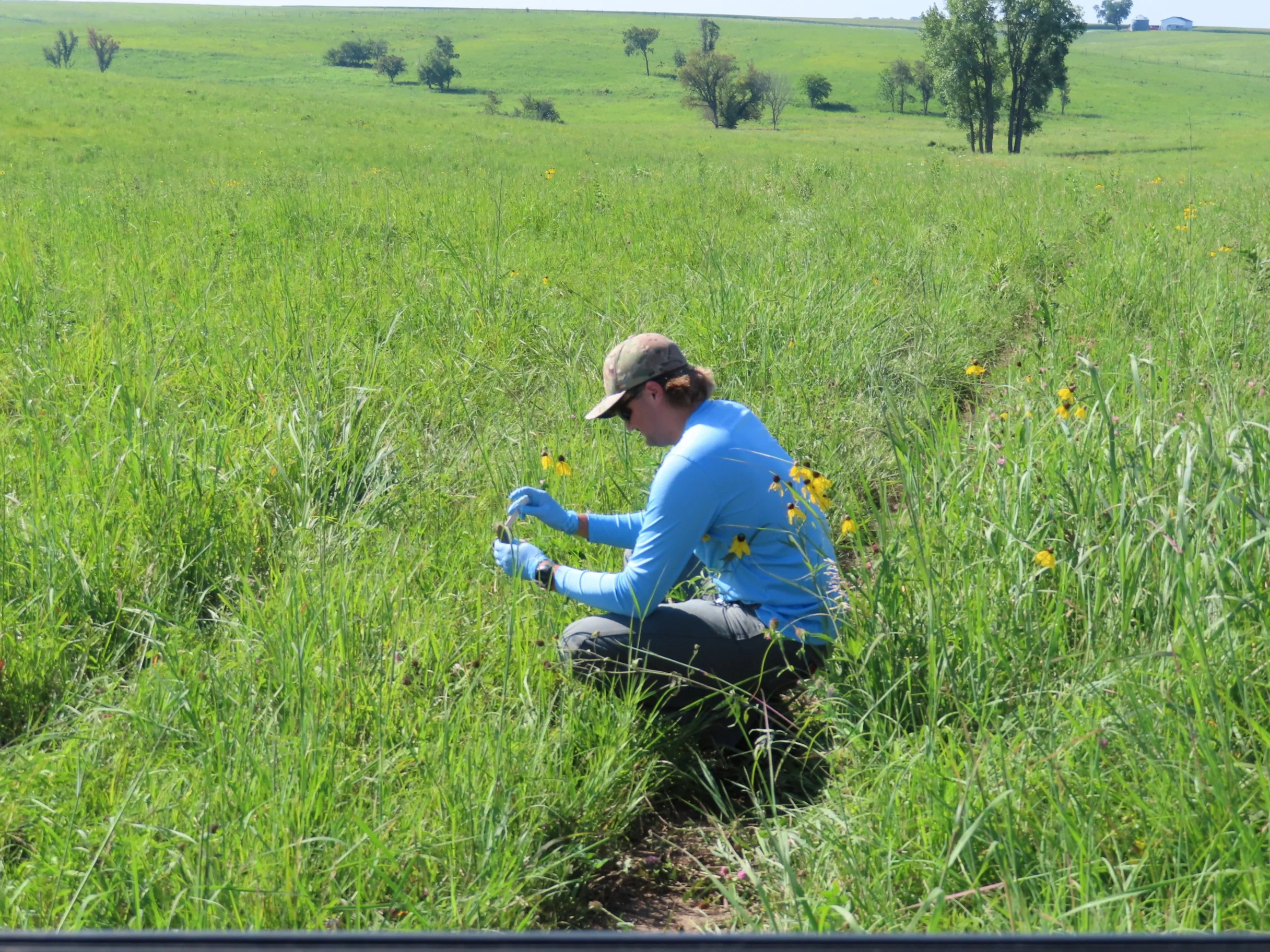
Mac is collecting in a field of flowers.
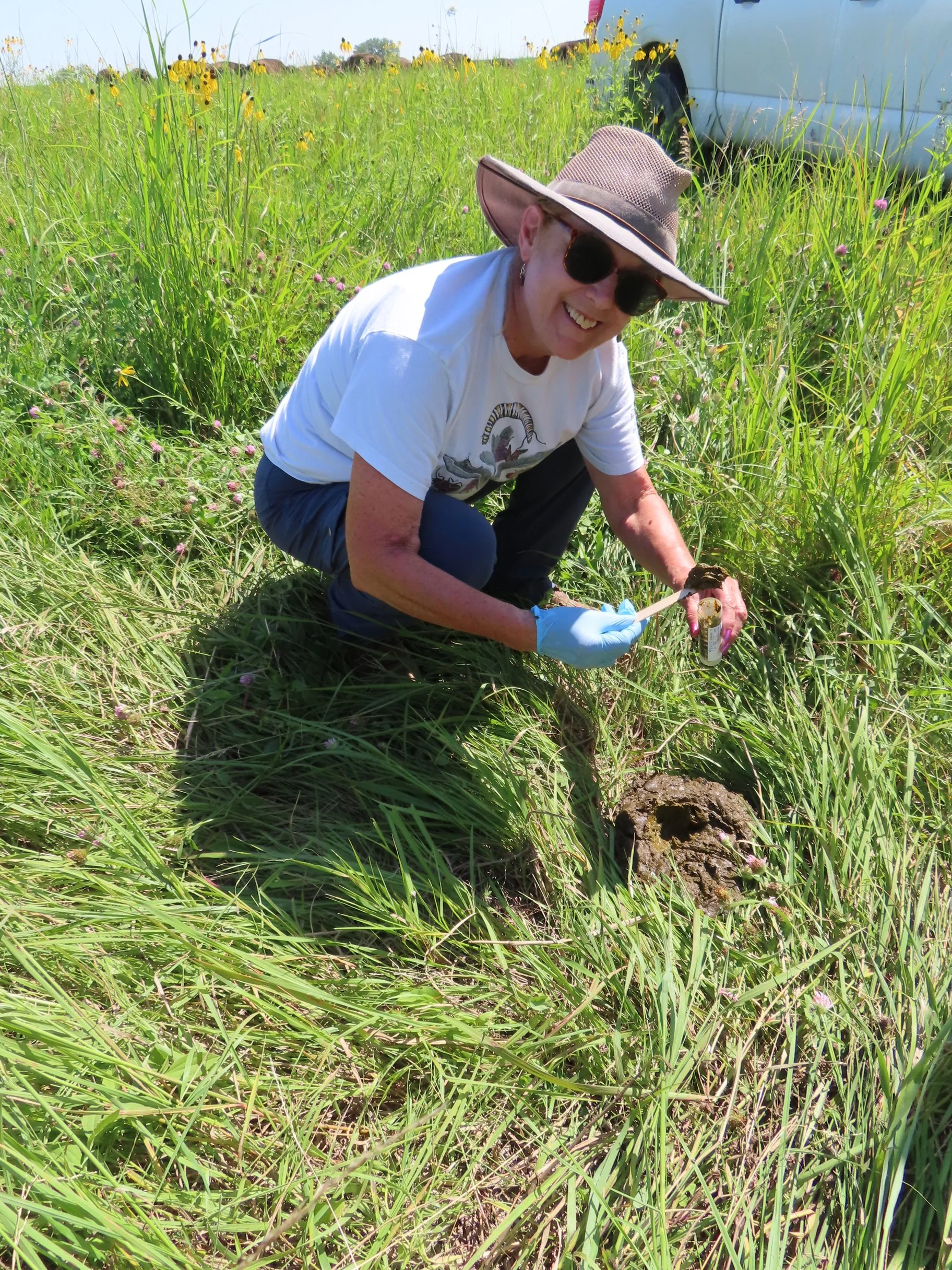
Tenlea is carefully filling the vial
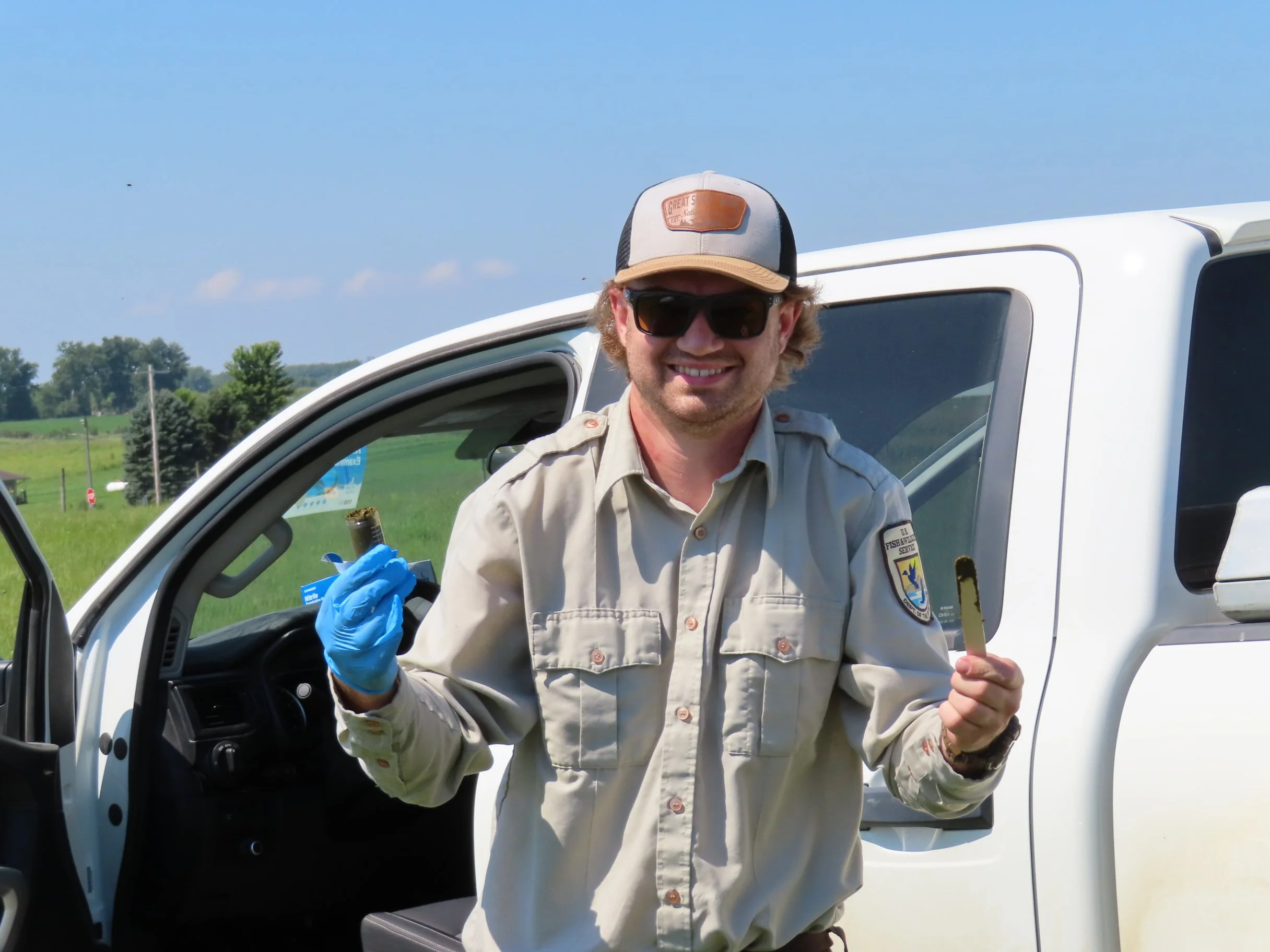
Hunter is very proud of his
sample
Bison Herd Health Assessment
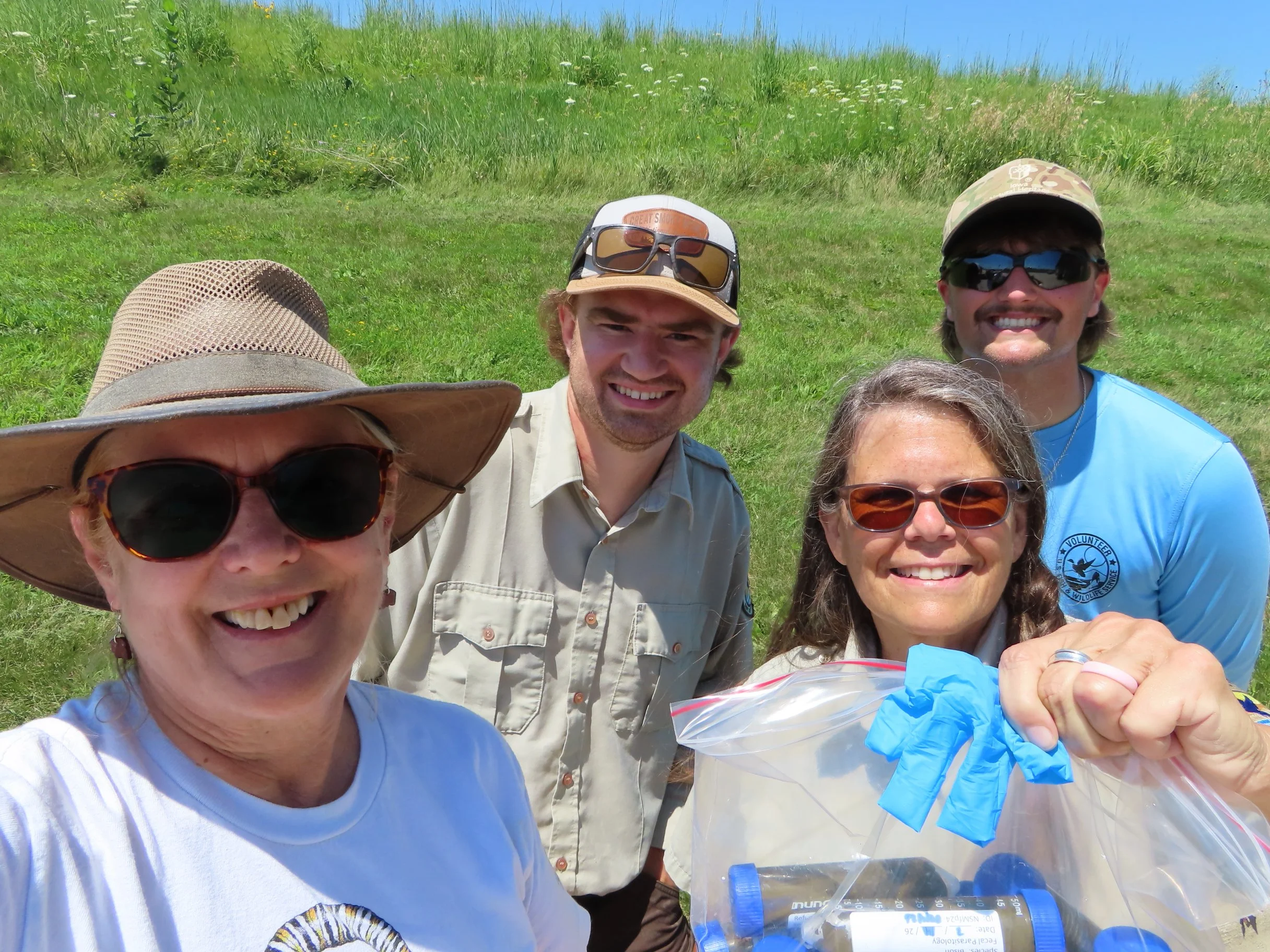
The Fecal Finder Team!
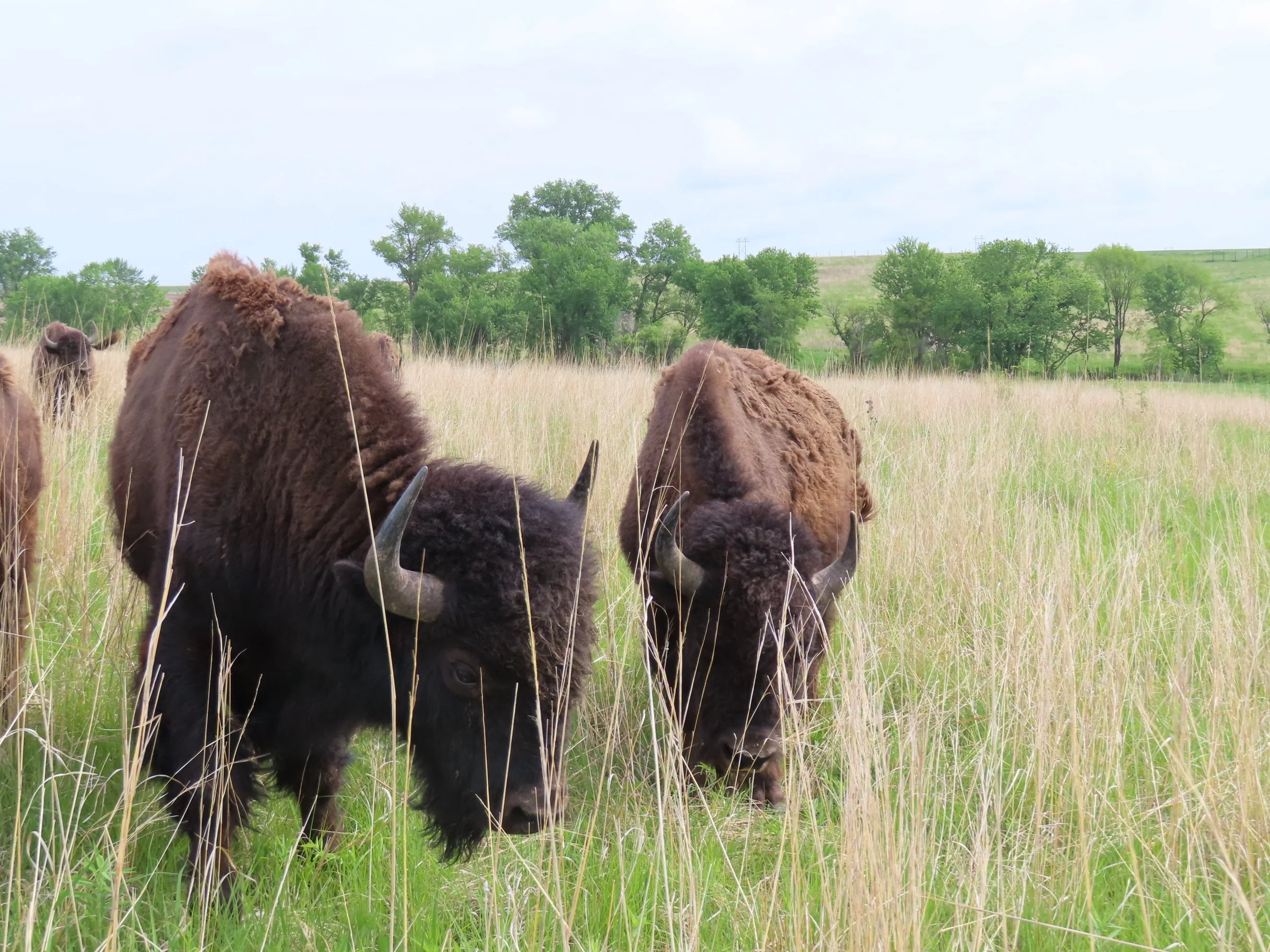
Hello all! This week we're going to cover the “crappy” side of intern duties. Bear with me as I provide some background. As part of the Department of the Interior's (DOI) Bison Conservation Initiative (BCI) and Bison Working Group (BWG), Neal Smith NWR works in collaboration with other government agencies, Tribal Nations, and non-governmental organizations to ensure the conservation and restoration of wild American bison. The goal of BCI is to conserve bison as wildlife using principles and practices that maintain the wild character of bison, minimize artificial selection, and allow forces of natural selection to operate - while promoting herd health and managing diseases that may impact bison conservation efforts.
As part of that program, we conduct bison health surveys on a regular basis to assess the overall condition of the herd. We look at body condition of the animals, physical ability, and age of the herd, then report any irregularities observed. Our herd is in very good health overall. Now to the crappy part. Each year in mid-July we collect fecal samples from the herd as part of that health assessment. The goal is to collect up to 30 samples of fresh fecal matter, from as many different bison in the herd as possible. We are part of an elite group of people who can say they have followed a herd of bison around waiting for them to poop so we can get the freshest sample possible. We follow them in our vehicles, at a distance to avoid any stress on the animals. We note the position of the "deposit" as near as possible and patiently wait for them to move along. When it is safe to exit the vehicle, we locate said deposit, scoop up the sample with a tongue depressor stick and carefully fill a vial about 75% full with the sample material. It is important to avoid any contaminated samples. For instance, samples that have been stepped on by a person or animal, run over by our vehicle, or by touching the ground while scooping. We also avoid those that are too old (a crust beginning to form over the top). Each vial is labeled with date and location (Neal Smith NWR) of sample collection. Those samples are then carefully wrapped, packed in ice, and sent to a lab in Texas where they are tested for parasites and bacteria that may be harmful to our herd, or may spread if an animal is moved to another location. It may sound crappy, but we're happy to be a part of such valuable research.
Thank you to the Friends for making this experience a possibility
7/21/2026
By Mac Payne
2026 Summer Intern
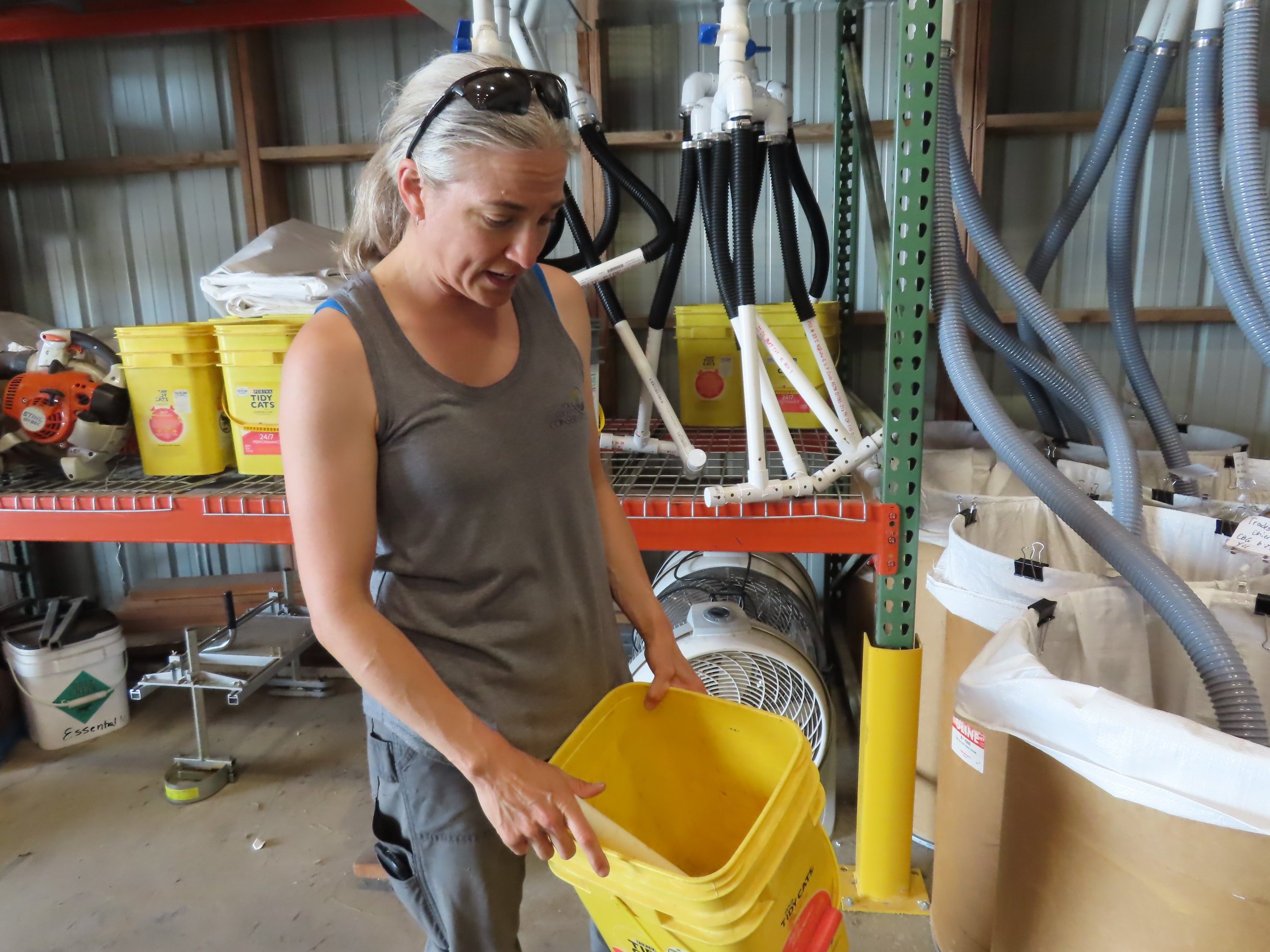
Lael Neal at Chichaqua Bottoms Greenbelt showing seed cleaning equipment.
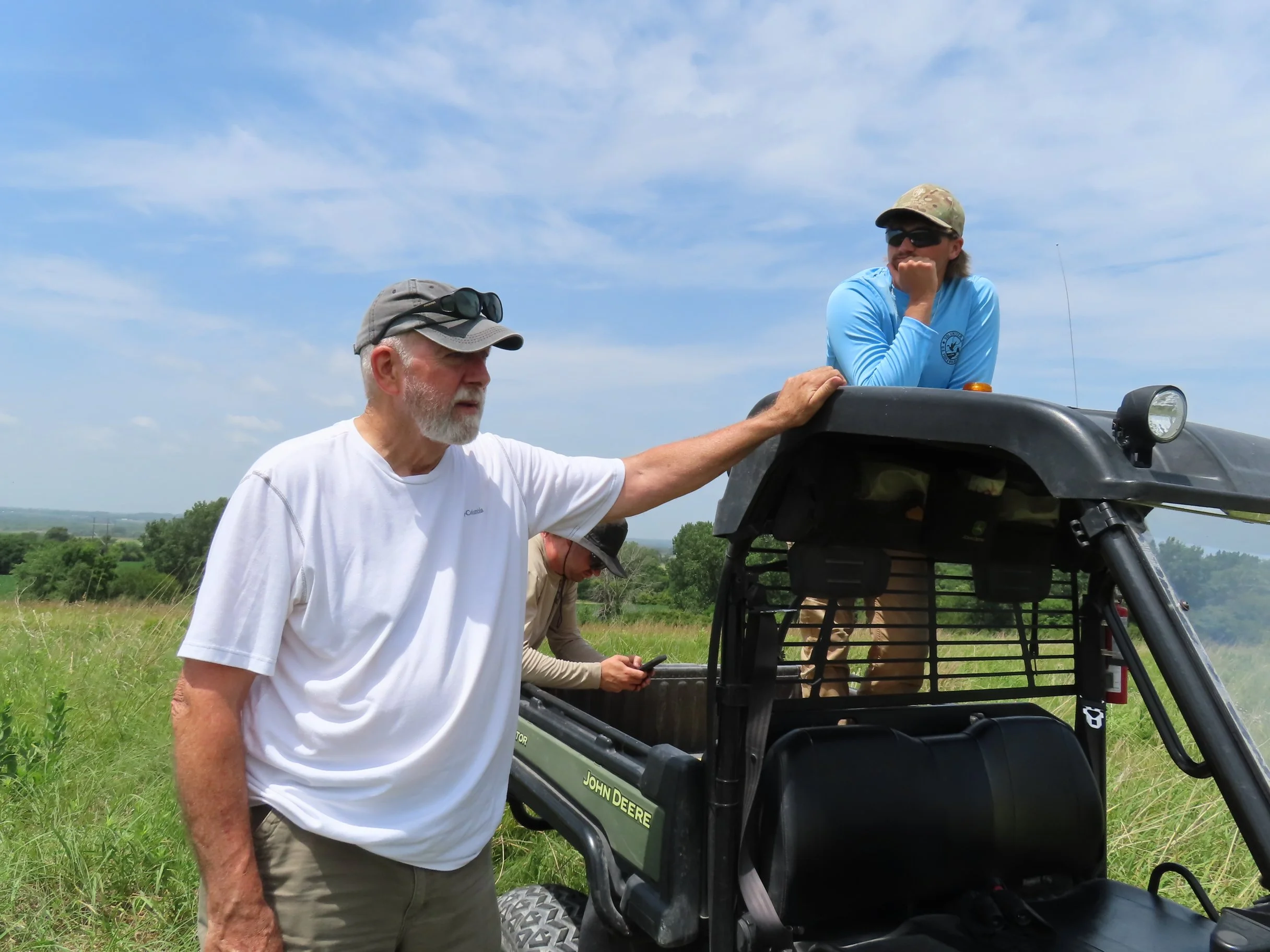
Loren Lown, Chichaqua Bottoms Greenbelt on a tour with Mac
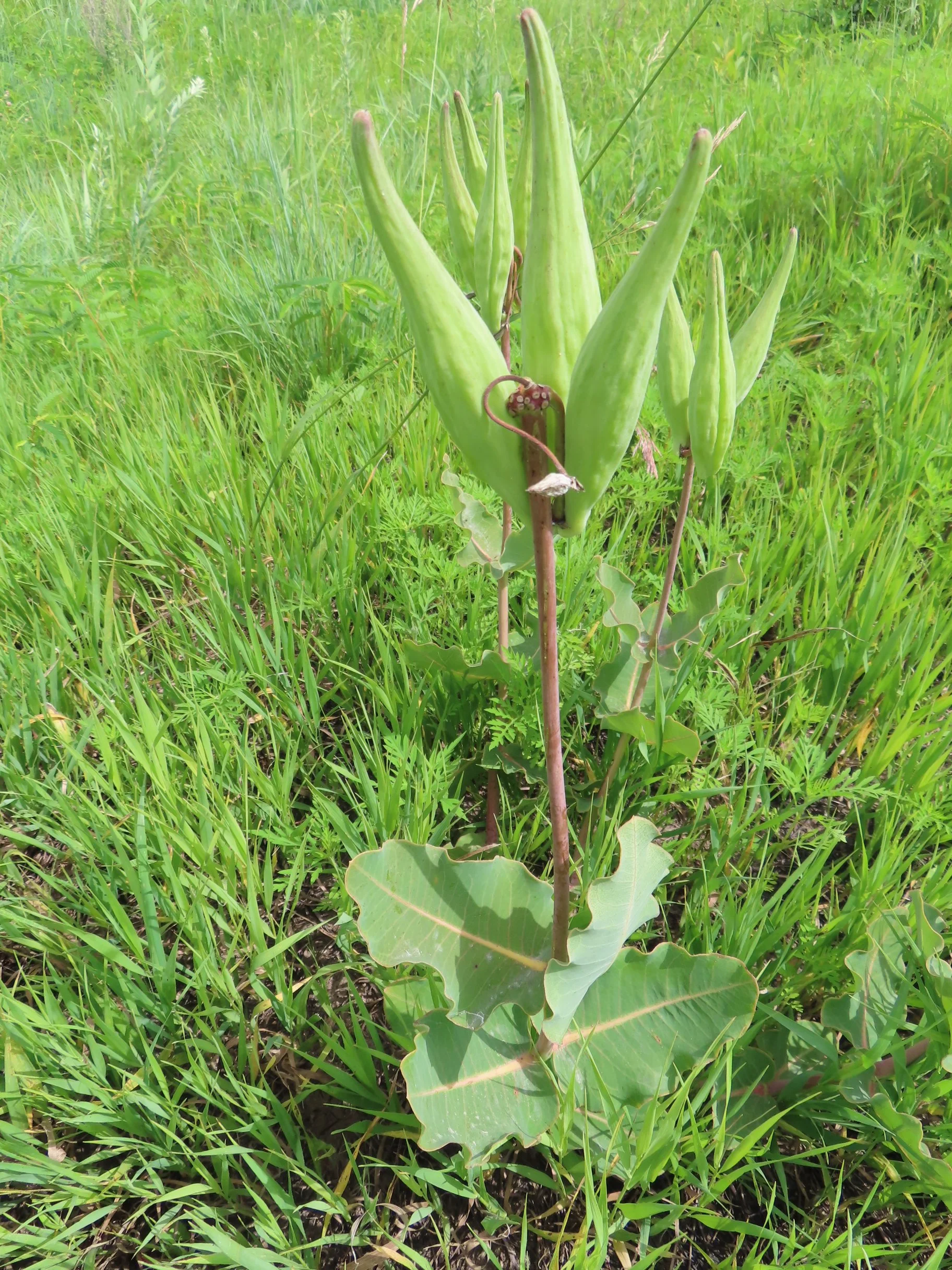
Sand Milkweed at Chichaqua Bottoms Greenbelt
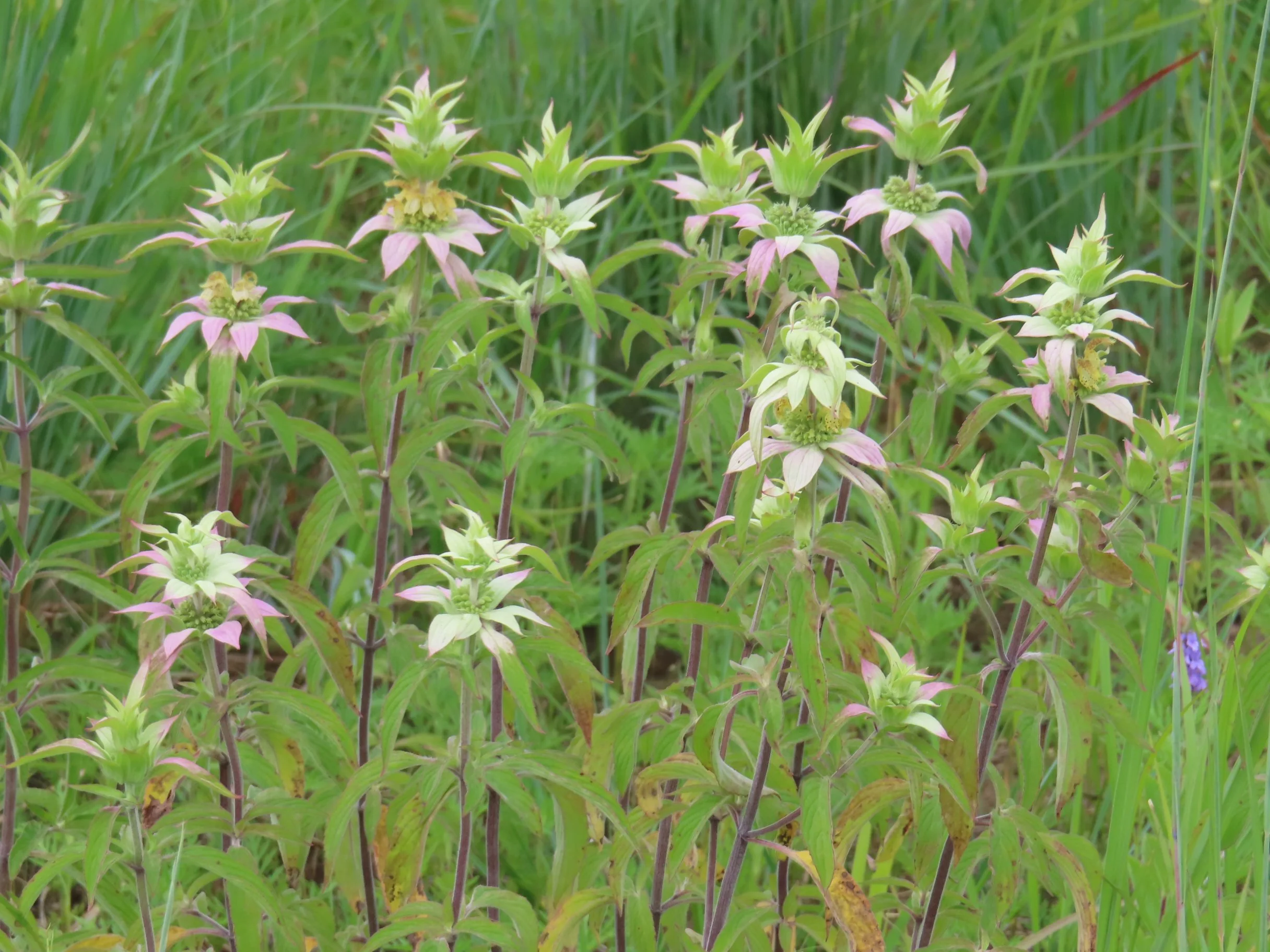
Spotted Beebalm at Chichaqua Bottoms Greenbelt
On July 1st we took a trip to meet with Loren Lown and Lael Neal at the Polk County Conservation Board headquarters, at Chichaqua Bottoms Greenbelt. Lael gave us a tour of the building, showcasing their new, inventive approach to seed drying. Large fans blow strong air through about 20 PVC pipes that are within large containers filled with plant material; holes are drilled on the “foot” of the piping (seen in the background of Lael’s picture) so air is directed up/adjacent to facilitate drying. Very cool to see new, more accessible innovations in the seed cleaning process!
After our walk around the building, Loren took us for a ride through the various units of sand prairie, wetlands, and woodlands. While driving, we stopped to look at some Spotted Beebalm (Monarda punctata) and Sand Milkweed (Asclepias amplexicaulis). After hearing more about these species, I realized how special Chichaqua is for its rare and complex sand prairie. Listening to Loren talk about the origins of Chichaqua was fascinating as well. His experience of purchasing properties, subsequently getting to know the landowners around him, made him knowledgeable about the history of the land and how he could restore the hidden remnant prairies.
I want to thank the Friends group for supporting us and giving us the opportunity to gain from Loren and Lael’s experiences!
6/19/2026
By Tenlea Turner
2026 Summer Intern
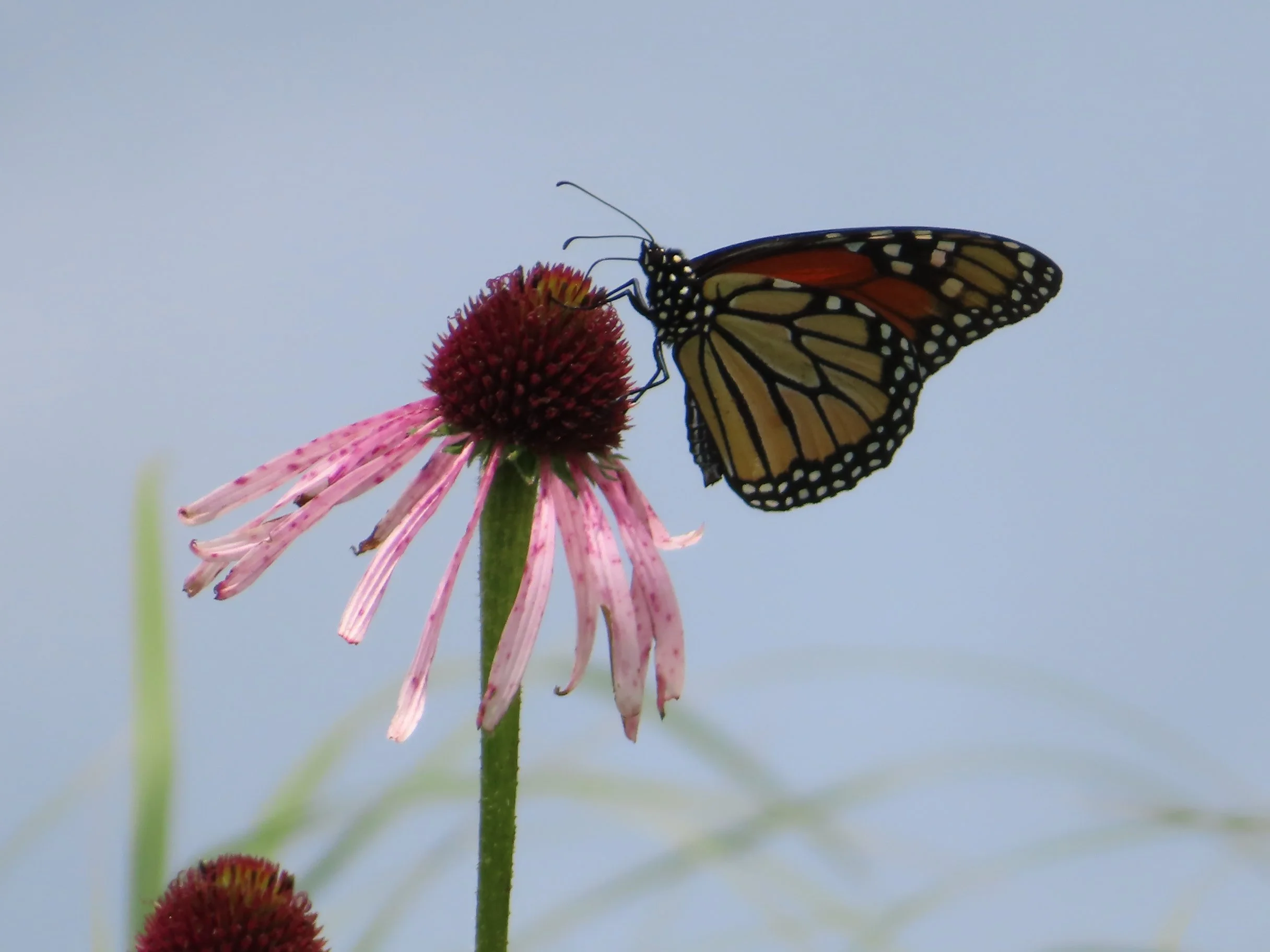
Monarch nectaring on Pale purple coneflower (Echinacea pallida)
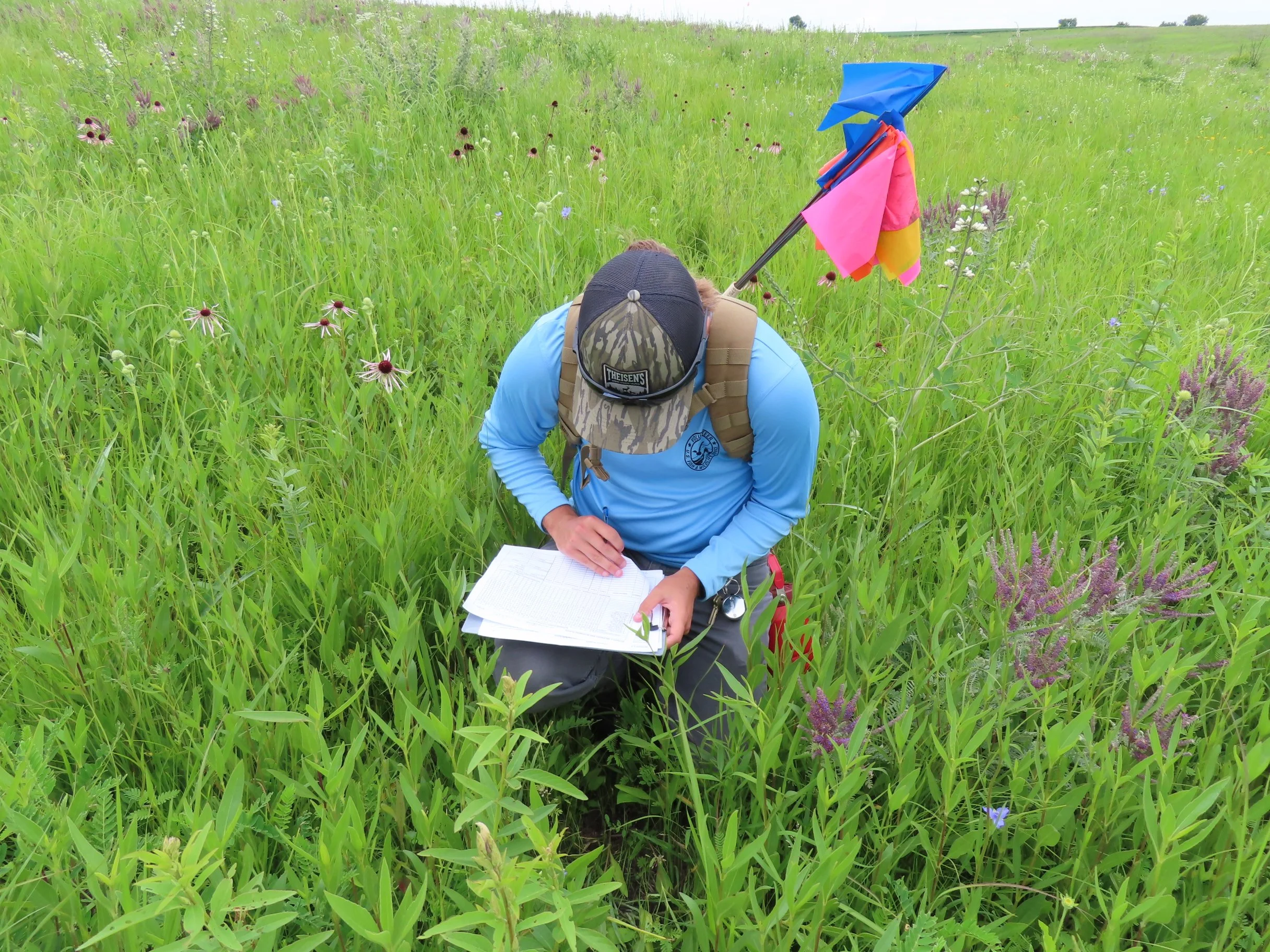
Mac recording vegetation data
Tenlea identifying blooming plant species within the subplot
Mac conducting an adult monarch survey
Monarch Joint Venture Partnering to conserve the monarch butterfly migration
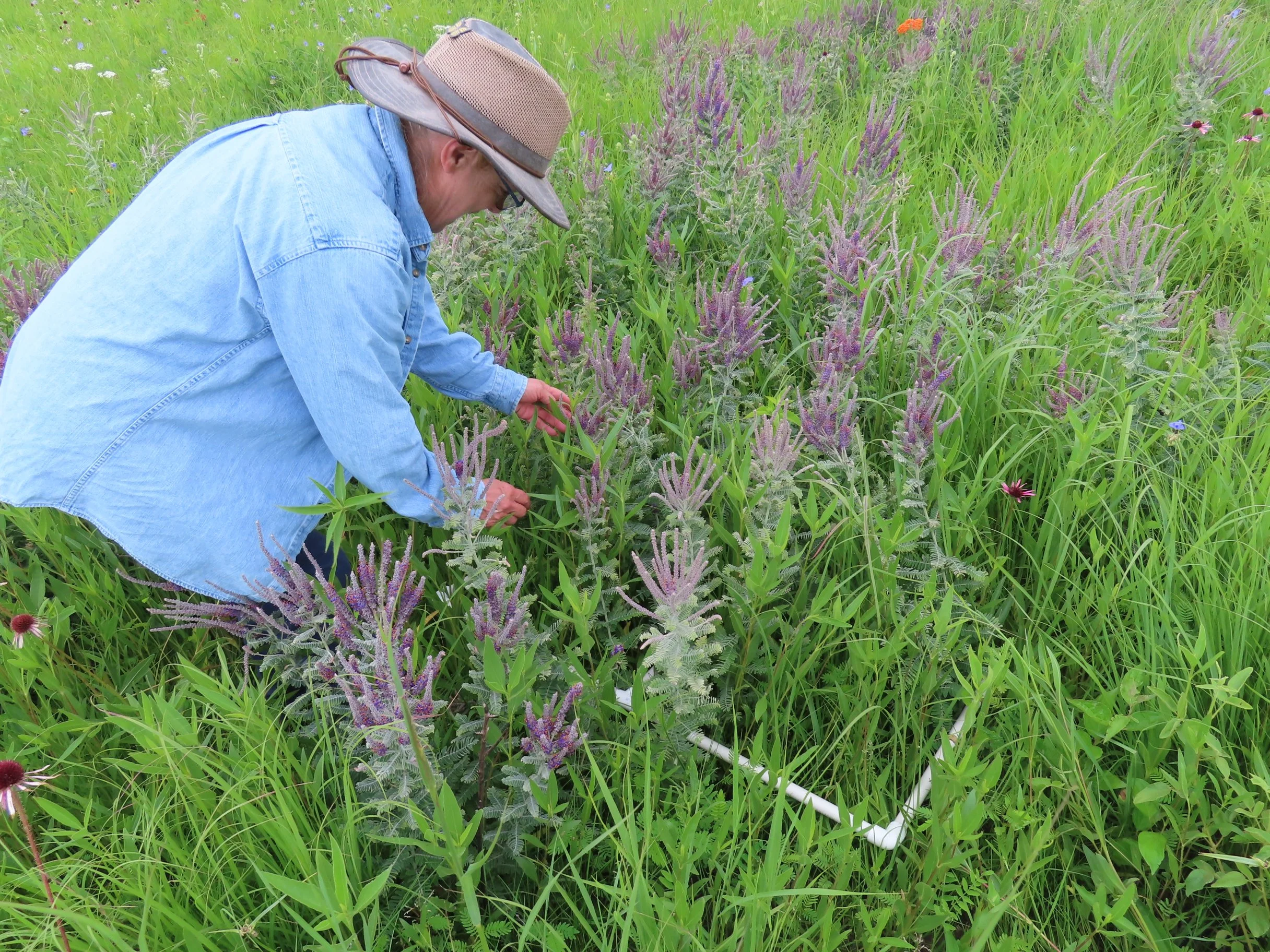
We have been so busy in the field that we haven't even had time to write the report. I'll try to get you up-to-date in the next couple of reports. I'll start with the monarch monitoring activities. We have set up all 3 of the plots and completed the first-round survey at each plot. We have one plot in 3 separate units of the Refuge. Each plot consists of 100 subplots arranged on transects within the plot - each subplot is 1-square meter. We record how many blooming plant species are in each subplot. The second survey records how many milkweed (blooming or not) are in subplots and along the transects, and the milkweed species we find. We also record the number of monarch eggs and larvae found of each of the milkweed plants we have counted. Finally, we walk around the perimeter of the plot, very slowly, to record the number of adult monarchs we observe and their behavior - flying, resting, nectaring, mating, or ovipositing (laying eggs). All of that takes about 2 hours - depending on the number of blooming plants, milkweed, adult, and immature monarchs present. The data is submitted to Monarch Joint Venture's data portal and stored in their database. The data we collect this season will be added to existing data (from 2016-2024) and give us an idea of the changes in available habitat, the abundance of monarchs, and how they utilize that habitat over an extended period.
6/12/2026
By Tenlea Turner
2026 Summer Intern
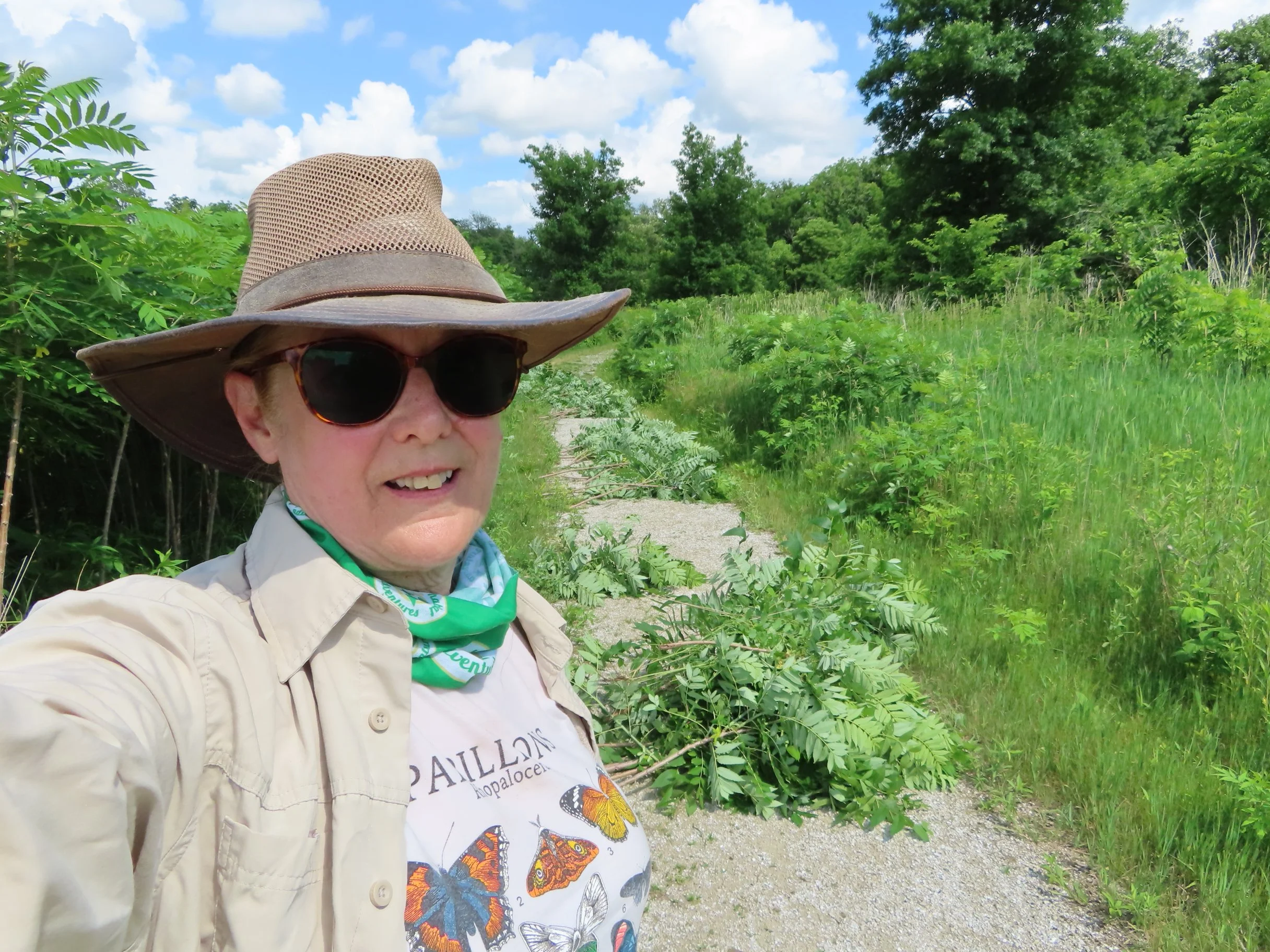
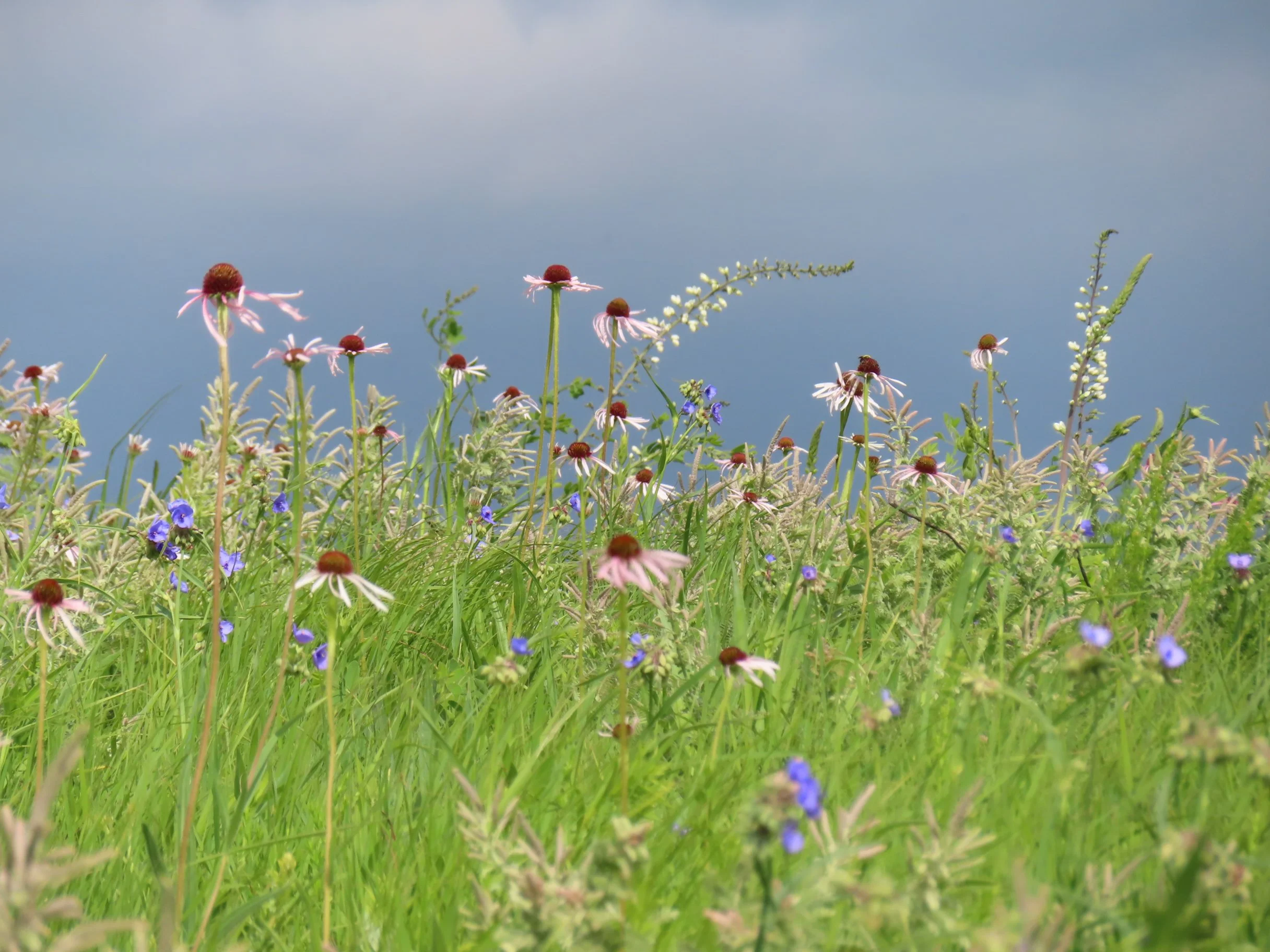
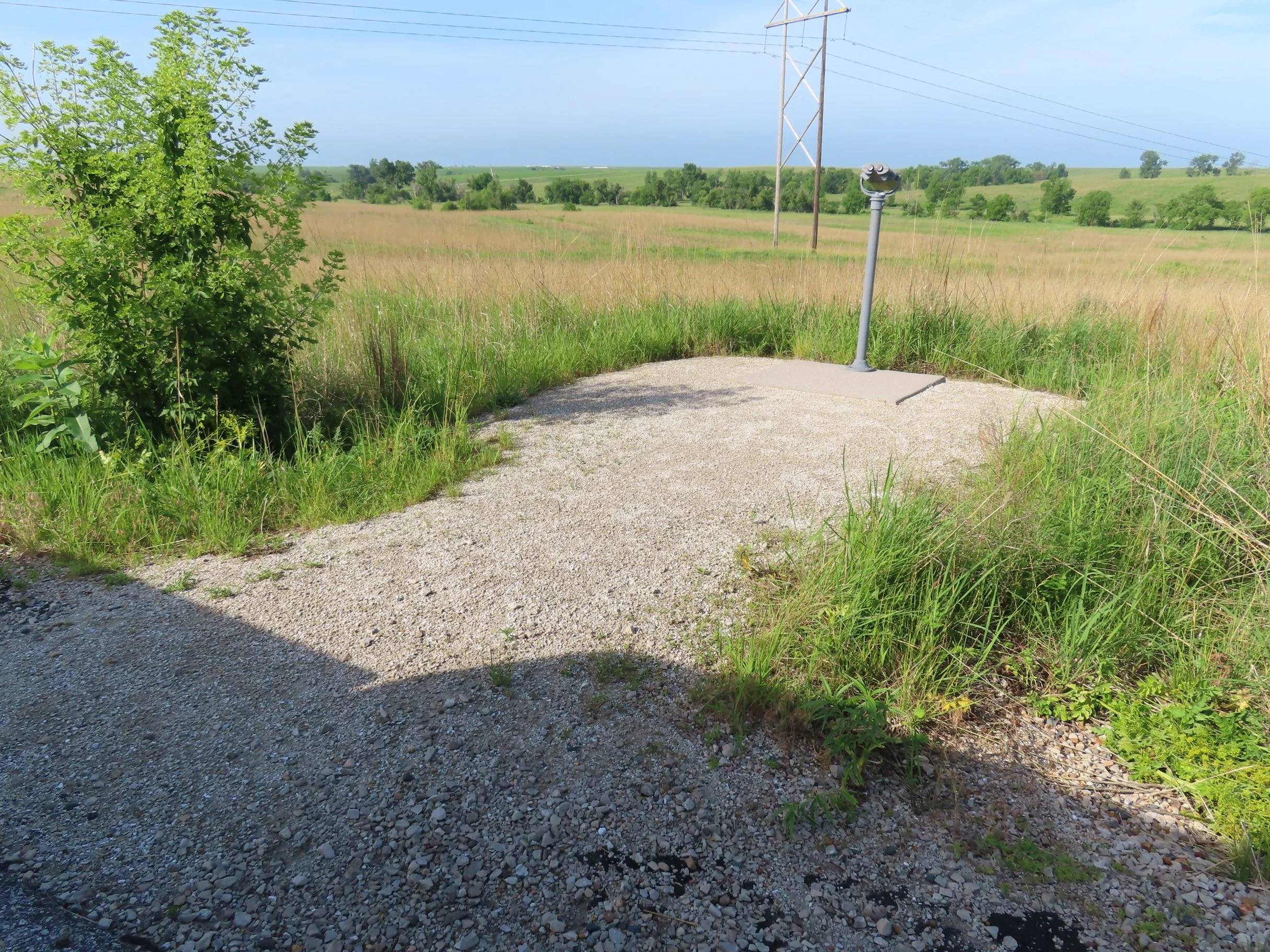
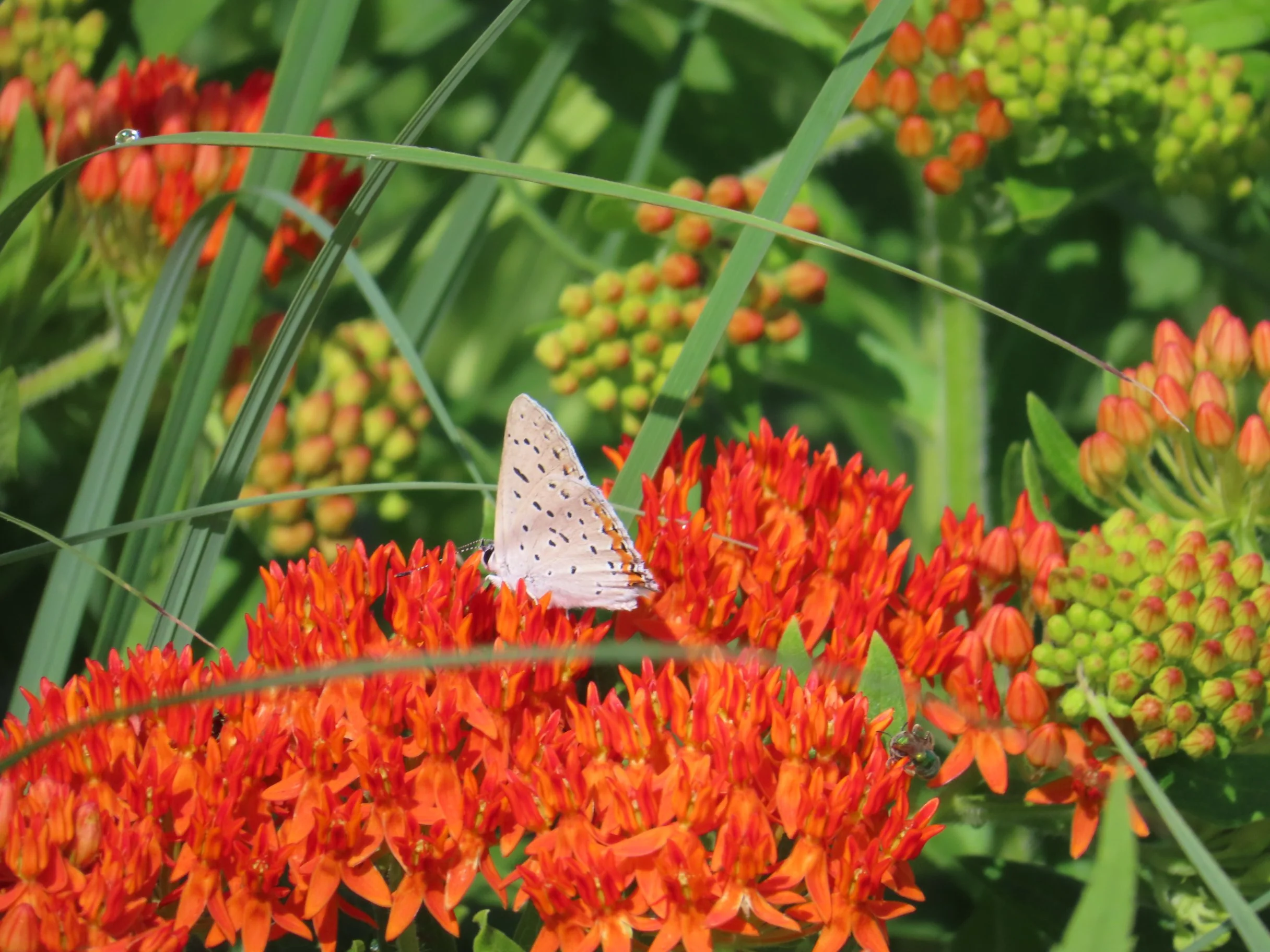
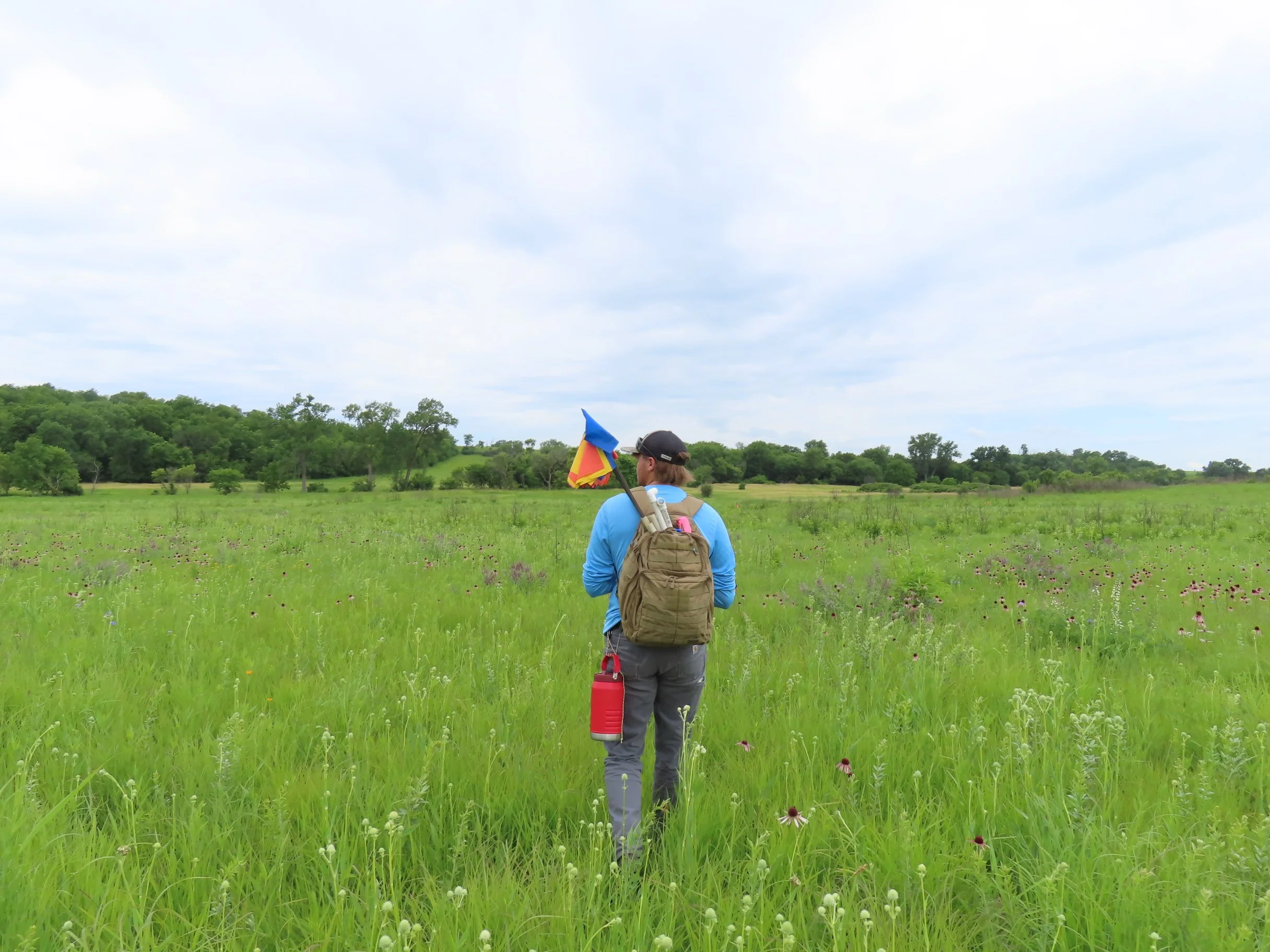
With all the training behind us, we are running full speed ahead with Refuge management duties that abound. This week Hunter and Mac helped Iowa DNR seine for Topeka shiners - a threatened freshwater minnow - in oxbow streams in central Iowa. The sampling provides information on its presence in the state. Meanwhile, Tenlea removed wild parsnip (Pastinaca sativa) from the viewing area on the entry road and Tallgrass Trail. She also cleared vegetation that hangs down onto or reaches out and grabs visitors as they pass by on the Savanna Trail. The sumac on the northern edge of the trail was especially troublesome. We also cleared a tree from the Savanna Trail that was impeding passage. Another activity was to set up the monarch monitoring plot at North Middle unit to start this season's monitoring activity. It will add to the data that has been collected since 2016. It was a full week - something we can look forward to in the foreseeable future.
6/5/2026
By Tenlea Turner
2026 Summer Intern
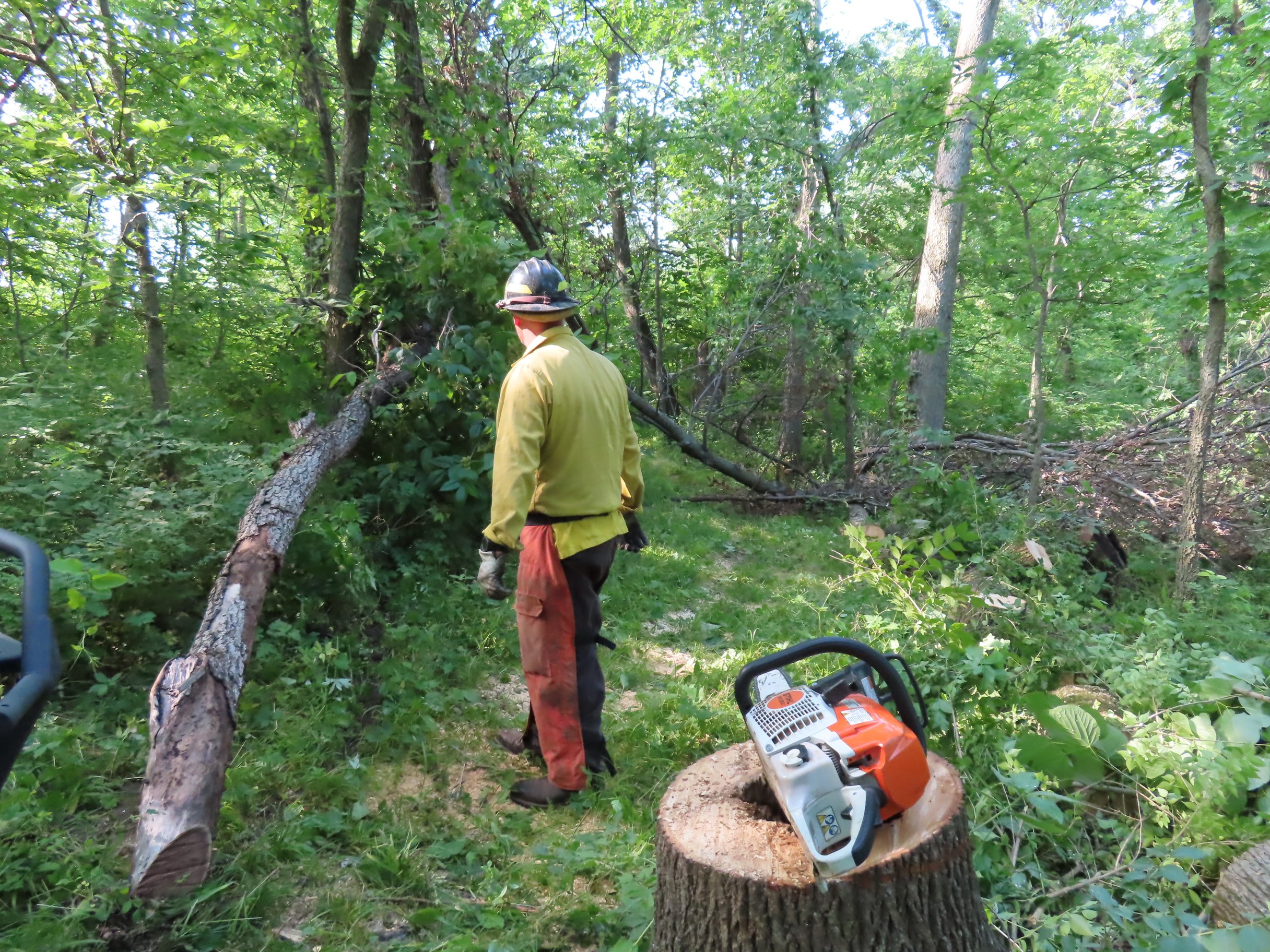
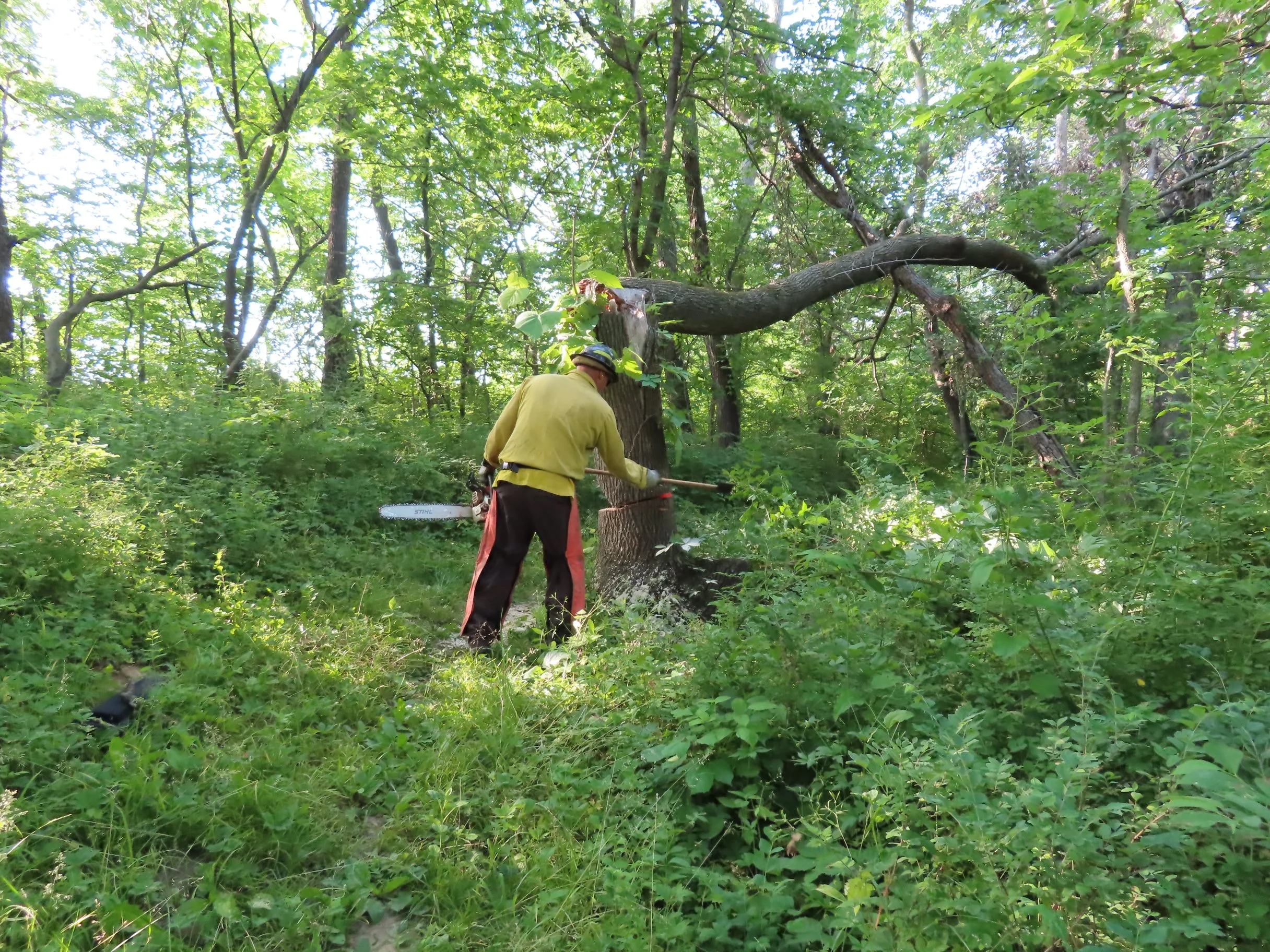
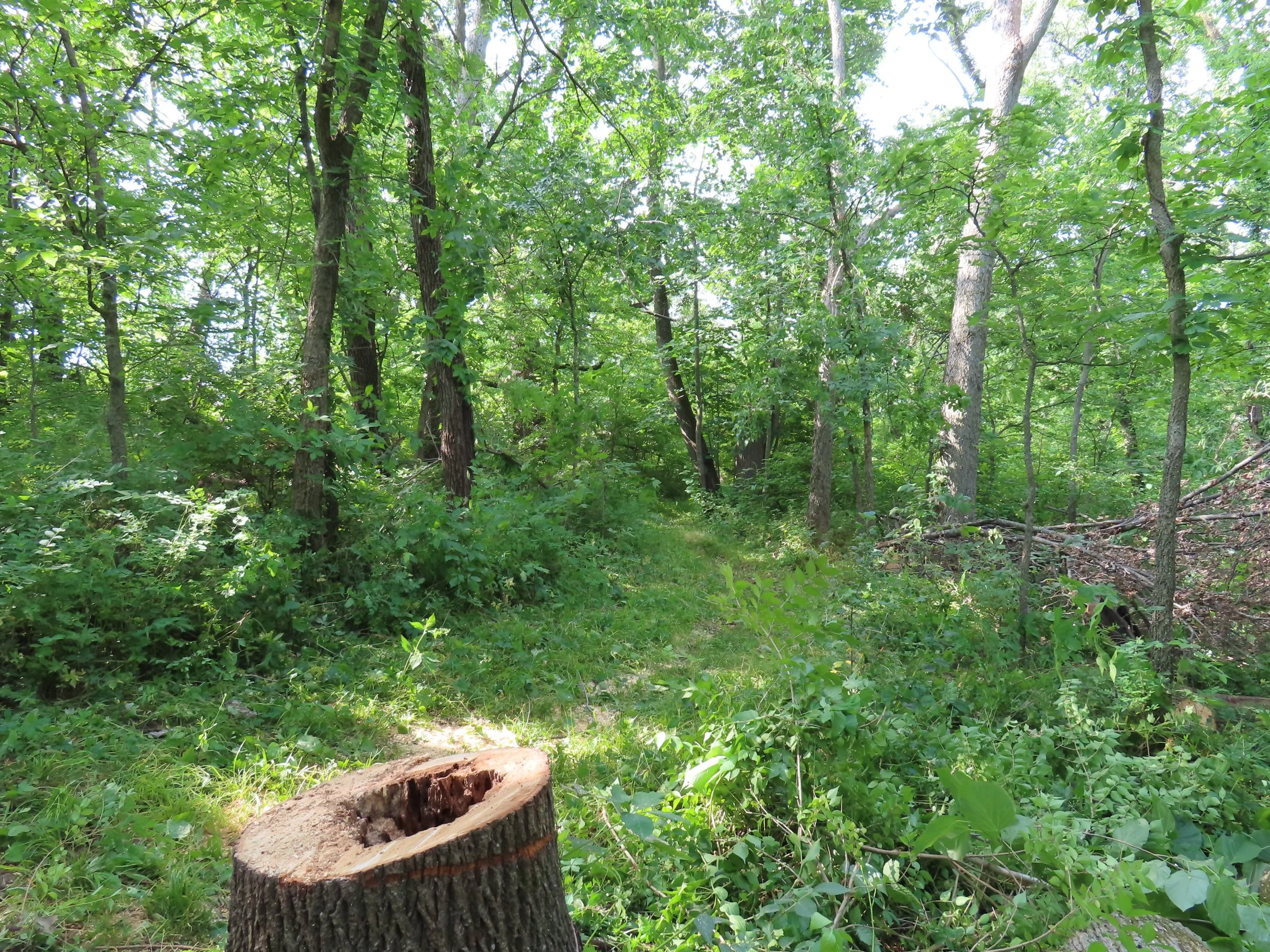
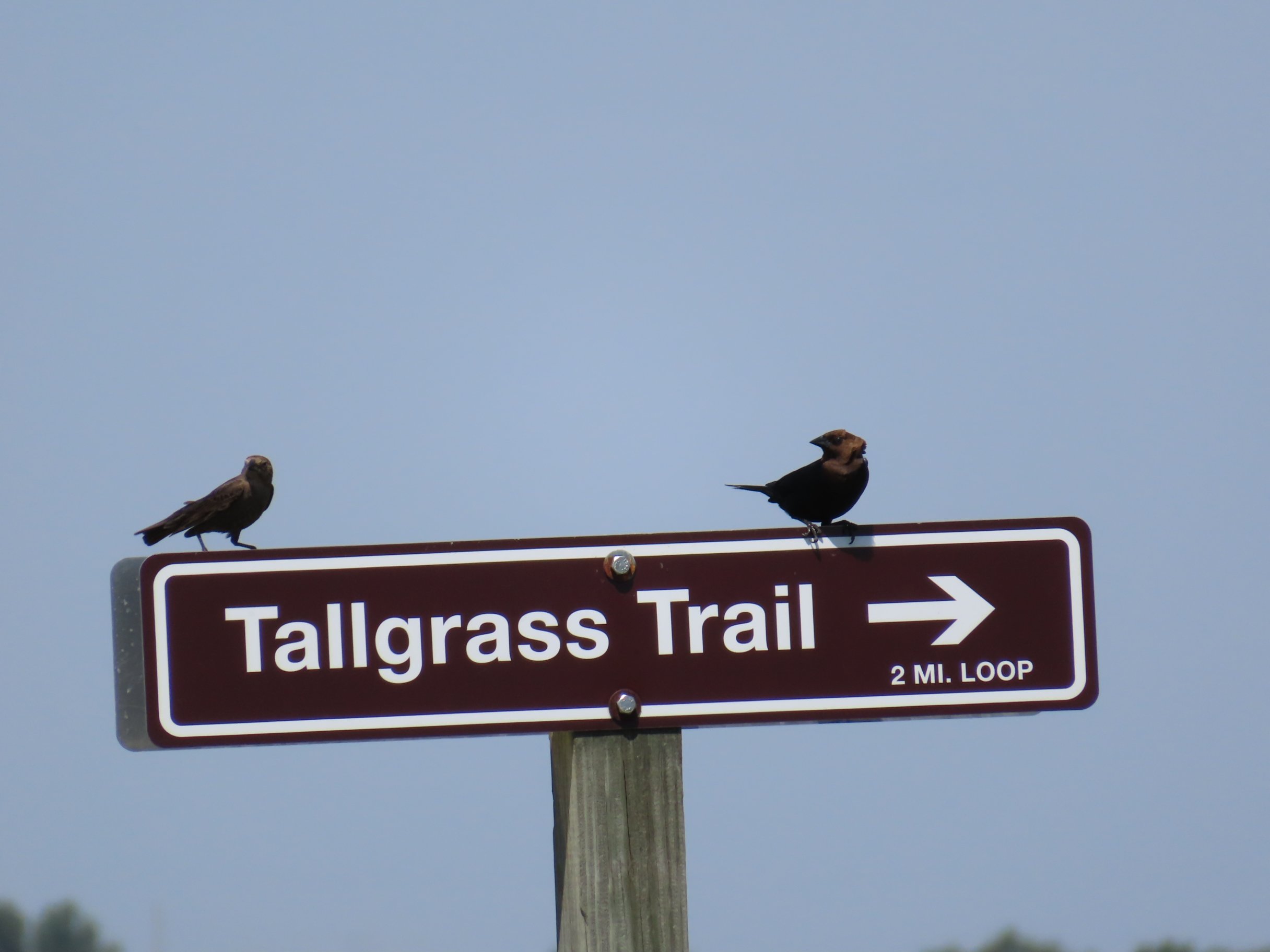
We had a pretty busy week. We have all finished both pesticide applicator certification tests and will be ready to start spot spraying for the invasive species Sericea lespedeza (Lespedeza cuneata) soon. It is great to have the study/certification testing over with. Now on to bigger prairie management duties. One of our main objectives this week was to remove a downed tree that was dangerously close to the trail at Basswood. Scott did the chainsaw work, and Hunter and I moved the logs off to the side of the trail. We also cleared some of the brush and other dead wood in that area but left plenty of downed material for wildlife habitat. The attached pictures are before and after clearing Basswood Trail, and brown-headed cow birds checking out the Tallgrass Trail. Quite often, you will see them hitching a ride on bisons' backs.
5/28/2026
By Mac Payne
2026 Summer Intern
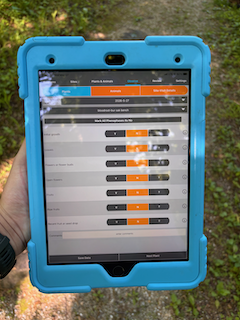
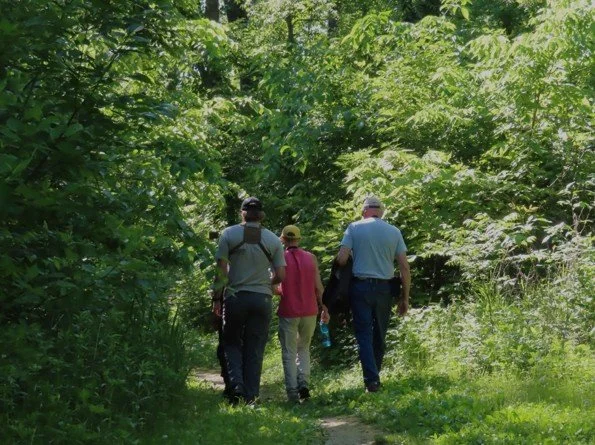
On Wednesday, we got to get outside to accompany Steve and Polly with their Nature’s Notebook project. Nature’s Notebook is a nationwide citizen science program run by the USA National Phenology Network. It serves as a platform for everyday people (like students, gardeners, hikers, and volunteers) to observe and record changes in plants and animals, especially seasonal events (called phenology). All of this data is submitted online and used by scientists to study how climate change and environmental factors are affecting ecosystems over time.
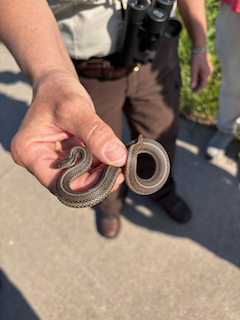
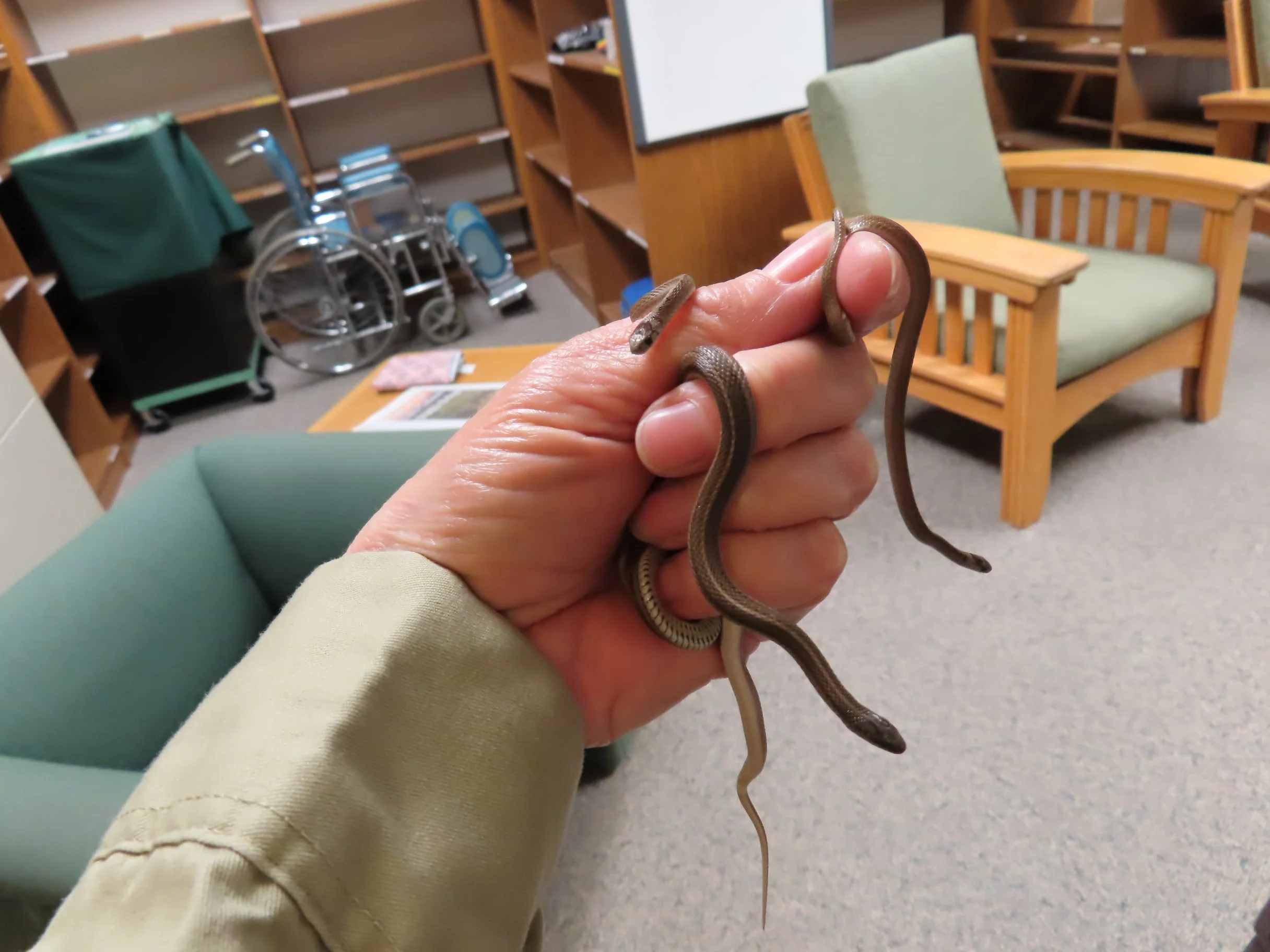
We looked at Butterfly Milkweed, Rough Blazing star, and Prairie Violet’s on the Overlook Trail. Keeping track of characteristics of the plants like initial growth, visible leaves, flowers (and how many), and fruits. We got stopped by a Lined Snake (Tropidoclonion lineatum) on the pavement, so we had to ooh and aah! On the Savanna Trail, we looked at Bloodroot, Bur Oaks, and Leather Flower for similar characteristics.
Overall, I’m happy to get the opportunity to be a small part of projects like this and understanding the importance of citizen science. Get out there and stay curious about the natural world around you!
(Thank you Tenlea for the last picture!)
5/21/2026
By Tenlea Turner
2026 Summer Intern
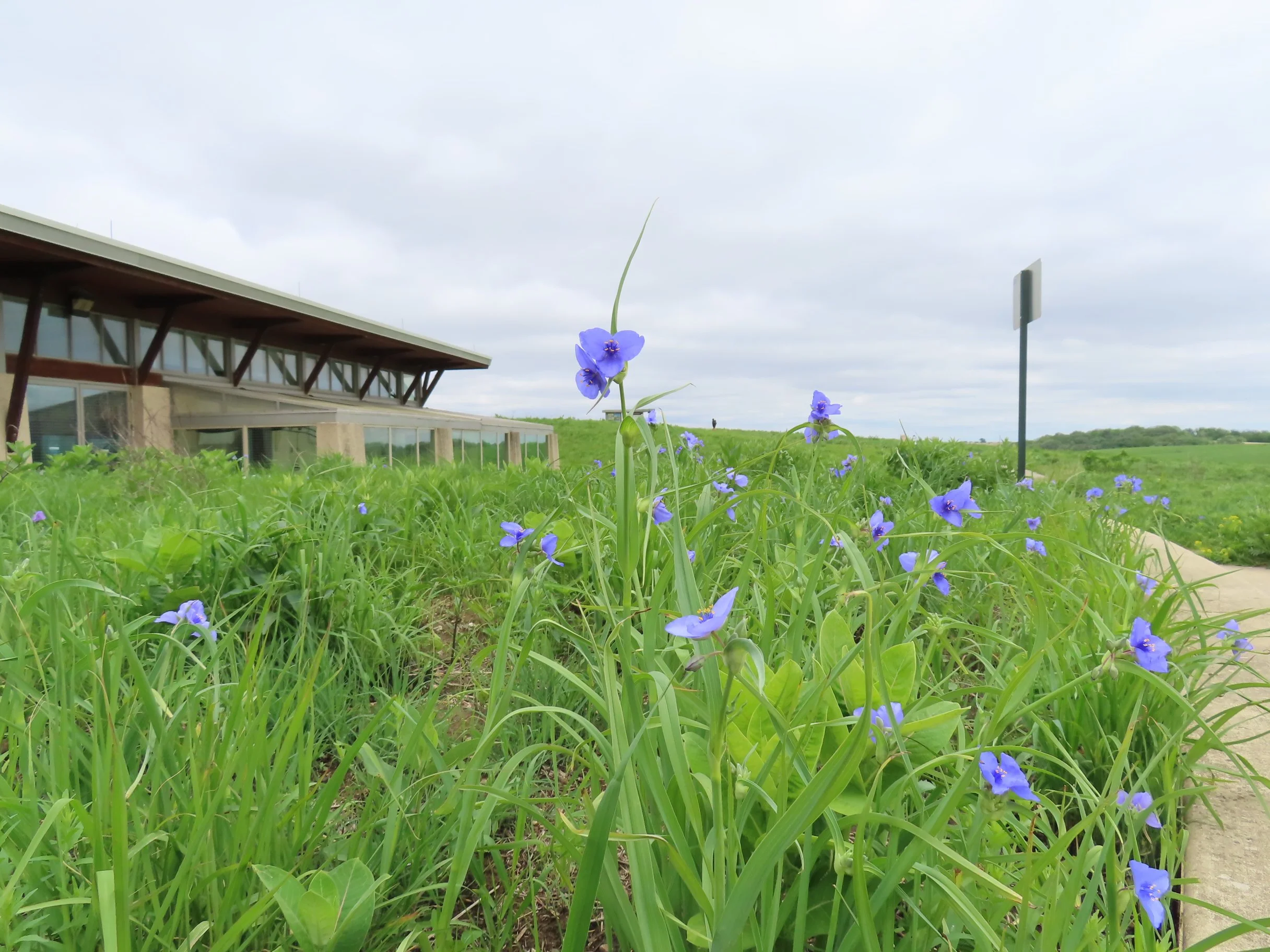
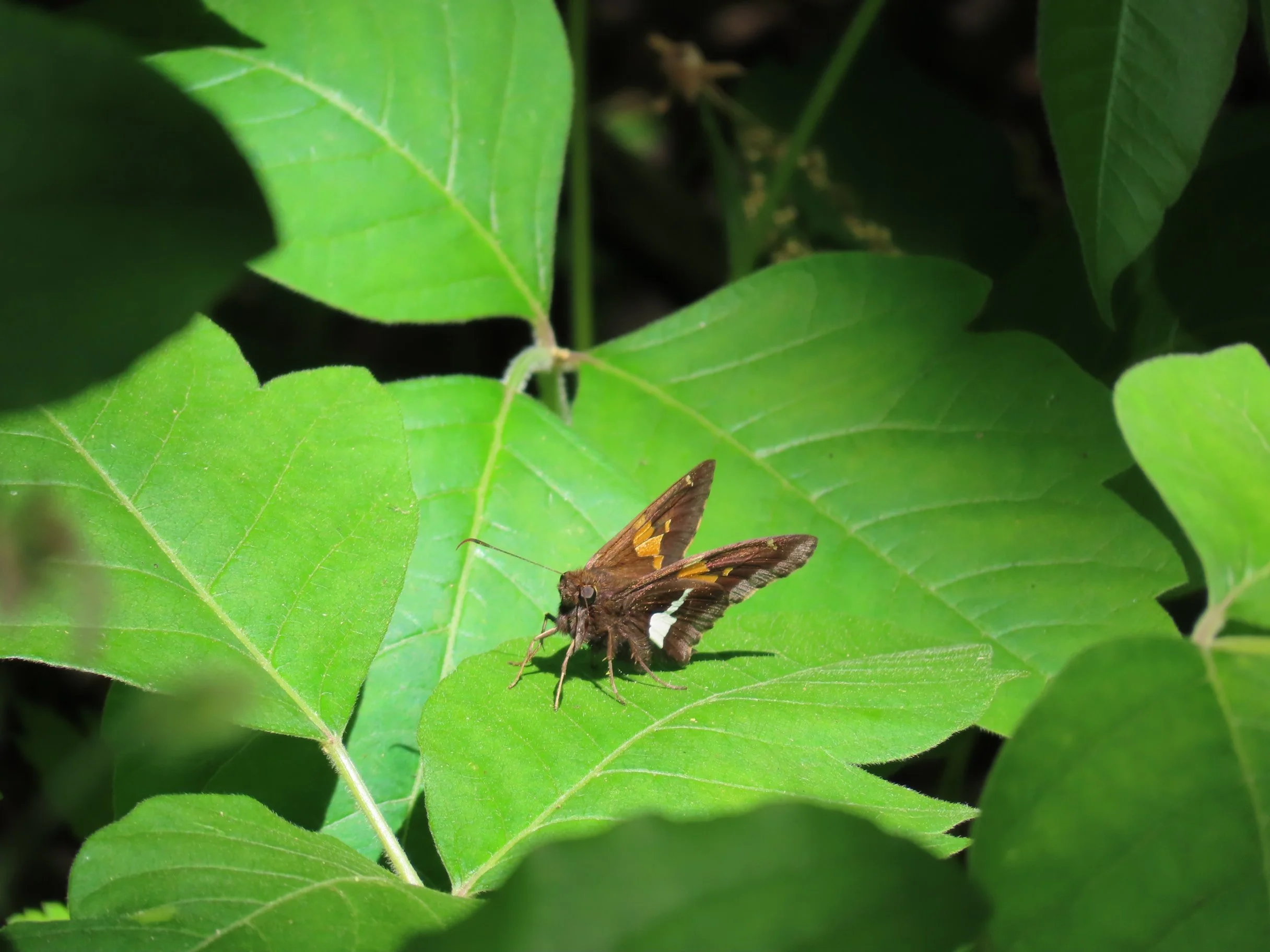
Studying and testing were still taking up a significant portion of our time this week. We should all be done by the end of next week, if all goes well. Our newest intern, Mac Payne, started on Monday the 18th. He will be a nice addition to our crew. We attempted a bison survey but the wet weather prevented completion. The weather has been beneficial for the prairie and blooming plants. The Spiderwort (Tradescantia ohiensis) is really popping right now. We are all looking forward to heading out to the field in the coming weeks. We will be focusing on invasive species mitigation, and revisiting the monarch monitoring program - just for starters. We have a very busy season ahead of us.
5/14/2026
By Tenlea Turner
2026 Summer Intern
Interns get trained
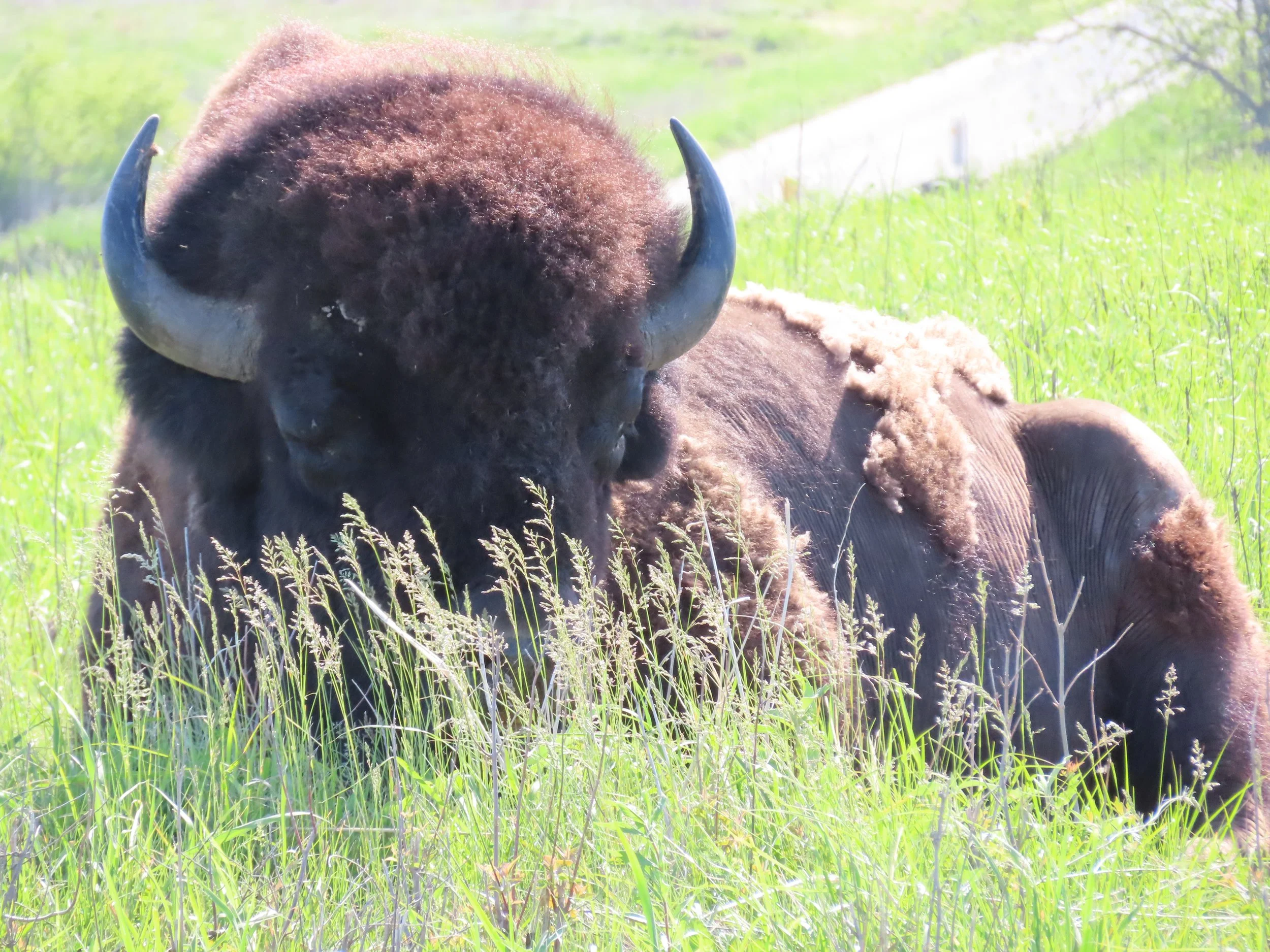
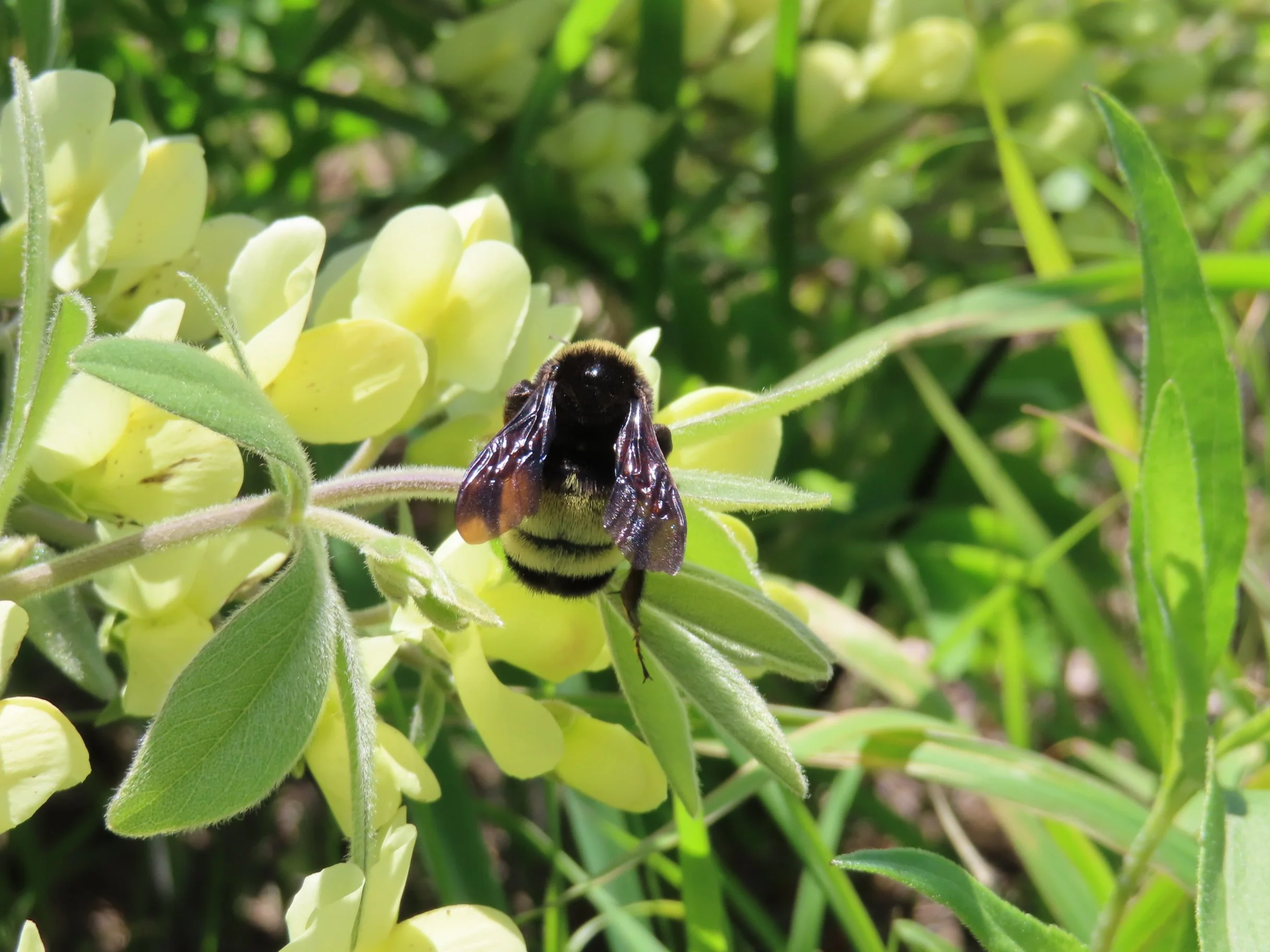
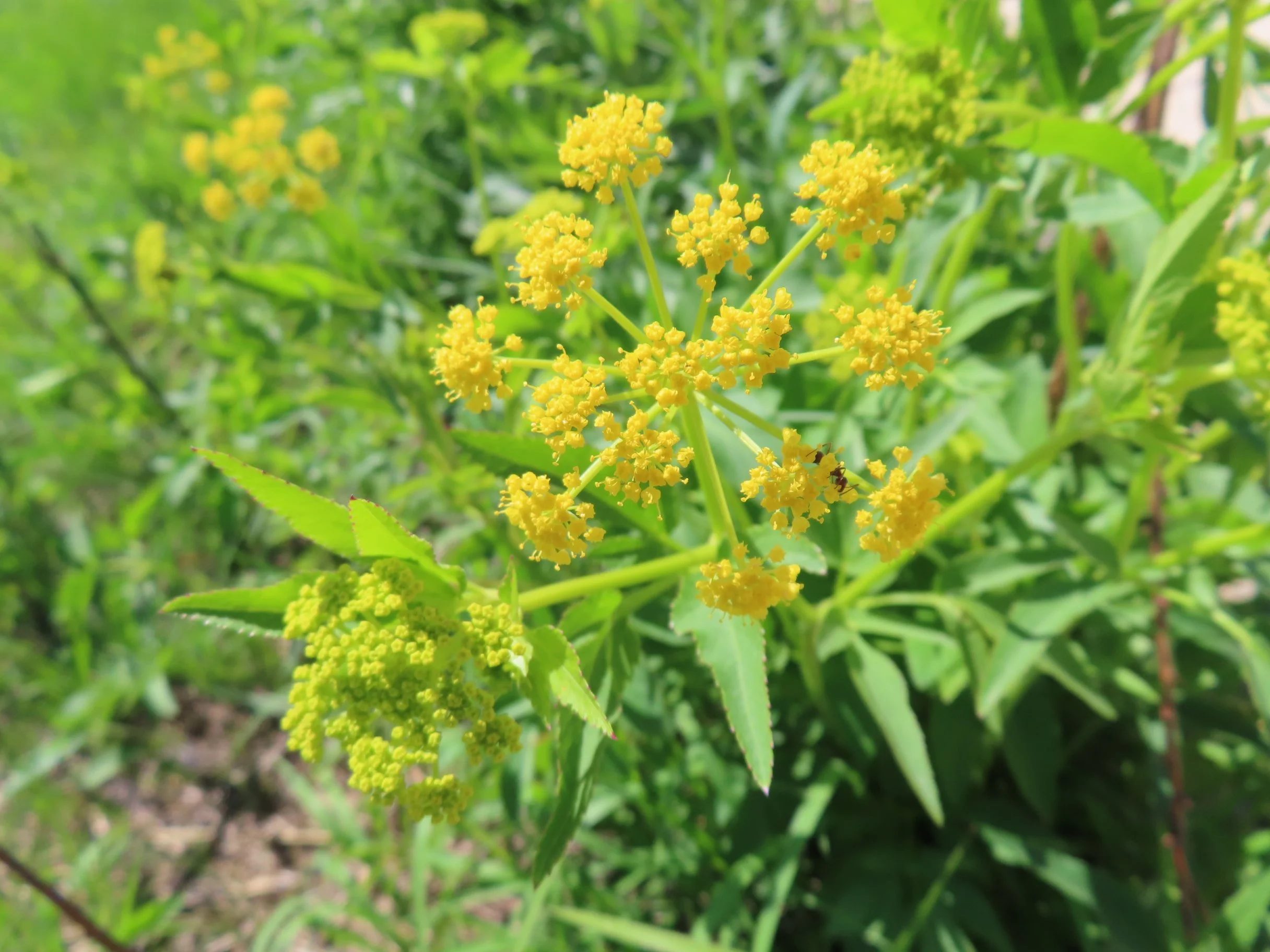
With all of the studying and training that's going on there is not much time right now for outdoor activities. We have both nearly completed our Defensive Driving requirements, Pesticide Applicator cerification, and ORUV (UTV) training. While that stuff keeps us very busy, we continue with bison surveys and making sure the available amenities are clean and stocked for the recent influx of visitor. That white bison calf is quite the draw. Now is a great time to visit even if it's not just for those little ones. The prairie is greening up nicely, and flowers are starting to color the landscape. Cream wild indigo (Baptisia bracteata) and Golden Alexander (Zizia aurea) are in peak form, and Spiderwort (Tradescancia ohensis) is just beginning to bloom. It's an exciting time to be on the prairie and part of this team. The pollinators are loving it too.
5/1/2026
by Tenlea Turner
2026 Summer Intern
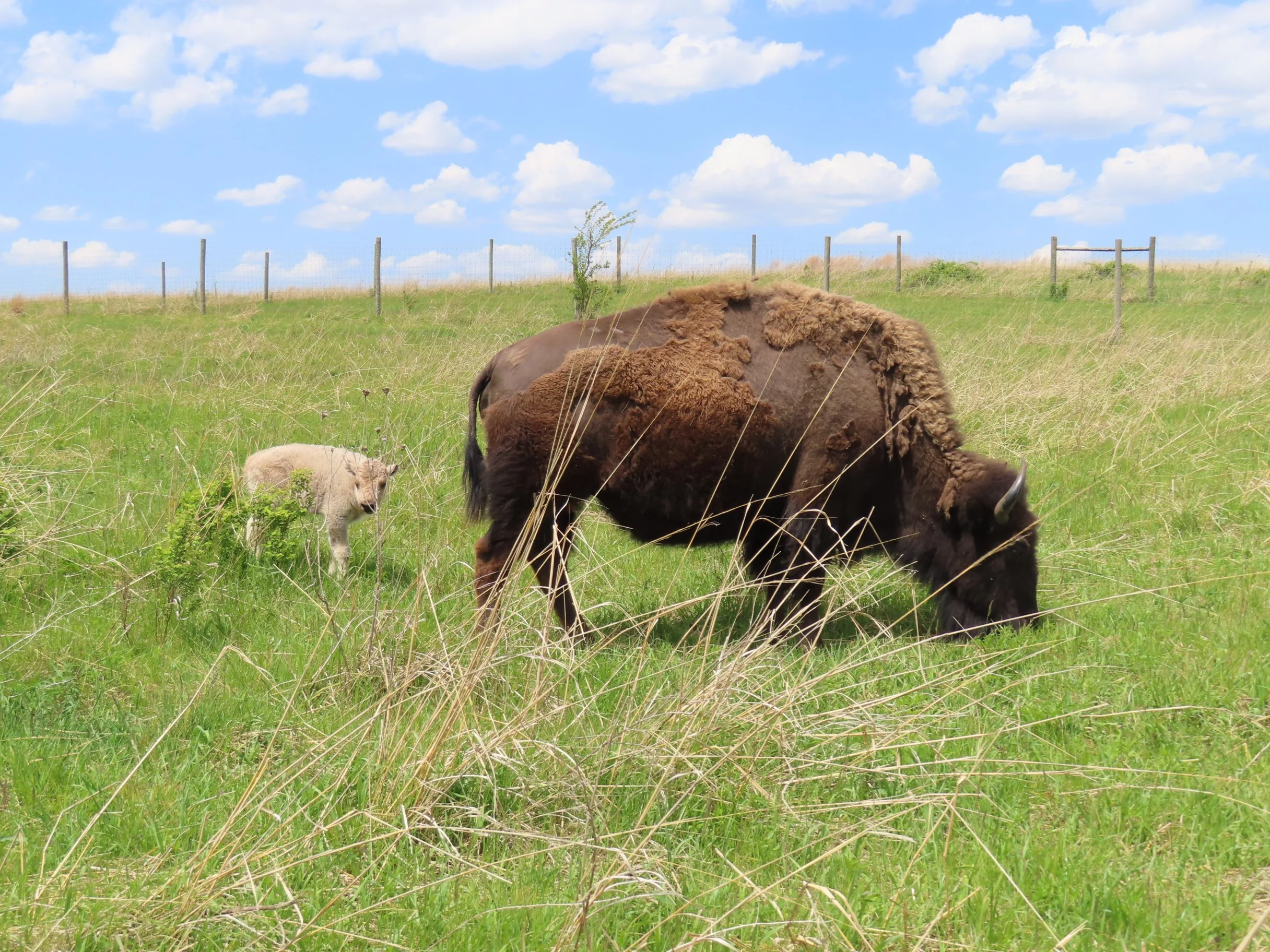
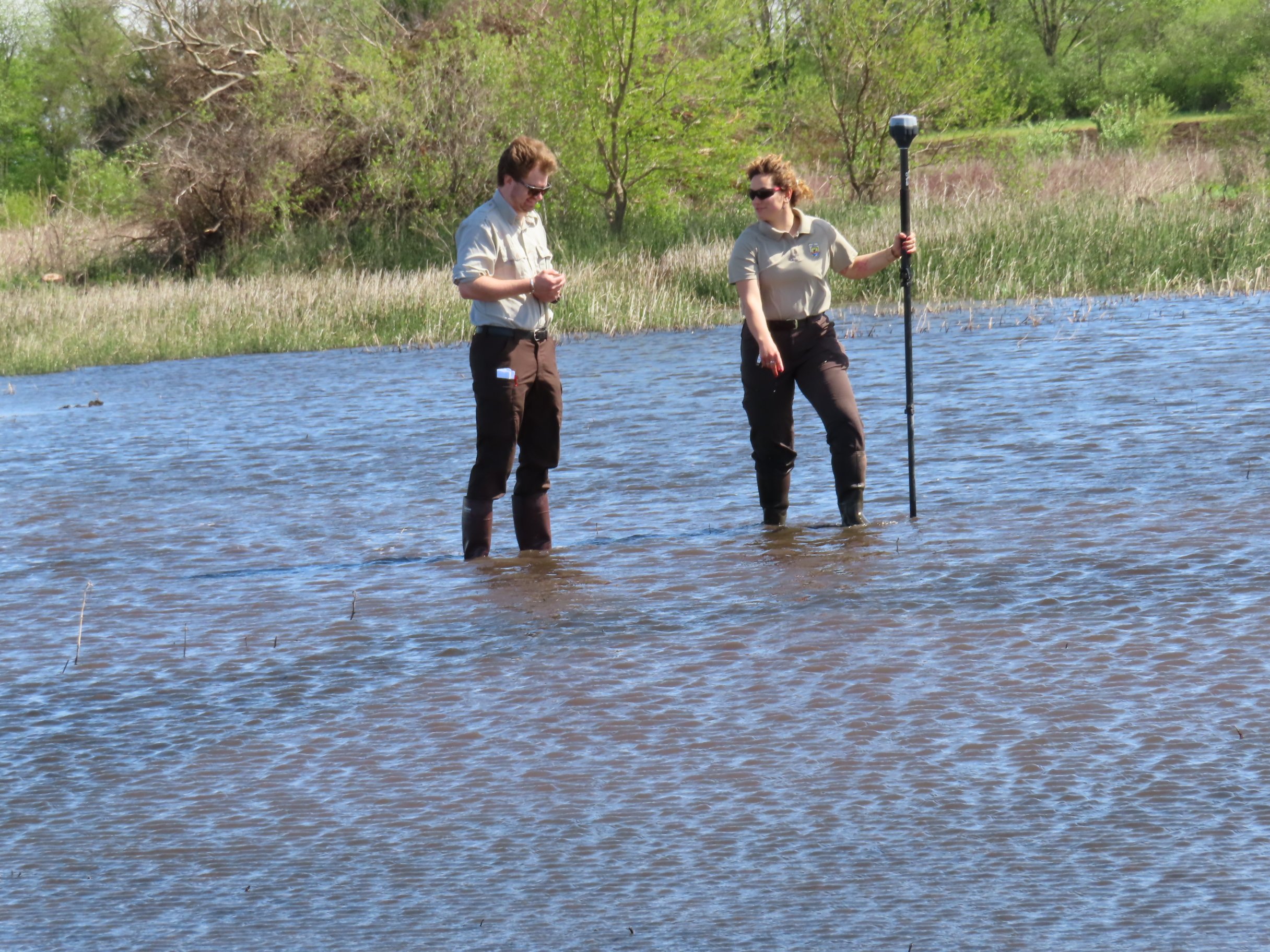
I would have to say the best part of this last week has been the arrival of so many bison calves. We saw the first 2 on April 22. As of today (5/4/2026) we counted 12 - one of those being white. What a special surprise. We went out with Private Lands Biologist Annie Pohlen to assess potential wetland restoration sites in Dallas County. The field visits were very interesting and informative. We took some elevation measurements in and around the larger site to map out high and low points for the planning stage. We stopped by Chichaqua Bottoms Greenbelt for a quick lunch and tour of a restored oxbow. They have done a beautiful job of restoration and increasing species diversity in the area. We also helped with a couple of school groups. Every morning we collect the snakes that hide under the front doors. We use them as a learning tool in the class and release them back to the prairie afterward. On the 28th one of them was a lined snake - a rare find for this area. We also continued our studies for certifications to meet the requirements of our respective positions. It was a productive week.
February 18, 2026
By Ryan Kalal, Seasonal Biology Intern
Ryan says Farewell
Starting out as a Biological Technician coming from outside of Iowa, I was always told that Iowa was a flyover state with a lot of corn. I quickly discovered I was wrong—well, there still is a lot of corn. There is so much more here, including the beauty of the tall grass prairie and the natural wonders within Iowa. I realized that my time here was going to be full of experiences like invasive species work, wildlife surveys, and public programming.
I had the opportunity to work with some great people in the private lands program and some of the partners they worked with. The private lands program works with private landowners and other organizations to restore and enhance natural resources on their property. They showed me how the private lands program worked and some of the things to know when working with landowners. Annie Pohlen with private lands took the time to set us up with surveying Topeka shiners, banding geese, and spending the day with Ecological Services to learn what they do. Ecological Services’ main task is to enforce the Endangered Species Act. Refuge staff coordinated with the Iowa DNR to let us tag along during many of their wildlife surveys on the refuge. The work on the refuge was not always glamorous, but it was rewarding—spraying for lespedeza, girdling black locust, working with the bison and elk, and assisting with interpretive programs had their joys.
Learning hands-on skills is always a success, but I think the biggest thing I learned from working here is the skill of leadership. Working in a team and with volunteers required me to learn new skills to overcome challenges in my leadership. I wouldn’t have learned all that I did if it weren’t for the great refuge staff and all their partners that mentored me over my season here. In the end, I think this has been one of the best seasons I’ve had, and it has helped show me different directions I can go in the U.S. Fish and Wildlife Service (USFWS) and in the field of Natural Resources. I hope to be able to continue my work with the USFWS in the future.
February 6, 2026
By Ryan Kalal, Seasonal Biology Intern
ArcGIS Field maps and Survey 123
This week on our windy Friday I had the important task of helping Nancy (Visitor Services Manager) get the iPad set up and get her orientated with how to use ArcGIS Field maps and Survey 123. These programs are essential to the operation of not only this refuge but the whole refuge system. Refuge staff use Survey 123 to record the bison heath surveys on the refuge. In my opinion Field Maps of the 2 are the most important. Refuge staff us GPS points record plants for seed collection, where we girdle and treat, where we spray for invasives, and where invasives are located for future treatment. The data from Field maps is all entered into a national database. This is important to know so the next biotech and interns can be properly trained and can start the next season running.

January 30, 2026
By Ryan Kalal, Seasonal Biology Intern
Iowa Prairie Network Winter Seminar, "Passing the Drip Torch - 250 Years of Prairie Resilience"
Nancy Corona (Visitor Service Manager) and I attended the Iowa Prairie Network winter Seminar in Ames over the weekend of the 24th and 25th. The conference talked about how important the forb to grass ratio is and how close it is to 50/50. Forbs are broad leafed, non-woody, flowering plants. There was also a talk about the tribal people that once lived in Iowa. I find these conferences to be valuable experience for professionals and the public alike. They encourage networking and for furthering our knowledge of the prairie. I came out of this experience with a deeper understanding of the prairies of Iowa and the organizations that are working to protect and restore them.

January 23, 2026
By Ryan Kalal, Seasonal Biology Intern
Ryan takes the U.S. Fish and Wildlife’s Annual Fireline Safety Refresher Training RT-130
During the month of January, I participated in the U.S. Fish and Wildlife’s Annual Fireline Safety Refresher Training RT-130. This training is required every year if I have any interest in participating in wildland or prescribed fire. The training consists of a classroom portion and a physical portion. The classroom portion provided an overview of the Iowa's previous fire season, entrapment prevention, hazards on the fire line, and driver safety. Entrapment is when all your escape routes on the fire line have failed and you have been trapped by the fire; this usually results in the deployment of your fire shelter. The physical portion of the training, a practice fire shelter deployment and an arduous exam. This exam consists of a 3 mile walk with a 45lbs pack that must be completed within 45 min. It was important for me to complete because I expressed interest in participating in prescribed and wildland fire the next season and this kept my certification up to date. It also refreshed my knowledge of safety on the fire line.
January 16, 2026
By Ryan Kalal, Seasonal Biology Intern
Many Tasks for Ryan
This week I continued to cut and treat black locust within the Oak Savanna. I also removed the emergency lights from the type 2 fire truck. I also assisted refuge staff with many administrative tasks that helped the refuge work smoothly. Some of these include fire extinguisher inspections, assisting with volunteer agreements and coordinating volunteers for black locust treatment. Through these tasks I am learning what is required to maintain the refuge in the background.
January 9, 2026
By Ryan Kalal, Seasonal Biology Intern
Removing Black Locust
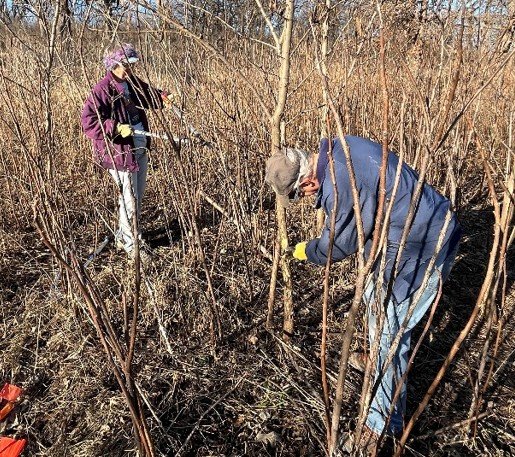
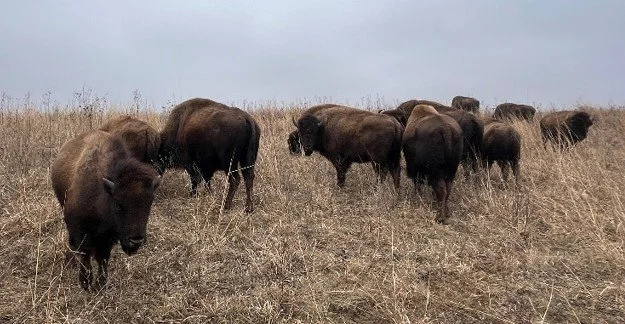
I took some volunteers out to cut, treat, and remove black locust from the Oak Savanna. We made some great progress and everyone had fun doing it. Black locust is a colonial species. A colonial species is a group of individuals that are genetical identical that comes from a single ancestor that functions as a single organism. They also spread very quickly and create monocultures which out compete native vegetation. To help control this we are girdling or cutting every stump and treating them with chemicals to kill the roots. This will intern kill the plant and help prevent the spread. This week I also took out one of our volunteers to do a Bison and Elk survey. The elk were on full display, and the herd was on the move.
December 12, 2025
By Ryan Kalal, Seasonal Biology Intern
Assisting Private Lands Crew
This week I assisted the private lands crew with some of their projects. I am helping private lands with an initial site visit where we took elevation points for a for a future wetland restoration, getting the ball rolling on a prairie restoration, visiting some contractors while they were digging for an oxbow restoration, and helping a landowner with a previous restoration project. The private lands crew helps private landowners and other organizations with restoration projects on their land through cost sharing, partnerships, and technical help.
December 4, 2025
by Ryan Kalal, Seasonal Biology Intern
Bison Care, Black Locust and Birds
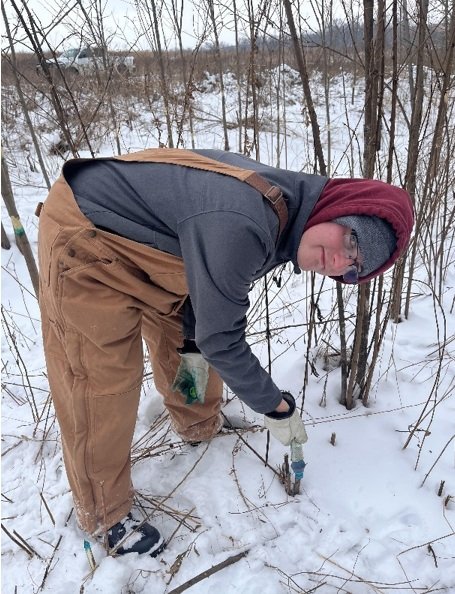
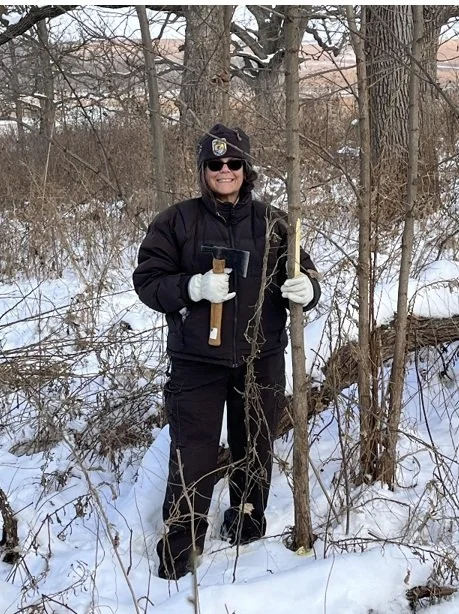
This week I went out with our maintenance worker and placed mineral blocks for our bison herd. The bison were eager to get a lick of the blocks! Minerals blocks are the only supplement we provide for them as they are unable to find the minerals they need from within their enclosure. The bison find all the food and water they need within the 800 acre enclosure. I also continued the project of cutting, girdling and treating the black locust that is consuming the oak savanna. Nancy even came and joined the fun! While out on the refuge the American Tree Sparrows and Eastern Meadow Larks were vocal in their flocks. There was even a Northern Bobwhite Quail running down the road.
August 25 - September 5
By Connor Bennett
Summer Intern
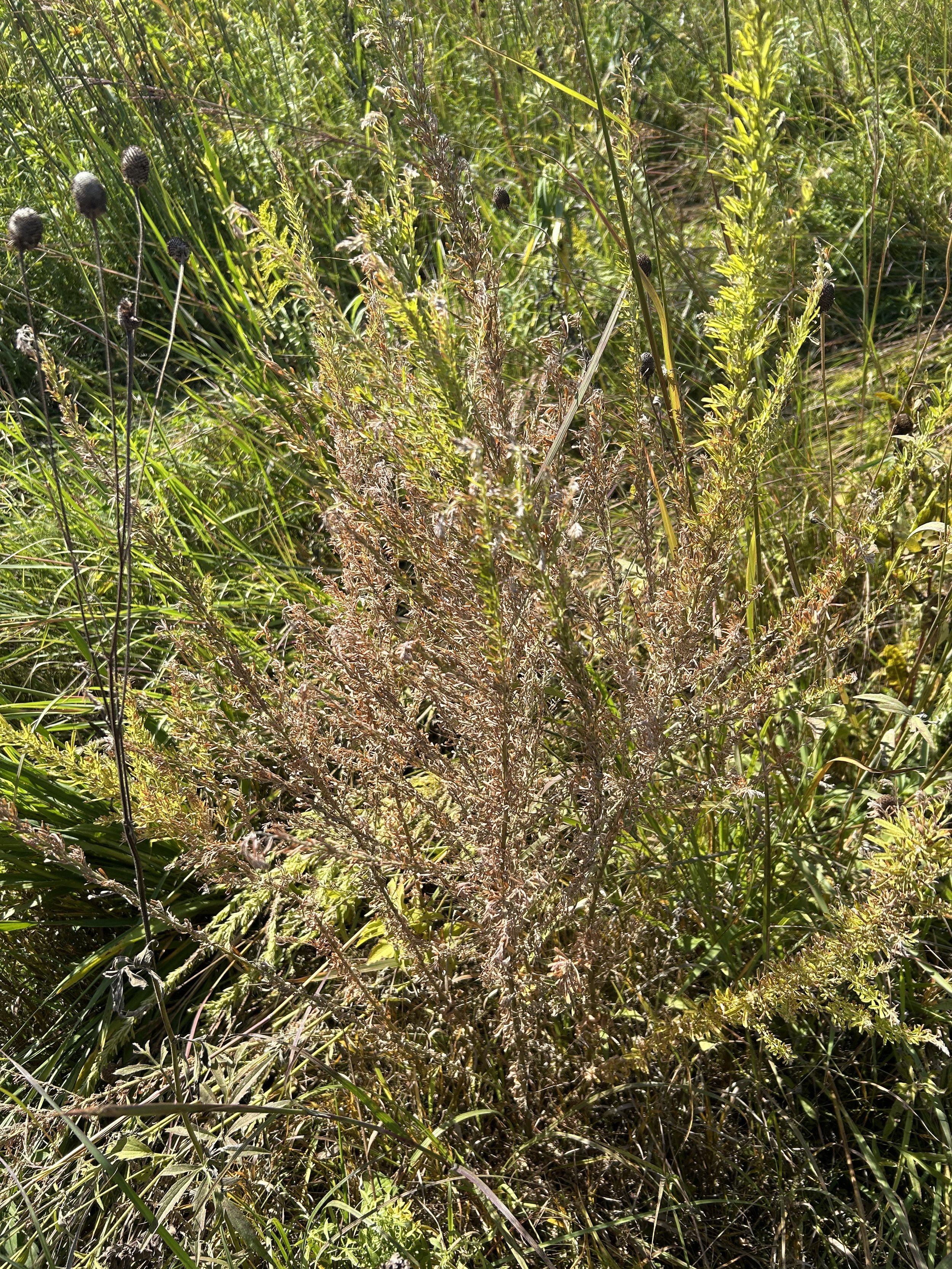
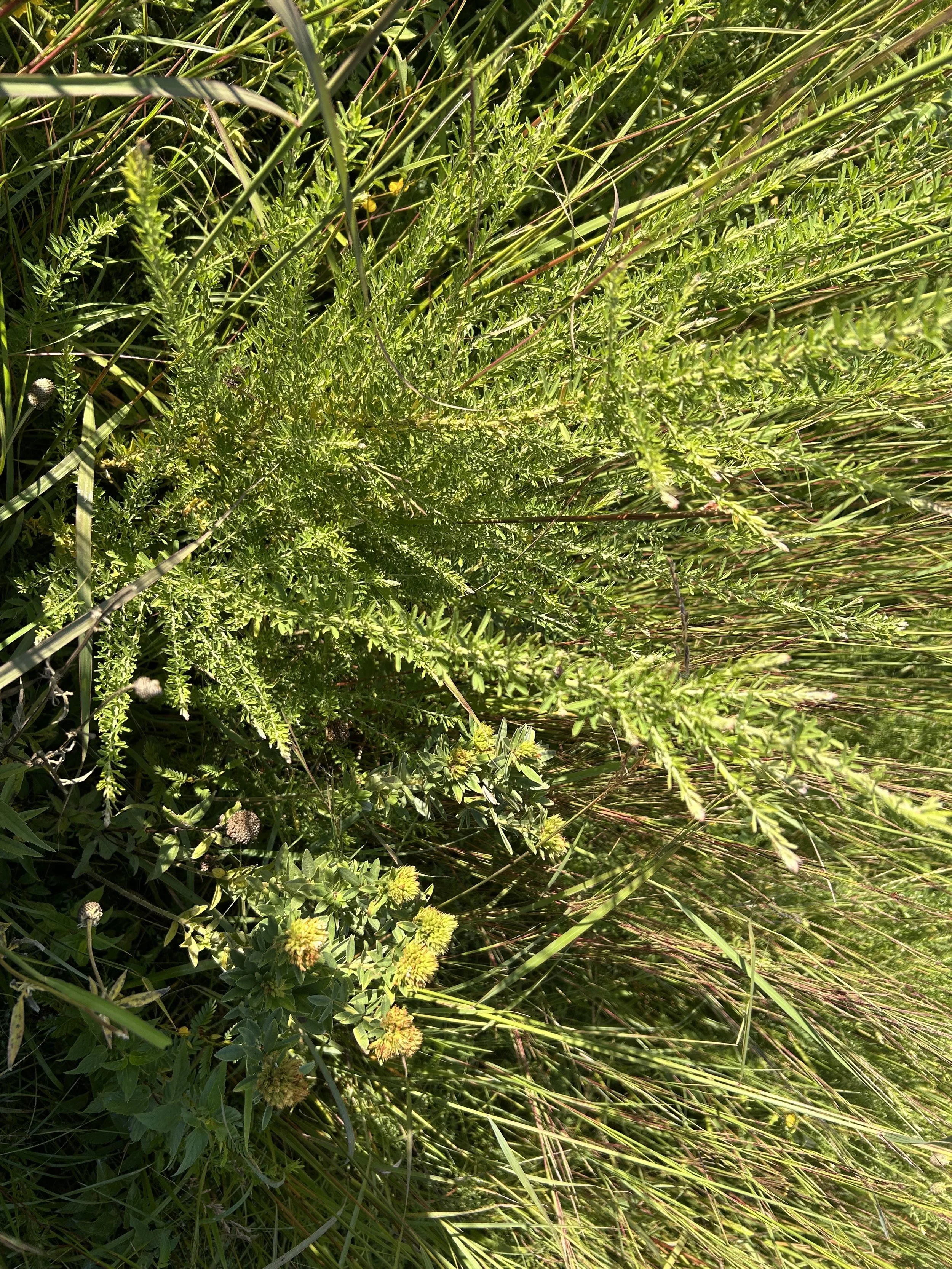
We are spraying Sericea lespedeza (Chinese Bush Clover). Lespedeza can grow in extremely large patches, meaning when we spray, we sometimes lose the Round-Headed bush clover.See a lespedeza plant post-herbicide application. These results vary from one day to up to a week after application.
The brown plant is the lespedeza after application, while the other includes the lespedeza pre-treatment and the above-mentioned Round-headed bush clover.
The picture is the lespedeza (left) next to it's native cousin, lespedeza capitata (Round headed bush clover, right).
Spraying Sericea lespedeza (Chinese Bush Clover)
July 29, 2025
Norah Shires
2025 Summer Intern
This week we conducted a bison fecal matter assessment! This involved collecting 30 vials of fresh bison fecal matter. As unappealing as that may sound, it's important to be able to monitor the health of the herd. The samples will undergo parasite testing. It took us a few hours, and it was fun to watch their behavior as the day went on: calves playing with each other and adults grazing calmly beside them.
Bison Fecal Matter Assessment
July 16
Norah Shires
2025 Summer Intern
Invasive Plant Species Removal
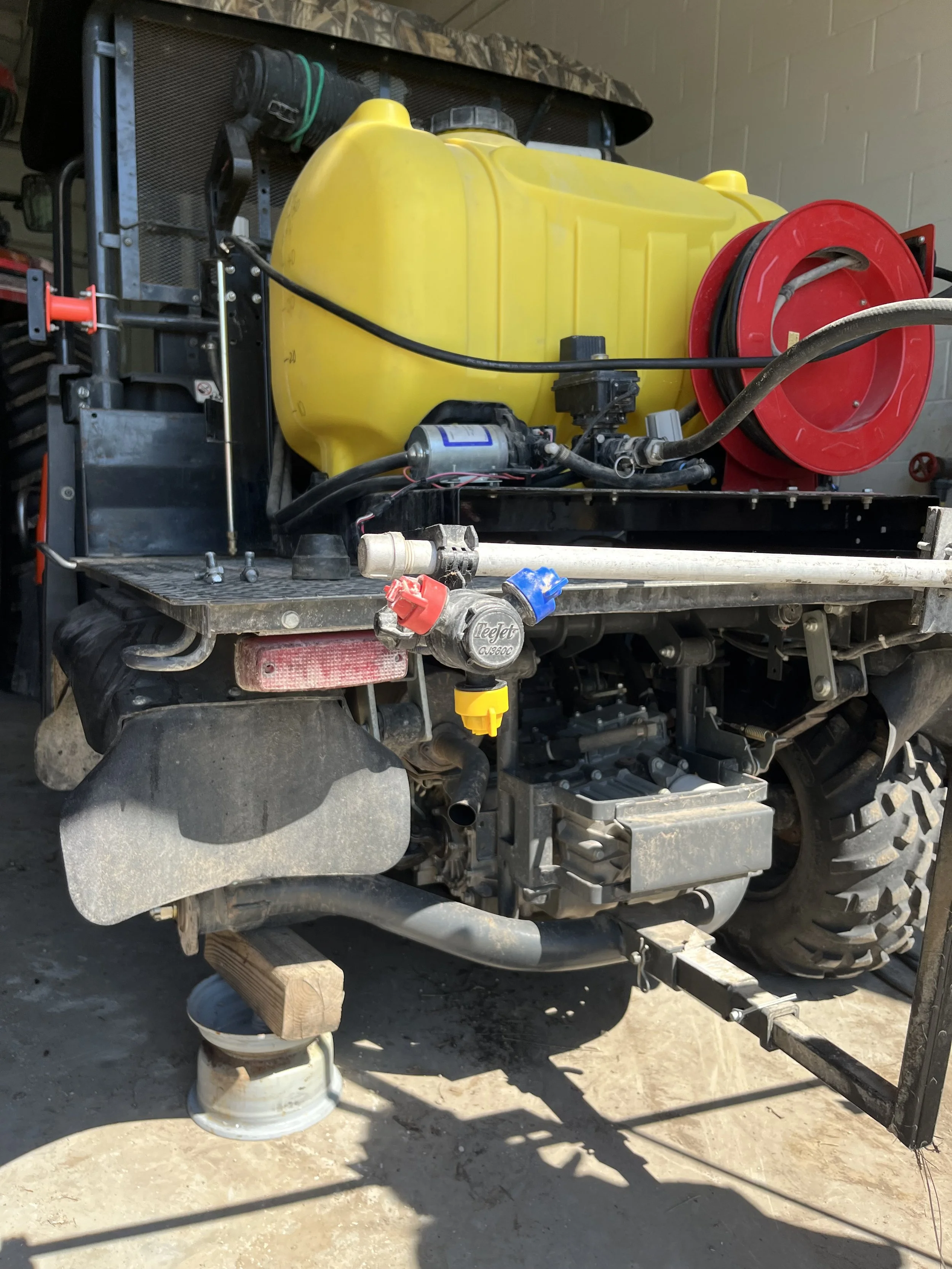
Out at the refuge we have several invasive plant species; wild parsnip, birdsfoot trefoil, and lespedeza to name a few. Lespedeza is a particularly nasty one, and we are focusing on it heavily with pesticide for these next few weeks before it goes to seed. The pesticide tanks sit on a UTV, which we drive through the prairie and use a hand sprayer or the boom sprayer (nozzles on the back operated by a switch) on the target plant. Often a product called "Soy Stick" is used, which is an additive mixed into the pesticide to help it stick to the leaves.
Jun 24
Connor Bennett
2025 Summer Intern
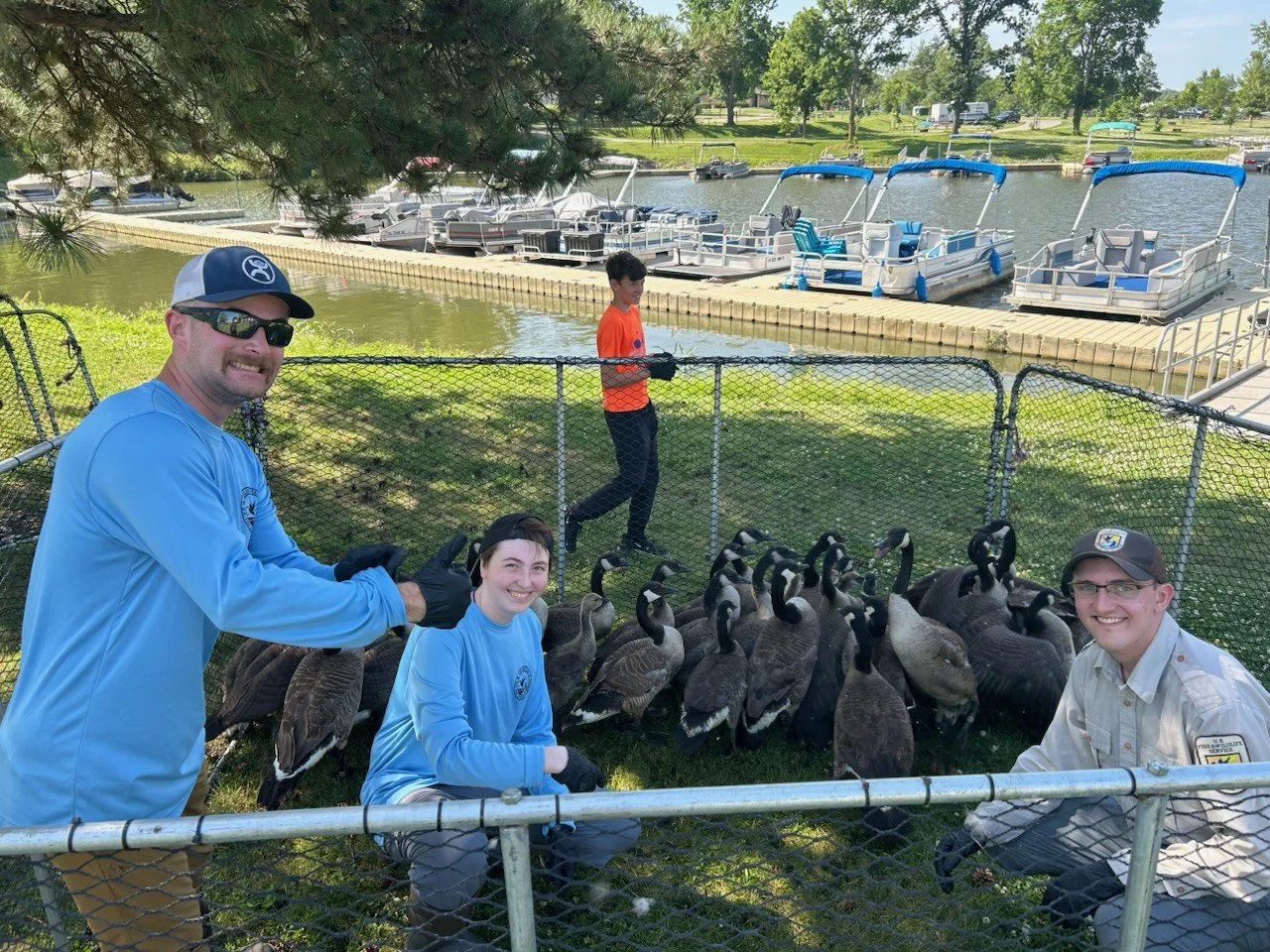
This week we assisted the Iowa DNR with their Canada goose banding program. Banding the geese allows the DNR to track migration patterns after they have been harvested. The bandings took place at Oakland Acres golf course in Kellogg, Quarry Springs in Colfax, Rock Creek State Park, and at Central College. Over the course of 3 days, the DNR banded 599 geese!
Canada Geese Banding
June 13th
Norah Shires
2025 Summer Intern
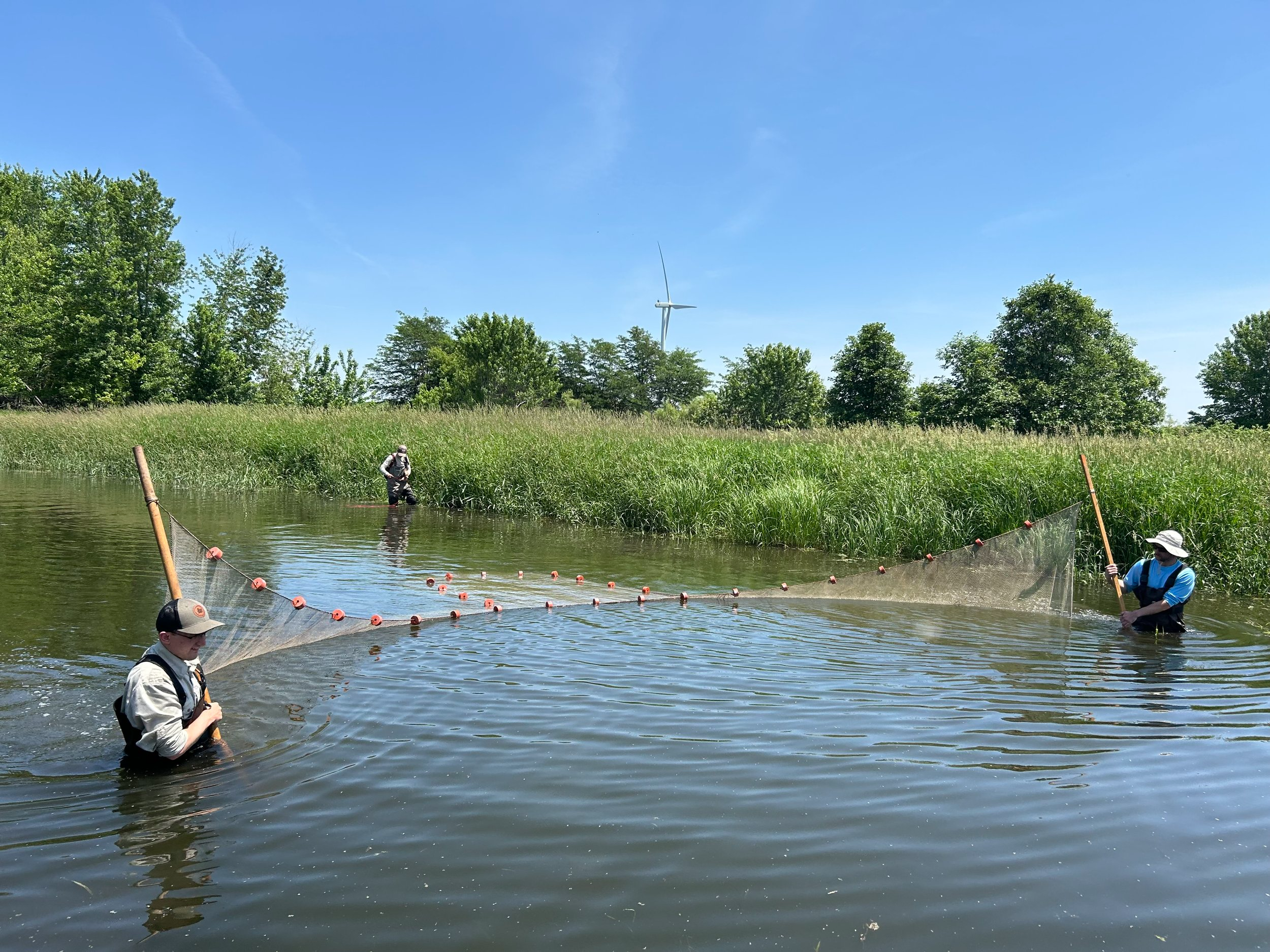
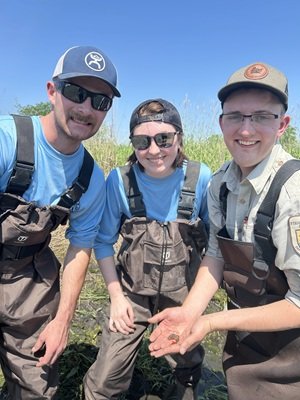
This week we assisted with a Topeka Shiner survey! Topeka Shiners are an endangered small minnow-like species that like murky bottom waterways. For Iowa this means oxbows or streams. We went out and used a net to scoop up fish from the oxbows and counted them up, which is called seining. It was an absolute blast, and we even found some other cool species like darters and big tadpoles!
Topeka Shiner survey
June 5th
Norah Shires
2025 Summer Intern
This week we went out and learned how to do a bison and elk survey, which is how we keep track of how many individuals there are, how many calves there are, and the overall health conditions of the herd. We also record data of the day, like time, sky conditions, and ground conditions. Some individuals can be easily picked out by unique features they have, like horn shapes or irregularities!
Bison and Elk Survey
October 9th
Madison Zink, Visitor Services Intern
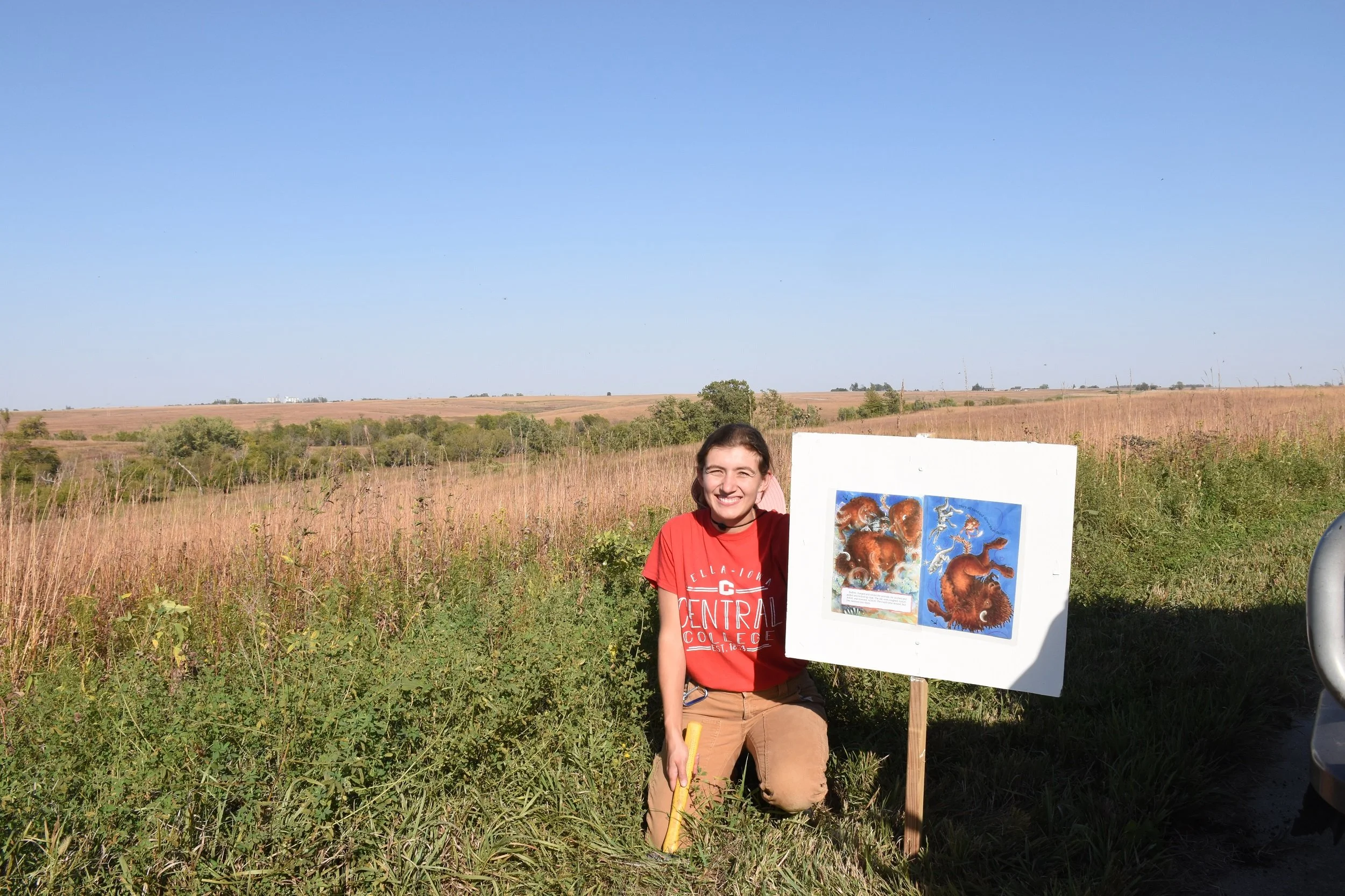
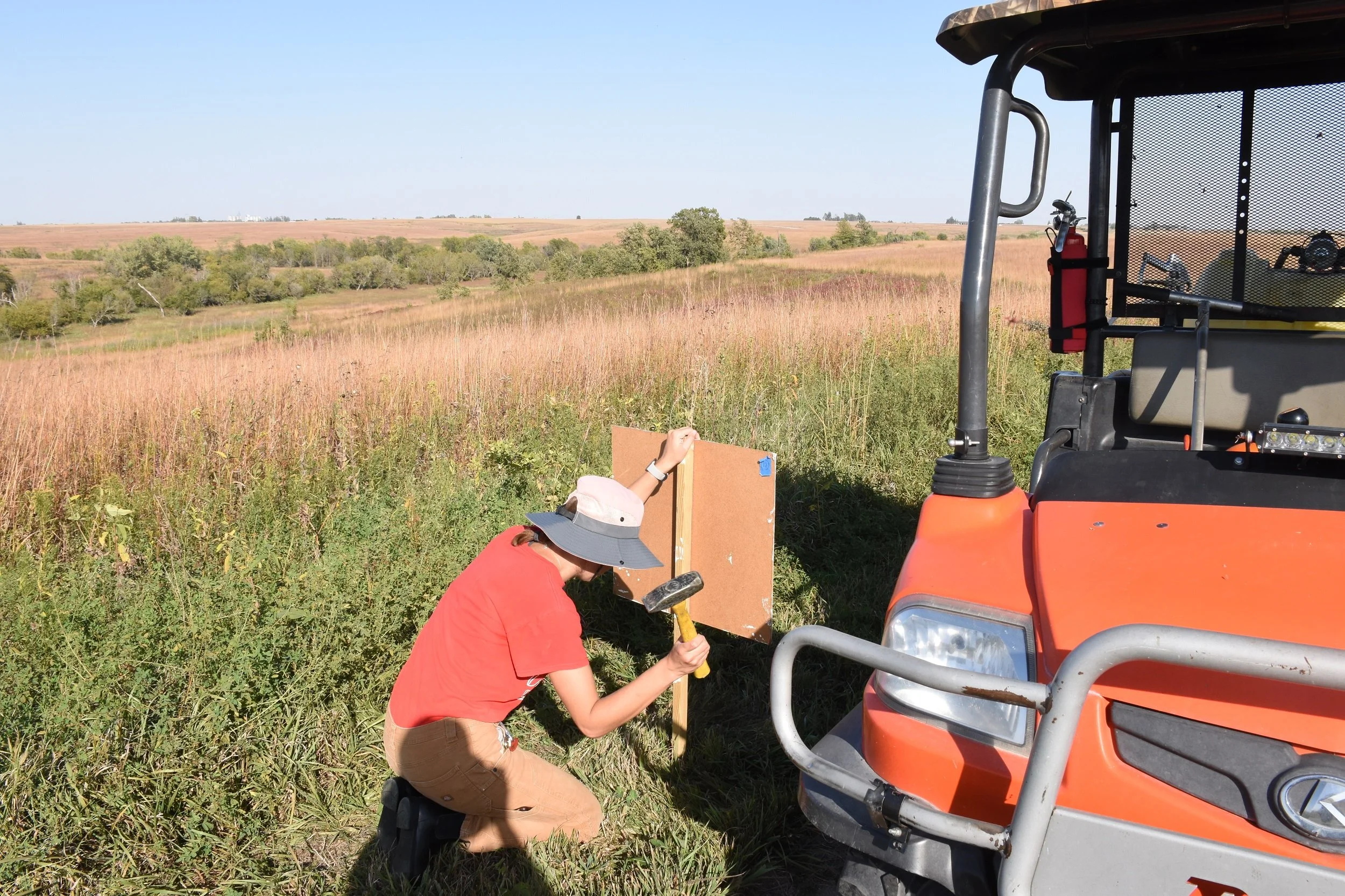
Without the ability to host classes in the Visitor’s Center right now, Nancy – the visitor services coordinator – and I have been brainstorming some fun ideas to keep the public involved and surprised when they come visit us in the prairie! With this goal I began to scope out some books in order to make Neal Smith National Wildlife Refuge’s first every Storybook Trail! Storytime with the kiddos has always been one of my favorite events. I believe that growing a child’s imagination is just as important as scientific skills! With this goal in mind, creating the trail became an all-staff teamwork event! I dug up some old signs in our maintenance building that we don’t use anymore. Evie and Scott helped me paint them before I taped on all the laminated pages. Then finally, despite the lack of rain, Evie and I persevered and installed the book signs in the dry dirt — Steve, the maintenance worker, had some tips and tricks to help us too. Now, visitors can walk the Overlook Trail, and enjoy the view of the prairie while also exploring Old Bag of Bones retold by Janet Stevens. This story is based on the Shoshoni tale “Old Man Coyote and Buffalo Power” and follows an elderly coyote, who believes himself to be just an old bag of bones. As he laments, he seeks help from a powerful bison to turn him young again. Will he learn the true wisdom that comes from age, or will he simply be the same trickster he always was?
Storywalk
October 10
Danica Linn
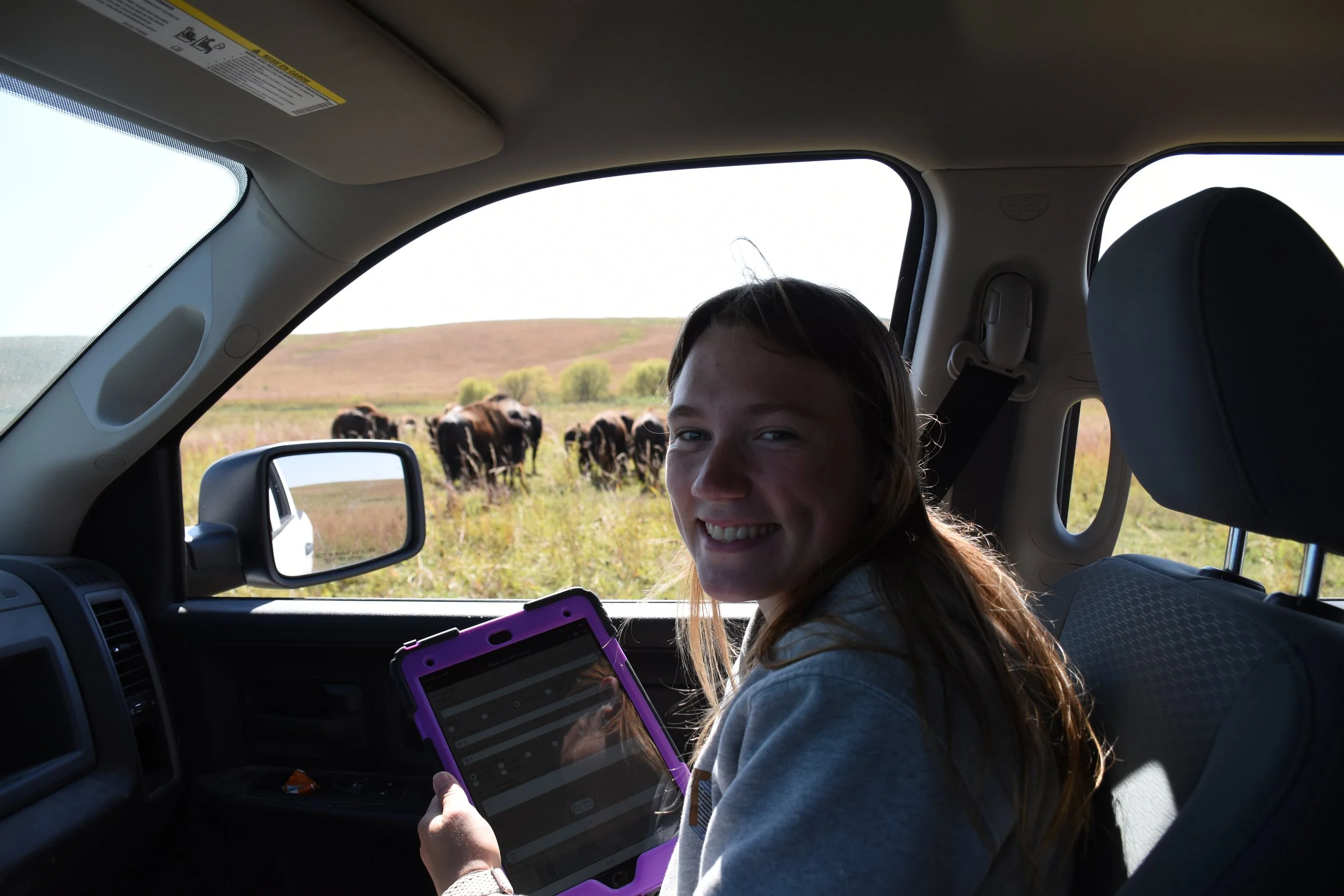
We go out once a week to do a bison and elk survey in order to keep track of herd numbers and to see how well their body condition is. By looking at the bisons body condition you can tell how healthy each individual is. We keep track of this by doing a survey on the iPad of health conditions and things to look out for.
Bison and Elk Survey
October 7
Evelyn Ince, Biology Intern
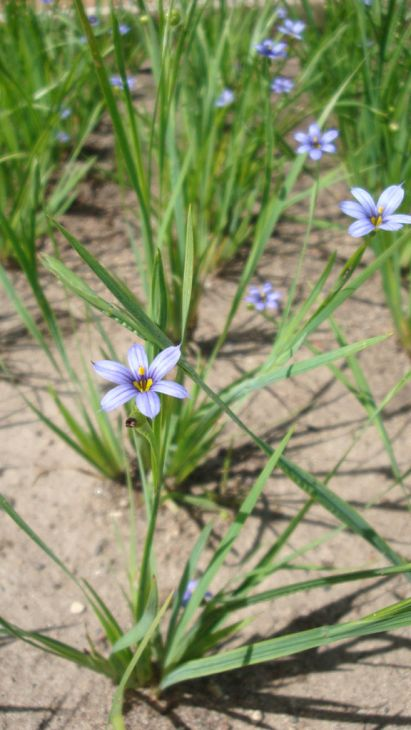
We spent time spreading a seed called Blue Eyed Grass (Sisyrinchium campestre). It is a gorgeous little plant that looks like a grass but is actually part of the Iris family! This species blooms in May-July, before most others, making it an important plant for early pollinators. Because of its small stature, it needs openings in the plant communities from either soil disturbance (bison, gophers, badgers, etc) or fire.
It also likes to be in full sun on well draining soil. In order to maximize germination, the seed should be spread before the first freeze in the fall or after the last freeze in the fall (preferably in the spring after the last frost). I talked with Scott about burn priorities for the upcoming year. Danica and I then went two one of those units to spread this seed directly onto the soil on rocky/sandy slopes. We then notate where we spread the seeds for future monitoring. This spring, the unit will burn and give this small early blooming plant a space to germinate.
Spreading Seed
October 2
Evelyn Ince, Biology Intern
About three weeks ago, I recorded a species we don't usually get in a monarch survey. During monarch surveys we monitor what vegetation is blooming at that moment so we can understand the correlation between blooming species and monarch abundance.
After struggling to key the species out on my own, Tenlea suggested including Pauline and asking for her opinion. We went out last week and keyed out the species with Pauline. Here are some pictures of this. Unfortunately, the plant is an invasive that we do know about but isn't a top priority at this point. It is officially ID'd as Shrub Lespedeza (Lespedeza bicolor). I've documented it on our invasive species map so that the next biologist has an idea that it is still here and apparently doing well in this unit.
Discovering a new species
Blue Eyed Grass (Sisyrinchium campestre) picture from Prairie Moon Nursery